Vikram-1 success signals India's shift to multi-actor space ecosystem
Synopsis
Vikram-1's successful orbital flight is more than a launch milestone — it is proof that India's decade-long policy pivot away from a state space monopoly has produced a functioning private industrial base. With nearly 200 startups, ₹1,000 crore in fresh capital, and international payload customers already on board, India's space ambitions now have commercial rocket fuel behind them.
Key Takeaways
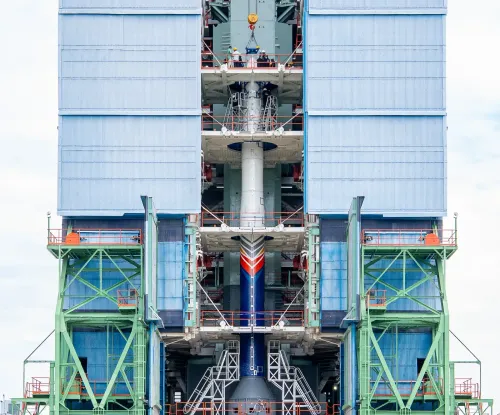
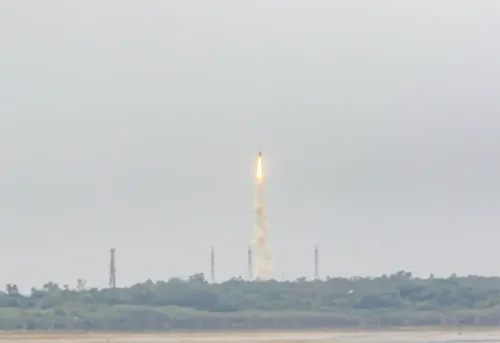
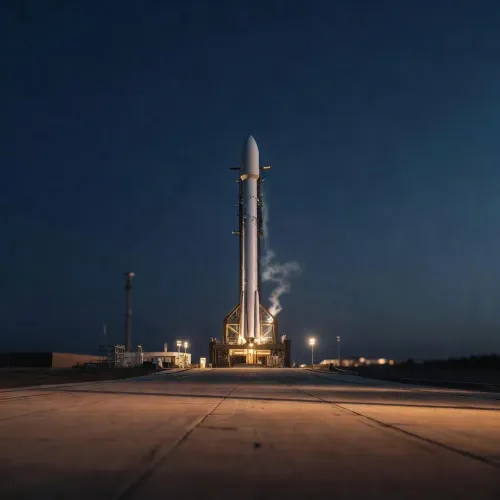
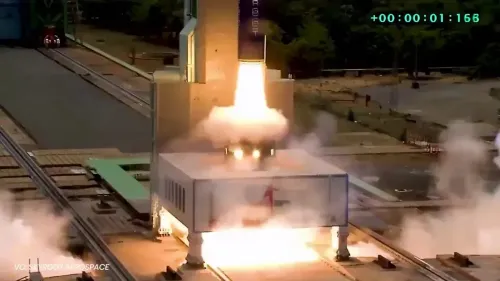
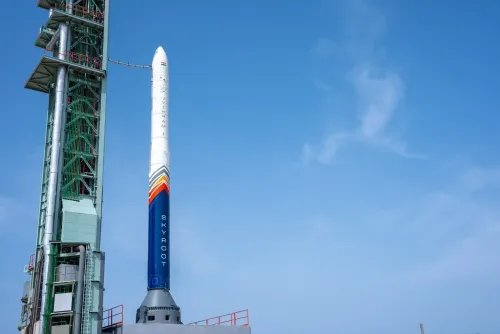
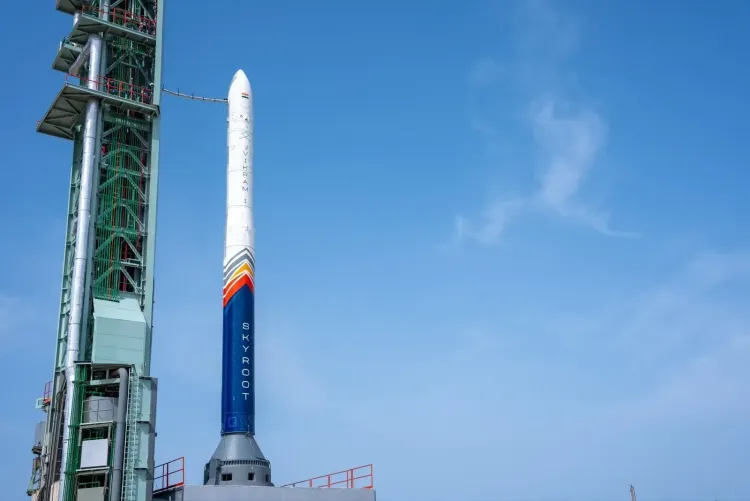
Vikram-1 , India's first privately developed orbital rocket by Skyroot Aerospace , successfully reached orbit.
The mission used all-carbon composite motor casings , high-performance solid motors , and 3D-printed propulsion components .
Payloads from Grahaa Space , Cosmoserve , Germany's DCubed , and Skyroot were carried on board, demonstrating commercial demand.
India's space startup count grew from 1 in 2022 to nearly 200 by 2024 , with ₹1,000 crore raised in eight months of 2023 .
India targets a 8% share of the global space economy by 2030 and 15% by 2047 , up from 2% in 2021.
IN-SPACe reforms, initiated around 2020 , enabled Skyroot to use ISRO's launch range at Sriharikota .
India's first privately developed orbital rocket, Vikram-1, has successfully reached orbit, marking what analysts describe as a structural transformation of the country's space sector — from a state-run monopoly to a multi-actor space ecosystem. A new report by India Narrative, released on 21 July, frames the milestone as evidence that India's private space industrial base is now operational, not aspirational.
What Vikram-1 Represents
'India is no longer just a low-cost extension of ISRO but a country building a diversified, multi-actor space ecosystem, with its own rockets, satellites and eventually its own crewed missions and space station,' the India Narrative report stated. The launch extends a narrative arc that began with Chandrayaan-3's lunar landing and the Aditya-L1 solar mission, according to the report.
The rocket was developed by Hyderabad-based startup Skyroot Aerospace, which deployed advanced manufacturing techniques including all-carbon composite motor casings, high-performance solid motors, and 3D-printed propulsion components — technologies that, until recently, were the preserve of ISRO and a small circle of global aerospace giants.
The Role of IN-SPACe Reforms
The report credits policy reforms initiated around 2020 — particularly the creation of IN-SPACe (Indian National Space Promotion and Authorisation Centre) — as the structural enabler behind Skyroot's success. IN-SPACe allowed Skyroot to test its hardware and launch from ISRO's own range at Sriharikota, integrating private players into the national ecosystem rather than forcing them to build isolated, parallel capabilities.
Notably, this is not a single-company story. Vikram-1 carried technology demonstration payloads from Grahaa Space (India), Cosmoserve, DCubed (Germany), and Skyroot itself — a signal, the report argues, that Indian private launch capability is already attracting paying customers who had global alternatives.
India's Space Startup Surge
The policy shift has had measurable consequences for the ecosystem. India went from having a single space startup in 2022 to nearly 200 by 2024, according to the report. The sector attracted roughly ₹1,000 crore in investment in just eight months of 2023 alone.
This growth is underpinned by an ambitious national target: raise India's share of the global space economy from approximately 2 percent in 2021 to 8 percent by 2030, and as high as 15 percent by 2047. The report argues that Vikram-1 demonstrates the industrial foundation to pursue those targets actually exists.
What Comes Next
The Vikram-1 mission positions Skyroot Aerospace as India's first private orbital launch provider, opening a commercial launch market that could attract both domestic and international satellite operators. With IN-SPACe continuing to lower barriers for new entrants, industry observers expect the number of active launch and satellite ventures to grow further through 2025 and beyond. The question now shifts from capability to cadence — how quickly India's private sector can scale launches to compete globally.
Point of View
But the harder work begins now. India's jump from one space startup to 200 in two years reflects regulatory liberalisation, not yet sustained commercial revenue — and those are different things. The real test for IN-SPACe is whether it can move from enabling first launches to enabling repeat, reliable, competitively priced orbital access. International payload customers on Vikram-1 are encouraging, but global launch markets are unforgiving: SpaceX's reusability economics and Europe's Ariane 6 are not standing still. India's 8-percent-by-2030 target requires not just more rockets, but a downstream applications market — earth observation, communications, navigation services — that generates recurring revenue and keeps the startup ecosystem solvent beyond the venture-capital phase.
NationPress
21 Oct 2026
Frequently Asked Questions
What is Vikram-1 and who built it?
Vikram-1 is India's first privately developed orbital rocket, built by Hyderabad-based startup Skyroot Aerospace. It successfully reached orbit, making Skyroot the country's first private orbital launch provider.
What role did IN-SPACe play in the Vikram-1 launch?
IN-SPACe, established through space sector reforms around 2020, allowed Skyroot Aerospace to test hardware and launch from ISRO's range at Sriharikota. It integrates private companies into the national space ecosystem rather than requiring them to build separate infrastructure.
What payloads did Vikram-1 carry?
Vikram-1 carried technology demonstration payloads from Grahaa Space (India), Cosmoserve, Germany's DCubed, and Skyroot itself — indicating that international customers are already using Indian private launch services.
How fast has India's private space sector grown?
India went from a single space startup in 2022 to nearly 200 by 2024, according to a report by India Narrative. The sector attracted roughly ₹1,000 crore in investment in just eight months of 2023.
What are India's space economy targets?
India aims to grow its share of the global space economy from about 2 percent in 2021 to 8 percent by 2030, and up to 15 percent by 2047. The Vikram-1 success is cited as evidence that the industrial base to support these targets now exists.