How Did India Become the World’s 2nd Largest Honey Exporter?
Synopsis
In a remarkable ascent, India has claimed the title of the world's second-largest honey exporter, showcasing the nation's potential in beekeeping. With over 1.07 lakh metric tonnes of honey shipped valued at $177.55 million, this achievement highlights a significant rise from its previous ranking. Discover the initiatives propelling this sweet revolution.
Key Takeaways
India is the world's second-largest honey exporter.
Exports reached 1.07 lakh MT worth $177.55 million.
The National Beekeeping and Honey Mission promotes scientific beekeeping.
NBHM has a budget of ₹370 crore for its ongoing phases.
Beekeeping supports rural communities and agricultural sustainability.
New Delhi, Nov 2 (NationPress) India has ascended to the position of the world’s second-largest honey exporter, with exports reaching approximately 1.07 lakh metric tonnes (MT) valued at $177.55 million for the fiscal year 2023-24. This marks a significant improvement from its 9th ranking in 2020, according to an official announcement made this Sunday.
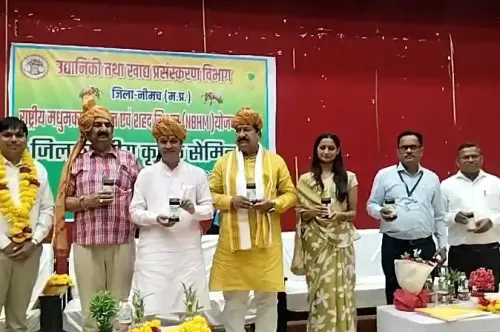
The National Beekeeping and Honey Mission (NBHM) is a Central Sector Scheme initiated by the government aimed at the comprehensive enhancement and development of scientific beekeeping alongside the production of high-quality honey and other beehive products.
Executed through the National Bee Board (NBB), the initiative was introduced under the Atmanirbhar Bharat framework with an allocated budget of Rs 500 crore for a span of three years (FY 2020–21 to 2022–23). It has now been extended for an additional three years (FY 2023–24 to 2025–26), with a remaining budget of ₹370 crore from the initial allocation, as stated.
The Madhukranti portal has been established to facilitate online registration and ensure traceability of honey and other bee products.
India’s varied agro-climatic conditions present vast opportunities for beekeeping, honey production, and export. Acknowledging its significance for rural development and agricultural sustainability, the Centre initiated the NBHM as part of the “Sweet Revolution”, an ambitious program designed to advance apiculture, enhance the quality of honey production, and increase farmers’ incomes through organized and scientific beekeeping.
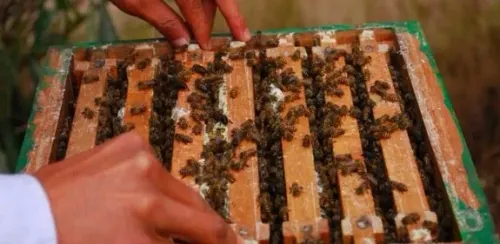
Beekeeping, an agro-based practice undertaken by farmers and landless laborers in rural areas, is a vital component of the Integrated Farming System. It plays a pivotal role in pollination, thus boosting crop yields and farmers’ earnings while providing honey and various high-value beehive products like beeswax, bee pollen, propolis, royal jelly, and bee venom, all of which are crucial for the livelihoods of rural communities.
The NBHM is being executed through three Mini Missions. Mini Mission-I emphasizes enhancing production and productivity of various crops via pollination supported by scientific beekeeping. Mini Mission-II focuses on post-harvest management of beekeeping and beehive products, including collection, processing, storage, marketing, and value addition, while also aiming to develop essential infrastructure for these activities. Mini Mission-III is dedicated to research and technology development tailored to different regions, as noted in the statement.
Point of View
I believe this remarkable achievement reflects India's commitment to agricultural innovation and rural development. The government's initiatives like the NBHM not only enhance honey production but also significantly support the livelihoods of rural communities. This 'Sweet Revolution' signifies a positive step towards sustainability and economic empowerment.
NationPress
24 Sept 2026
Frequently Asked Questions
What is India's ranking in honey exports?
India has recently become the second-largest honey exporter in the world.
How much honey did India export in FY 2023-24?
India exported approximately 1.07 lakh metric tonnes of honey worth $177.55 million.
What is the National Beekeeping and Honey Mission?
The NBHM is a government initiative aimed at promoting scientific beekeeping and the production of quality honey.
What are the goals of the NBHM?
The NBHM aims to enhance honey production, support farmers' income, and promote sustainable agricultural practices.
What is the Madhukranti portal?
The Madhukranti portal facilitates online registration and traceability of honey and bee products.