Did India’s textiles sector see a boost in investment and exports in 2025?
Synopsis
India’s textiles sector is witnessing unprecedented growth, with massive investments and exports in 2025. Government initiatives are paving the way for a thriving industry, aiming for a Vision 2030 target of $100 billion in exports. Discover how these changes are reshaping the landscape of textile production and trade!
Key Takeaways
Significant investment in textile parks to enhance infrastructure.
Exports increased to $37.8 billion, marking a 5% growth.
Vision 2030 aims for $100 billion in textile exports.
GST reductions to stimulate growth and employment.
A focus on sustainability and innovation in the textiles sector.
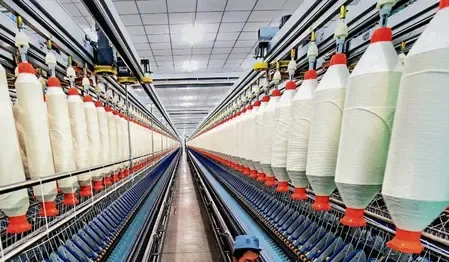
New Delhi, Dec 24 (NationPress) India’s textiles industry experienced a remarkable uptick in investment and exports throughout 2025, driven by government incentives and reforms aimed at enhancing the business environment.
The government has authorized the establishment of seven PM Mega Integrated Textile Region and Apparel (PM MITRA) Parks, featuring world-class infrastructure including a plug-and-play facility, with a total investment of Rs 4,445 crore slated for seven years up to 2027-28. These parks will be developed in Tamil Nadu (Virudhnagar), Telangana (Warangal), Gujarat (Navsari), Karnataka (Kalaburagi), Madhya Pradesh (Dhar), Uttar Pradesh (Lucknow), and Maharashtra (Amravati), as per a statement from the Ministry of Textiles.
Currently, investment MoUs with projected potential exceeding Rs 27,434 crore have been finalized, and all land has been fully acquired and transferred to the special purpose vehicle. Following site approvals from the Centre, infrastructure projects valued at Rs 2,590.99 crore for access up to the park gates have commenced in all seven states.
The government also introduced the National Technical Textiles Mission (NTTM) with a budget of Rs 1,480 crore, focusing on research, market development, education, and export enhancement. This mission aims to boost the utilization of technical textiles in various national initiatives and strategic sectors and has been extended until March 31, 2026.
Textile and apparel exports, including handicrafts, reached $37.8 billion in the fiscal year 2024-25, marking a 5% increase from the previous year and achieving a solid trade surplus of $28.2 billion.
Traditional markets like the US, EU, and UK contributed 55% of exports, while rising markets such as Bangladesh, the UAE, Sri Lanka, Australia, and Canada accounted for 20%.
With over 500 districts across 33 States/UTs actively involved, the Ministry has set an ambitious Vision 2030 target of $100 billion in exports, focusing on enhanced trade partnerships, market diversification, and a strong emphasis on innovation and sustainability — highlighting India’s Bharatiya Vastra Shakti as a hallmark of resilience, craftsmanship, and global competitiveness.
The reduction in GST rates for textiles has been a significant advantage for the sector, further promoting exports. The GST rate on ready-made garments and made-ups has been lowered to 5% for items priced up to Rs 2,500/piece from the previous limit of Rs 1,000.
Additionally, the GST on man-made fibers and yarns dropped from 18% to 5%, while the rate for carpets and floor coverings fell from 12% to 5%.
The GST for 36 handicraft items, including cotton rugs from handlooms and handwoven carpets under HS 5705, has also decreased from 12% to 5%. This adjustment will benefit artisans, improve rural livelihoods, and uphold India’s rich craft heritage.
A total of 168 R&D projects in specialty fiber and applications (including carbon fiber, aramid, alternative materials, and composites) have been approved with a budget of Rs. 520 crore.
Seventy-four applications have been selected under the production-linked investment (PLI) scheme for textiles, with a total proposed investment of Rs 28,711 crore anticipated to generate a turnover of Rs 2,16,760 crore and create jobs for 2,59,164 individuals. Some participant companies have already begun investing in their projects.
The Textiles Trade Promotion (TTP) section has been instrumental in enhancing India’s global textile presence, tracking export performance through eleven Export Promotion Councils. In 2024, India emerged as the sixth largest exporter of textiles and apparel, contributing a substantial 8.63% to India’s total exports and representing 4.1% of global trade.
The cotton sector, a vital component of India’s agricultural economy, supports nearly 6 million farmers and 40-50 million people across the value chain, continuing to play a crucial role in textile production and foreign exchange earnings. In the 2024-25 cotton season, the government, through the Cotton Corporation of India Ltd. (CCI), has successfully procured 525 lakh quintals of seed cotton (100 lakh bales) under MSP operations, disbursing Rs 37,450 crore to farmers — covering 38% of arrivals and 34% of national production.
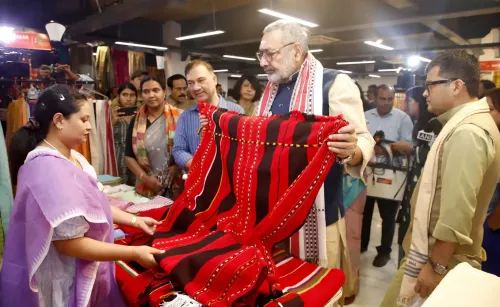
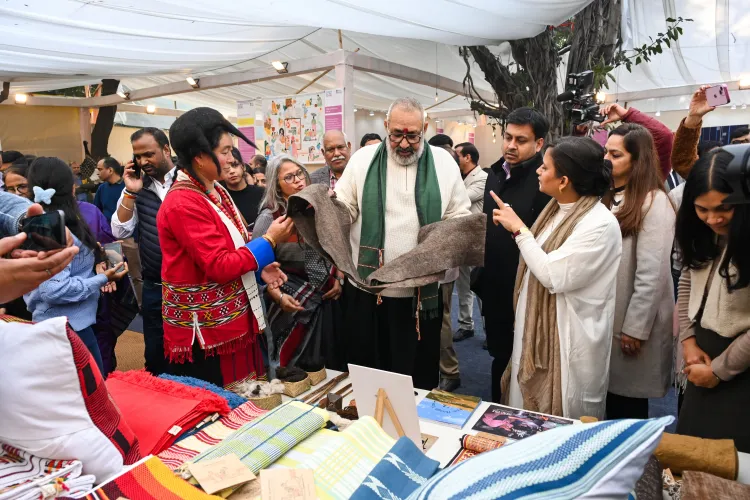
Initiatives like the Handloom Marketing Assistance and related schemes have significantly bolstered India’s handloom ecosystem, combining market promotion, welfare, and raw material support. Over 300 marketing events have been organized to enhance sales, alongside the establishment of 12 Handloom Producer Companies and six Craft Handloom Villages, with two more in progress, integrating craft promotion with tourism.
Furthermore, under the Weavers’ MUDRA Scheme, 11,544 artisans have accessed credit, with welfare coverage expanding to 2.35 lakh enrollments under social security schemes.
Point of View
The textiles sector stands out as a beacon of growth and resilience. With government support and strategic initiatives, the sector is poised to achieve remarkable milestones, benefitting countless artisans and reinforcing India's position in global trade. This positive trajectory reflects the nation's commitment to fostering sustainable development and economic empowerment.
NationPress
20 Sept 2026
Frequently Asked Questions
What is the PM MITRA initiative?
The PM MITRA initiative aims to establish seven integrated textile parks with world-class infrastructure to promote investment and boost the textiles sector.
How much did India's textile exports grow in 2024-25?
India's textile and apparel exports grew by 5%, reaching $37.8 billion in 2024-25.
What is the Vision 2030 target for India's textiles sector?
The Vision 2030 target for India's textiles sector is set at $100 billion in exports, focusing on enhanced trade partnerships and sustainability.
What is the significance of the GST rate reduction?
The reduction in GST rates for textiles is expected to boost exports and ease the financial burden on manufacturers and artisans.
How does the textiles sector impact employment?
The textiles sector is projected to create significant employment opportunities, with the PLI scheme alone expected to generate jobs for over 259,000 individuals.