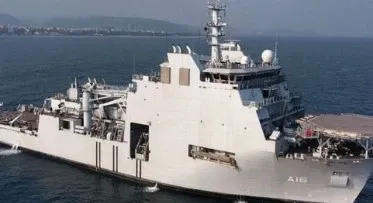
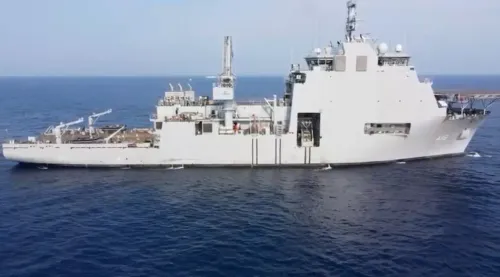
INS Nipun commissioned: Indian Navy adds second DSV for deep-sea, submarine rescue
Synopsis
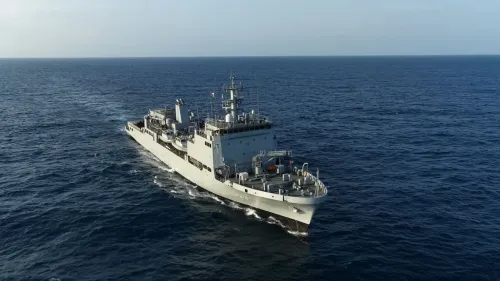
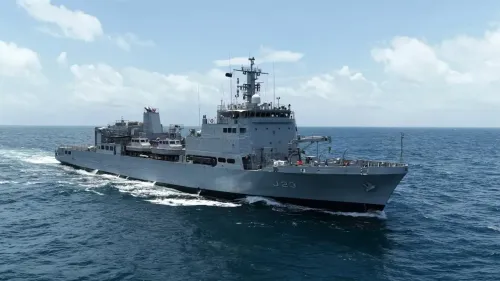
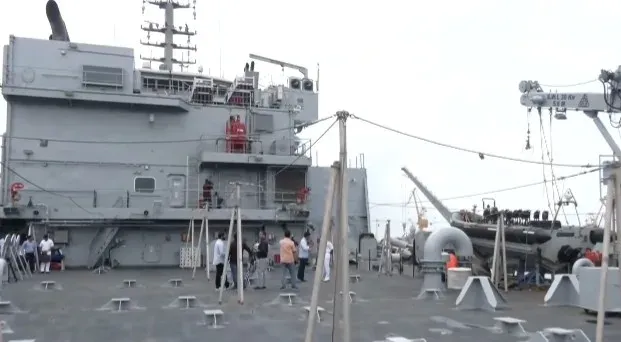
The Indian Navy has commissioned INS Nipun, a purpose-built Diving Support Vessel with over 75 per cent indigenous content, capable of saturation diving and acting as a mothership for submarine rescue systems. It is only the second such specialised platform in the Navy — and its induction signals a serious upgrade to India's underwater emergency response architecture at a time when Indian Ocean operations are intensifying.
Key Takeaways
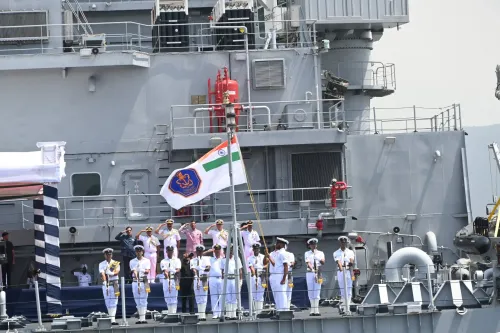
INS Nipun was commissioned into the Indian Navy on 31 August , presided over by Admiral Krishna Swaminathan , Chief of the Naval Staff.
The vessel is the second Diving Support Vessel (DSV) built by Hindustan Shipyard Limited (HSL) , Visakhapatnam .
INS Nipun carries more than 75 per cent indigenous content , making it one of the most locally sourced advanced naval platforms inducted in recent years.
The ship is equipped for saturation diving and can serve as a mothership for submarine rescue systems .
Commanding Officer Captain L.S.
Subramanian described the vessel as 'one of its kind in the Navy, built for deep-diving operations and submarine rescue capabilities.'
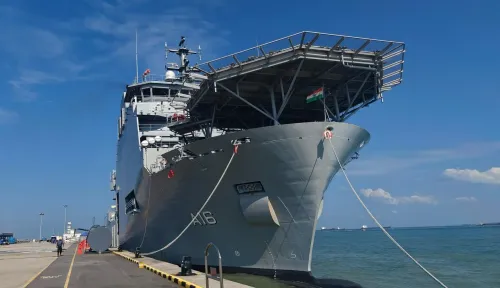
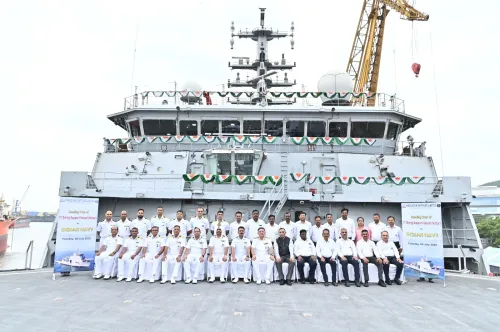
The Indian Navy on 31 August commissioned INS Nipun, the second Diving Support Vessel (DSV) built by Hindustan Shipyard Limited (HSL), Visakhapatnam, significantly bolstering the force's deep-sea diving, underwater intervention, and submarine rescue capabilities. Chief of the Naval Staff Admiral Krishna Swaminathan presided over the commissioning ceremony.
What INS Nipun Brings to the Fleet
INS Nipun is purpose-built for specialised underwater operations, including saturation diving and submarine rescue — roles that demand dedicated platforms rarely found in most regional navies. With more than 75 per cent indigenous content, the vessel represents one of the most locally sourced advanced maritime platforms inducted into the Indian Navy in recent years.
The ship is equipped to function as a mothership for submarine rescue systems, allowing it to deploy rescue assets in emergencies involving submarines in distress. Its saturation-diving capability enables trained divers to undertake prolonged underwater missions with specialised life-support equipment, extending operational reach into deeper waters than conventional diving vessels permit.
Commanding Officer Explains the Vessel's Role
Captain L.S. Subramanian, INS Nipun's Commanding Officer, underscored the vessel's unique position within the Navy's inventory. 'It is one of the indigenous platforms with more than 75 per cent indigenous content. This ship is one of its kind in the Navy, built for deep-diving operations and submarine rescue capabilities,' Captain Subramanian said.
Asked about the ship's weapons systems, Captain Subramanian reframed the question: 'When you talk about weapons, divers are our weapon and our rescue system. This ship is one of its kind, wherein we operate primarily for deep-diving operations.' He added that all equipment aboard has been fitted specifically for saturation diving and to serve as a platform for embarking submarine rescue systems.
Indigenous Shipbuilding Milestone
INS Nipun is the second DSV delivered by HSL to the Indian Navy, following the precedent set by the first vessel in the class. The commissioning reinforces the Navy's strategic push toward indigenously built specialised platforms, aligning with the broader national objective of reducing dependence on foreign-built defence assets. Notably, HSL — a public sector shipyard under the Ministry of Ports, Shipping and Waterways — has been steadily expanding its portfolio of naval construction beyond conventional surface combatants.
This comes amid the Indian Navy's sustained effort to modernise its underwater warfare and rescue infrastructure, a priority that has grown sharper as India's submarine fleet expands and operational deployments in the Indian Ocean Region intensify.
Significance for Underwater Emergency Response
The induction of INS Nipun directly strengthens the Navy's ability to respond to underwater emergencies — a capability that has gained strategic salience following high-profile submarine accidents globally in recent years. A dedicated DSV with saturation-diving and rescue-system deployment capability means the Navy can sustain complex underwater operations for extended durations, rather than relying on improvised or borrowed assets.
With INS Nipun now part of the active fleet, the Indian Navy's specialised maritime support infrastructure takes a meaningful step forward — and attention will turn to how quickly the vessel's crew can be operationally certified for the full range of its deep-water missions.
Point of View
But its dedicated underwater rescue infrastructure has lagged behind. A single DSV class with saturation-diving capability is a start, but the Navy will need to accelerate crew certification and integrate the vessel into joint rescue protocols before it can be called operationally ready. The 75 per cent indigenisation figure is credible progress for HSL, yet the harder test is whether India can sustain and replicate this capability domestically rather than remaining a one-of-a-kind showcase.
NationPress
15 Oct 2026
Frequently Asked Questions
What is INS Nipun and what is its role in the Indian Navy?
INS Nipun is the second Diving Support Vessel (DSV) built by Hindustan Shipyard Limited for the Indian Navy, commissioned on 31 August. It is designed for deep-sea diving, underwater intervention, and submarine rescue operations, and can serve as a mothership for submarine rescue systems.
Who built INS Nipun and how indigenous is the vessel?
INS Nipun was constructed by Hindustan Shipyard Limited (HSL) in Visakhapatnam. The vessel carries more than 75 per cent indigenous content, reflecting a significant reliance on domestic industry for an advanced specialised naval platform.
What is saturation diving and why does it matter for the Navy?
Saturation diving is a technique that allows divers to live and work at depth for extended periods, reducing the physiological risks of repeated decompression. For the Indian Navy, this capability means trained divers can undertake prolonged underwater missions — critical for submarine rescue and deep-sea intervention — that conventional diving methods cannot support.
Who presided over the commissioning ceremony of INS Nipun?
Chief of the Naval Staff Admiral Krishna Swaminathan presided over the commissioning ceremony of INS Nipun on 31 August.
How does INS Nipun strengthen India's submarine rescue capability?
INS Nipun is equipped to deploy submarine rescue systems and act as a dedicated mothership for rescue operations involving submarines in distress. Its saturation-diving capability extends the Navy's operational reach into deeper waters, enabling a more sustained and effective response to underwater emergencies.