Smriti Irani: 'Every corner of India is Ram-filled today'
Synopsis
BJP leader Smriti Irani declared on X that 'every corner of India is filled with Ram' on October 20, 2026, invoking the Rama devotional tradition that has gained new resonance since the Ayodhya temple consecration in January 2024.
Key Takeaways
BJP leader Smriti Irani posted on X on October 20, 2026 , stating 'Aaj Bharat ka kona-kona Rammaय hai' — every corner of India is filled with Ram.
The post was accompanied by a video and reflects broad Hindu festive sentiment.
The message draws on reverence for Lord Rama , the central deity of the Ramayana and symbol of dharma.
It follows the historic consecration of the Ram Janmabhoomi temple in Ayodhya on January 22, 2024 .
BJP leaders have invoked Ramayana themes in public messaging since the Ram Janmabhoomi movement of the 1980s .
A single line. Eight words in Hindi. And yet, on the evening of Tuesday, October 20, 2026, BJP leader and former Union Minister Smriti Irani captured a mood felt across millions of homes with her post on X: 'Aaj Bharat ka kona-kona Rammaय hai' — 'Today, every corner of India is filled with Ram.'
The devotion that unites a billion households
The sentiment Irani invoked is not merely political — it is deeply devotional. Lord Rama, the central deity of the Ramayana epic, is revered across the country as the embodiment of dharma and righteous rule. On days tied to the Rama tradition — be it Ram Navami, Diwali, or associated regional festivals — temples, streets, and homes resonate with bhajans, diyas, and recitations of the Ramayana. Irani's post, accompanied by a video, situates itself squarely in that devotional current.
Ayodhya's shadow over every such message
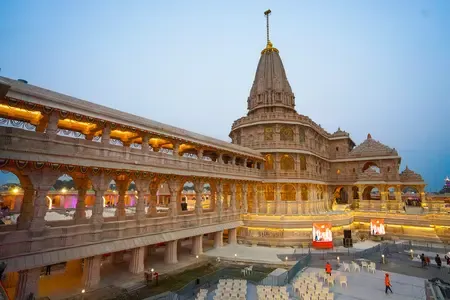
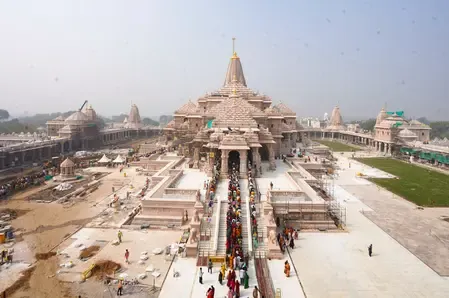
No invocation of Rama in Indian public life today can be read without the backdrop of Ayodhya. The consecration of the Ram Janmabhoomi temple on January 22, 2024 marked a watershed moment in the country's religio-political history — a decades-long movement finally crystallised in stone and ceremony. Since that consecration, expressions of Rama devotion by BJP leaders carry an added resonance: the temple stands, and the faithful are reminded of it with every such post.
A party language three decades in the making
BJP leaders have woven Ramayana imagery into public messaging since the Ram Janmabhoomi movement of the 1980s. What was once a mobilising call is now a governing cultural statement. Irani's eight-word post is the distilled form of that long arc — less a political declaration than a cultural affirmation aimed directly at Hindu devotees who see in Rama not a symbol but a living presence. Brief, warm, and freighted with history, it is a register the party has refined over a generation.
When a leader's shortest post carries its longest echo, the story is not the words — it is the world those words already live inside.
Point of View
Such declarations have shifted from aspiration to assertion, cementing the narrative that the party delivered on a generational promise. For the BJP, the Rama idiom is now not a campaign tool but a governing vocabulary — one that requires no elaboration because it carries three decades of accumulated meaning. The real political work happens in the silence between the words.
NationPress
20 Oct 2026
Frequently Asked Questions
What did Smriti Irani post on X on October 20, 2026?
Smriti Irani posted 'Aaj Bharat ka kona-kona Rammaय hai', meaning 'Today, every corner of India is filled with Ram', along with a video, on October 20, 2026.
Why do BJP leaders frequently reference Lord Rama in their social media posts?
BJP leaders have invoked Ramayana themes since the Ram Janmabhoomi movement of the 1980s, and after the Ayodhya temple consecration in January 2024, such references have become a regular part of the party's cultural and political messaging.
When was the Ram Janmabhoomi temple in Ayodhya consecrated?
The Ram Janmabhoomi temple in Ayodhya was consecrated on January 22, 2024, marking a historic milestone in India's religio-political history.
Who is Lord Rama and why is he significant in India?
Lord Rama is the central deity of the Ramayana epic and is revered across India as the embodiment of dharma and righteous rule, making references to him deeply resonant during Hindu festivals and cultural occasions.
What is the significance of Ayodhya to Rama devotees?
Ayodhya, a city in Uttar Pradesh, is regarded as the birthplace of Lord Rama and is home to the Ram Janmabhoomi temple complex, making it the most sacred site for Rama devotees in India.