CM Conrad Sangma Inaugurates Samandalgre Bridge, Lays AMPT Road Foundation
Synopsis
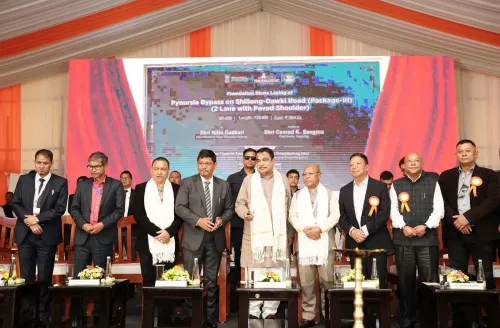
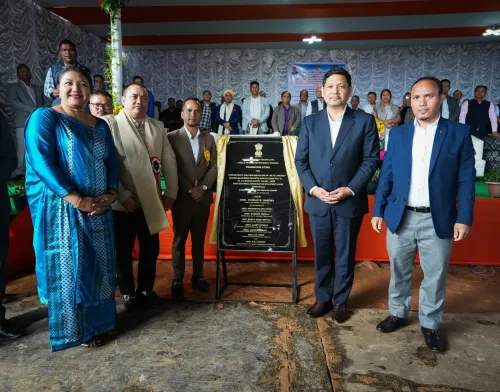
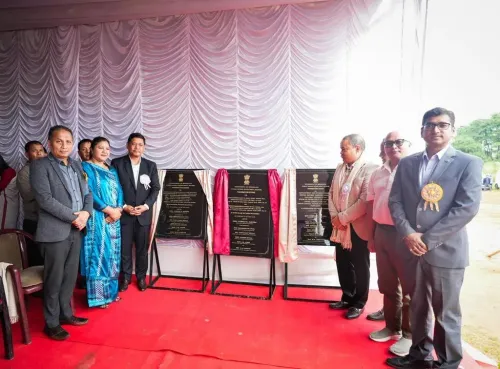
Meghalaya Chief Minister Conrad Sangma inaugurated the Samandalgre suspension bridge at Rerapara and laid the foundation for the AMPT Road (Garobadha–Tura) on October 20, 2026, advancing a state initiative to build over 100 suspension bridges for remote communities.
Key Takeaways
Conrad Sangma inaugurated the suspension bridge at Samandalgre, Rerapara on October 20, 2026 .
The bridge is part of a state initiative to construct over 100 suspension bridges across Meghalaya.
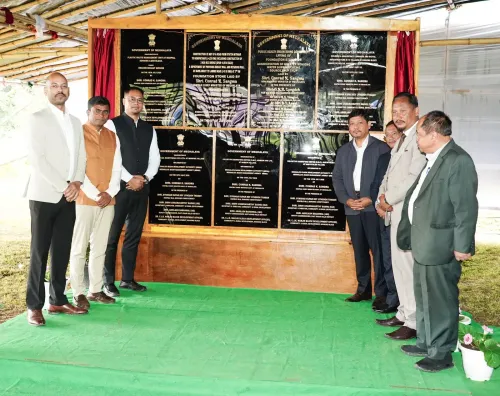
Foundation stone for the AMPT Road (Garobadha–Tura) was also laid during the same visit.
The initiative targets remote habitations with the explicit goal that 'no community is left behind.' The Garobadha–Tura corridor will improve regional access to West Garo Hills and the town of Tura .
Progress on remaining bridges and AMPT Road timelines will determine whether the programme meets its stated scale.
A suspension bridge and a highway foundation stone — on Tuesday, October 20, 2026, Meghalaya Chief Minister Conrad Sangma delivered two infrastructure milestones in a single visit to Rerapara, signalling a deliberate push to stitch together the state's most isolated corners before the next election cycle can reframe the conversation.
What opened at Samandalgre — and why it matters
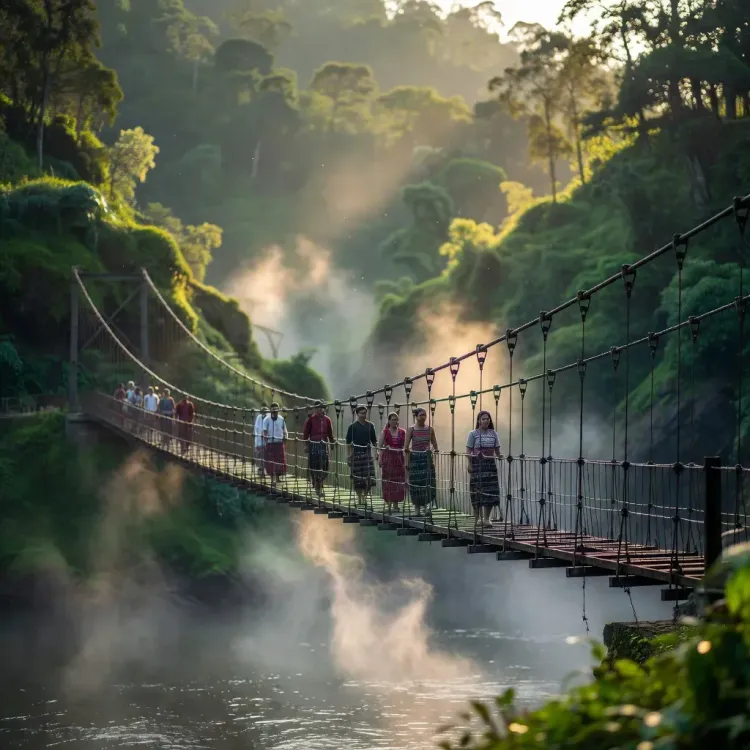
The newly inaugurated suspension bridge at Samandalgre, Rerapara is not a standalone project. Sangma confirmed it is part of a special state initiative to construct over 100 suspension bridges across Meghalaya, explicitly framed around the goal that 'no community is left behind.' In a state where rivers carve deep gorges through forested hills and monsoon-swollen streams can cut off villages for weeks, a suspension bridge is not a ribbon-cutting photo-op — it is a school run, a hospital visit, a market day made possible.
Meghalaya's topography has historically made conventional road-building both expensive and slow. Suspension bridges offer a faster, lower-cost route to last-mile connectivity, and successive state governments have leaned on them for that reason. The current administration's pledge to cross the 100-bridge threshold scales that logic into a programme.
The Garobadha–Tura corridor gets its starting gun
Alongside the bridge inauguration, Sangma laid the foundation for the AMPT Road linking Garobadha to Tura — a corridor that would improve access between the foothills and Tura, the largest town in West Garo Hills and the commercial hub of the Garo belt. Better road access to Tura means shorter travel times to district-level hospitals, colleges, and wholesale markets for communities that currently depend on winding, often damaged, hill roads.
The two projects together trace a pattern: the Sangma government is working both ends of the connectivity problem — micro-links through suspension bridges for the most remote habitations, and arterial roads for medium-distance regional integration.
Northeast's last-mile connectivity imperative
The Northeast has long sat at the intersection of geography and policy ambition. Central schemes channelling funds into the region's road and bridge network have accelerated in the past decade, and state governments have increasingly used those flows to build political narratives around 'connected Meghalaya' or 'connected Northeast.' Sangma's framing — 'vital lifelines that connect communities, improve access to essential services and create new opportunities' — is entirely consistent with that register.
What gives the 100-bridge initiative its news weight is scale. A single bridge is a project; a hundred bridges is a programme that reshapes the map. Progress on the remaining bridges and construction timelines for the AMPT Road will be the real test of whether the ambition holds.
For Meghalaya's most remote communities, today's foundation stones are tomorrow's fastest route to a doctor, a teacher, or a market. That is the measure Sangma has set for himself — and it is now in the public record.
Point of View
Rapid results in the most isolated wards, while arterial roads like the AMPT corridor signal longer-horizon regional ambition. For the NPP, whose base spans both the Khasi hills and the Garo belt, simultaneous action in both zones is politically deliberate. The '100 bridges' framing converts a series of small projects into a singular narrative the party can own — and be held accountable to — as the next state election approaches.
NationPress
20 Oct 2026
Frequently Asked Questions
What is the Samandalgre suspension bridge in Meghalaya?
The Samandalgre suspension bridge is located in the Rerapara area of Meghalaya and was inaugurated by Chief Minister Conrad Sangma on October 20, 2026. It is part of a state initiative to build over 100 suspension bridges to connect remote communities.
What is the AMPT Road in Meghalaya?
The AMPT Road is a road project linking Garobadha to Tura in Meghalaya. Chief Minister Conrad Sangma laid its foundation stone on October 20, 2026, aiming to improve regional connectivity in West Garo Hills.
How many suspension bridges is Meghalaya planning to build?
Meghalaya's state government has announced a special initiative to construct over 100 suspension bridges across the state to connect remote habitations and ensure last-mile connectivity.
Why does Meghalaya rely on suspension bridges for connectivity?
Meghalaya's hilly terrain and river gorges make conventional road-building expensive and slow. Suspension bridges offer a faster, lower-cost solution for linking isolated villages across the state's difficult geography.
Who is Conrad Sangma and what party does he lead?
Conrad Sangma is the Chief Minister of Meghalaya and the national president of the National People's Party (NPP), a regional political party based in the Northeast.