CM Conrad Sangma Hails ₹39,800 Cr Highway Push for Meghalaya
Synopsis
Meghalaya CM Conrad Sangma has welcomed a nearly ₹39,800 crore highway investment package announced by Union Minister Nitin Gadkari during a state visit, covering key corridors including the Shillong–Silchar Greenfield Corridor and Jorabat–Umiam high-speed route, in what Sangma called one of the largest infrastructure transformations in the state's history.
Key Takeaways
Union Minister Nitin Gadkari visited Meghalaya and laid the foundation for ₹3,214 crore worth of National Highway projects.
An additional ₹39,800 crore in highway investments was announced, bringing the total commitment close to ₹40,000 crore .
Key corridors include the Shillong–Silchar Greenfield Corridor , Jorabat–Umiam high-speed corridor , Shillong–Dawki expansion , Tura Bypass , and Pynursla Bypass .
CM Conrad Sangma described the package as 'one of the largest infrastructure transformations in Meghalaya's history.' Projects are expected to boost border trade, reduce travel time, support tourism, and create livelihood opportunities across the state.
The investments align with central programmes including Bharatmala Pariyojana and the Act East Policy .
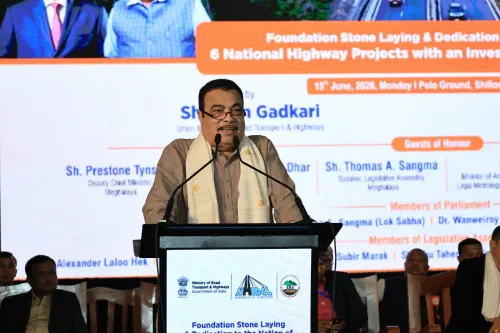
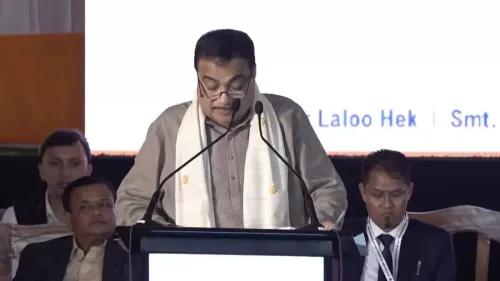
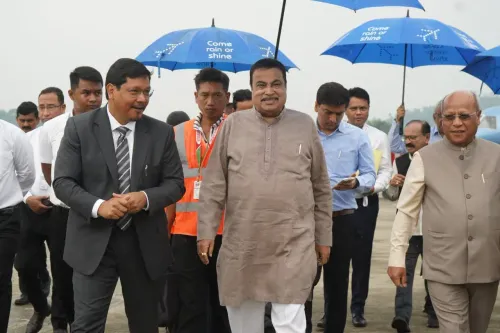
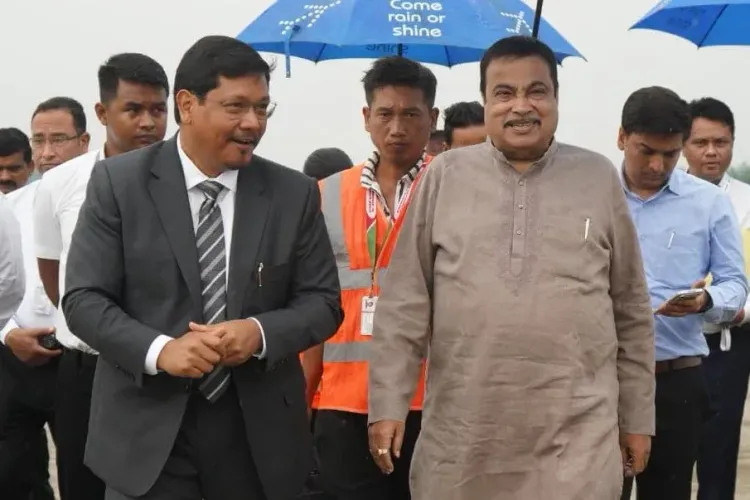
Meghalaya Chief Minister Conrad Sangma on Monday, June 15, 2026, expressed deep gratitude to Union Minister for Road Transport and Highways Nitin Gadkari after Gadkari visited Meghalaya to lay the foundation for ₹3,214 crore worth of National Highway projects and announced an additional package of nearly ₹39,800 crore in highway investments for the state.
Context
In a detailed post on X, CM Sangma listed several transformative corridors covered under the announcement, including the Shillong–Silchar Greenfield Corridor, the Jorabat–Umiam (Barapani) high-speed corridor, Darugiri–Baghmara–Dalu connectivity, Shillong–Dawki expansion, Tura Bypass, and Pynursla Bypass. Sangma described the combined investment as 'one of the largest infrastructure transformations in Meghalaya's history.' He also thanked Prime Minister Narendra Modi for what he called 'the special infrastructure push for Meghalaya.'
The foundation-laying visit by Gadkari marks a significant escalation in central government attention to the state, with the total investment figure approaching ₹40,000 crore when both the foundation-stage projects and the announced pipeline are combined.
Policy Backdrop
The announcements sit within a long-standing federal policy framework aimed at integrating India's Northeast with the national highway grid. The Bharatmala Pariyojana, approved in 2015, set national targets for over 34,000 km of new highways, with explicit priority for border and northeastern states. An earlier programme, the Special Accelerated Road Development Programme for North East (SARDP-NE), launched in 2005, had already identified Meghalaya's hilly terrain and limited road density as a strategic bottleneck.
The Act East Policy, formalised in 2014, further elevated the Northeast's role as a physical bridge between India and Southeast Asia, lending strategic weight to corridors such as the Shillong–Dawki route, which connects to the Bangladesh border. Successive central governments have pursued greenfield alignments and bypasses in the region to reduce travel times and lower logistics costs for cross-border trade.
Stakeholders and Impact
CM Sangma framed the projects as more than roads, stating they would 'unlock economic potential, connect communities, empower farmers, entrepreneurs and youth, and position Meghalaya as a strategic gateway to the North East.' The corridors are expected to reduce travel time between key urban centres, improve access to border trade points, and open interior districts to tourism traffic.
Border communities along the Dawki and Dalu crossings stand to benefit from improved freight movement, while the Tura Bypass and Pynursla Bypass are aimed at decongesting existing town routes. The Ministry of Road Transport and Highways oversees implementation, with tendering, land acquisition, and construction timelines to be confirmed in subsequent project notifications.
What's Next
The pace of delivery will hinge on land acquisition proceedings and the tendering of individual packages under the announced corridors. Progress on the Shillong–Silchar Greenfield Corridor will be closely watched given its cross-state significance connecting Meghalaya with Assam and further into the Northeast. Construction milestones on the Jorabat–Umiam high-speed stretch — a heavily trafficked gateway into Shillong — will serve as an early indicator of delivery pace. The scale of the commitment signals that Meghalaya's infrastructure profile is set to shift considerably over the next development cycle, with implications for regional trade, mobility, and economic integration across the Northeast.
Point of View
000 crore for a single small northeastern state — signals a deliberate federal strategy to accelerate Northeast integration ahead of what are likely to be politically significant state cycles. For the National People's Party, the optics of a Union Minister personally visiting and announcing record infrastructure investment provides CM Sangma with a tangible governance dividend. The emphasis on border trade corridors such as Shillong–Dawki and Darugiri–Dalu also reflects the Act East Policy's deepening operational phase, where physical connectivity is being prioritised as a prerequisite for regional economic diplomacy. Delivery on land acquisition and tendering will ultimately determine whether this announcement translates into the transformative legacy Sangma has articulated.
NationPress
14 Sept 2026
Frequently Asked Questions
What highway projects were announced for Meghalaya by Nitin Gadkari?
Union Minister Nitin Gadkari announced nearly ₹39,800 crore in highway projects for Meghalaya, including the Shillong–Silchar Greenfield Corridor, Jorabat–Umiam high-speed corridor, Darugiri–Baghmara–Dalu connectivity, Shillong–Dawki expansion, Tura Bypass, and Pynursla Bypass, in addition to laying the foundation for ₹3,214 crore worth of National Highway projects during his state visit.
What is the Shillong–Silchar Greenfield Corridor?
The Shillong–Silchar Greenfield Corridor is a proposed new-alignment national highway connecting Meghalaya's capital Shillong with Silchar in Assam, designed to significantly cut travel time and improve connectivity between the two northeastern cities. It is among the flagship projects announced as part of the nearly ₹39,800 crore highway package for Meghalaya.
What is the total highway investment announced for Meghalaya in 2026?
The total highway investment announced for Meghalaya approaches ₹40,000 crore, comprising ₹3,214 crore in projects whose foundation was laid during Gadkari's visit and an additional nearly ₹39,800 crore in projects announced for the state and the broader Northeast.
How does the Meghalaya highway package relate to Bharatmala Pariyojana?
The Meghalaya highway announcements align with the Bharatmala Pariyojana, a central government programme approved in 2015 that targets construction of over 34,000 km of national highways with explicit priority for border and northeastern states. The greenfield corridors and bypasses announced for Meghalaya are consistent with Bharatmala's focus on improving connectivity in strategically important regions.
What is the significance of the Shillong–Dawki road expansion for Meghalaya?
The Shillong–Dawki road expansion is significant because Dawki is a key border crossing point with Bangladesh, and improved highway connectivity is expected to boost cross-border trade, reduce freight costs, and support the broader Act East Policy goal of integrating Northeast India with neighbouring countries.