NVS-03 satellite launched: GSLV-F18 boosts India's NavIC navigation system
Synopsis
ISRO's 20th GSLV mission has placed the NVS-03 satellite into orbit, adding the L1 frequency band and an indigenous atomic clock to India's NavIC navigation network. The launch quietly advances India's push to rival GPS with a homegrown, full-spectrum navigation system — a strategic as much as a scientific milestone.
Key Takeaways
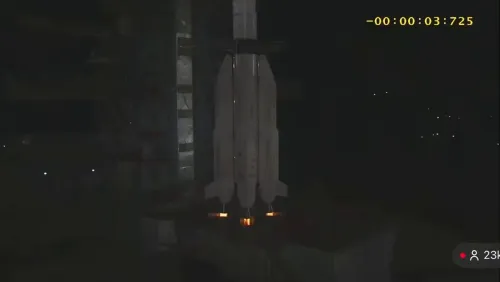
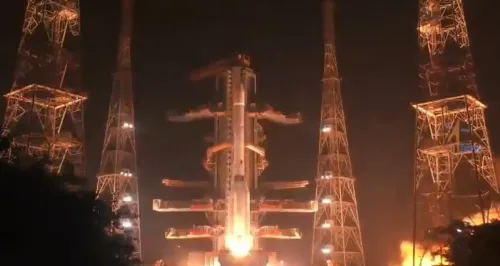
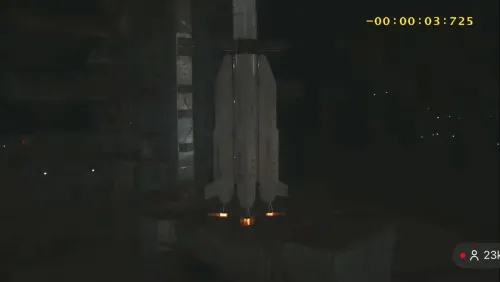
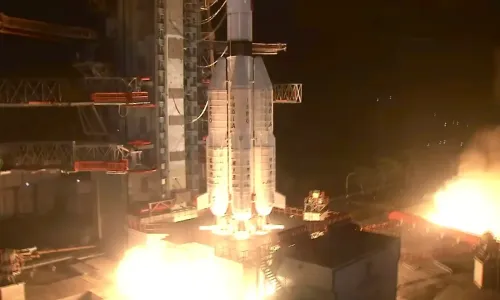
ISRO launched the NVS-03 navigation satellite aboard GSLV-F18 from Sriharikota on Friday night , injecting it into a Geosynchronous Transfer Orbit (GTO) .
This was the 20th flight of India's Geosynchronous Satellite Launch Vehicle.
NVS-03 is the third satellite in ISRO's second-generation NavIC series, adding the L1 frequency band alongside existing L5 and S bands.
The satellite carries an indigenous atomic clock — a key self-reliance milestone in precision timing hardware.
NavIC provides navigation and timing services over India and a region up to 1,500 km beyond its boundaries, with civilian, commercial, and strategic applications.
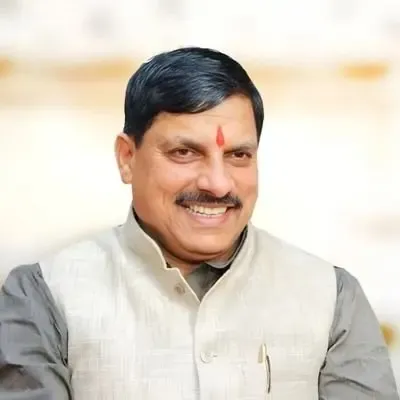
Madhya Pradesh CM Mohan Yadav congratulated ISRO and credited PM Narendra Modi's leadership for India's space achievements.
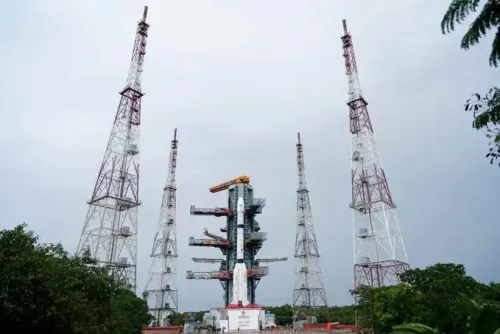
ISRO's GSLV-F18 rocket successfully placed the NVS-03 navigation satellite into a Geosynchronous Transfer Orbit (GTO) on Friday night from the Satish Dhawan Space Centre in Sriharikota, marking a significant step forward in India's bid to fortify its indigenous satellite navigation capabilities. The mission was the 20th flight of India's Geosynchronous Satellite Launch Vehicle, according to ISRO.
What NVS-03 Adds to NavIC
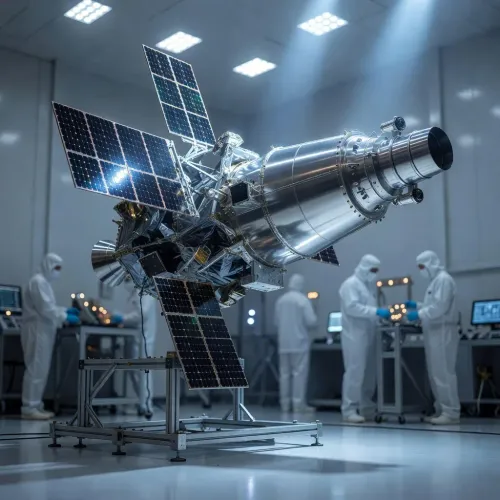
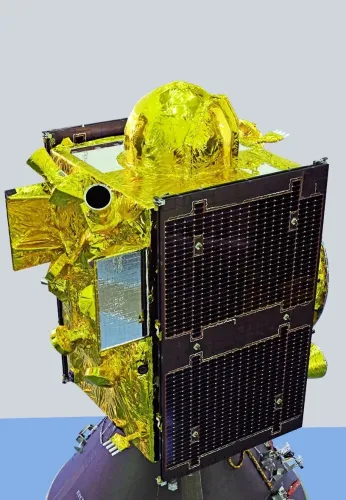
NVS-03 is the third satellite in ISRO's second-generation navigation satellite series, built to ensure continuity and enhance the Navigation with Indian Constellation (NavIC) system. Crucially, the satellite introduces the L1 frequency band alongside the existing L5 and S bands, broadening the operational scope of India's regional navigation network.
The satellite also carries an indigenous atomic clock — a critical onboard technology — in addition to procured atomic clocks, reflecting India's ongoing push towards self-reliance in precision timing hardware.
NavIC's Coverage and Applications
NavIC is engineered to deliver positioning, navigation, and timing services across India's entire landmass and a region extending approximately 1,500 km beyond the country's geopolitical boundary. Its use cases span civilian, commercial, and strategic domains, making it a dual-use national asset with growing importance as India reduces dependence on foreign navigation systems such as the US-operated GPS.
Political Response: MP CM Mohan Yadav Congratulates ISRO
Madhya Pradesh Chief Minister Mohan Yadav on Saturday extended his congratulations to the scientists, engineers, and the entire ISRO team for the successful mission. In a formal statement, he said: 'ISRO has successfully launched the NVS-03 satellite aboard the GSLV-F18 rocket, further strengthening India's indigenous NavIC navigation system. This is a significant achievement in the country's journey towards technological self-reliance.'
Yadav also attributed India's advances in space science and advanced technologies to the leadership of Prime Minister Narendra Modi, saying the country continued to set new milestones under his guidance.
Significance for India's Space Programme
This comes amid a broader acceleration of India's space ambitions, with ISRO pursuing an increasingly ambitious launch calendar. The addition of the L1 band is particularly noteworthy — it aligns NavIC with international navigation standards and could enable compatibility with a wider range of consumer and commercial devices. Notably, the integration of an indigenous atomic clock, even partially, signals progress on a component where India has historically relied on imports.
With NVS-03 now in orbit, India moves closer to a fully operational second-generation NavIC constellation — one with enhanced accuracy, resilience, and reach for both everyday users and defence applications.
Point of View
But the real story is the technical leap buried in the details. Adding the L1 frequency band makes NavIC compatible with a far wider class of devices — potentially accelerating mainstream adoption in smartphones and vehicles. The partial indigenisation of atomic clocks is similarly understated: precision timing hardware has been a long-standing import dependency. Each incremental step matters because NavIC's strategic value — reducing India's reliance on US GPS in conflict scenarios — depends entirely on the constellation being complete, accurate, and resilient. India is not there yet, but NVS-03 moves the needle.
NationPress
31 Oct 2026
Frequently Asked Questions
What is the NVS-03 satellite launched by ISRO?
NVS-03 is the third satellite in ISRO's second-generation navigation satellite series, launched to strengthen India's NavIC navigation system. It was placed into a Geosynchronous Transfer Orbit by the GSLV-F18 rocket from Sriharikota on Friday night.
What new capability does NVS-03 add to NavIC?
NVS-03 introduces the L1 frequency band alongside the existing L5 and S bands, expanding NavIC's compatibility with a broader range of devices. It also carries an indigenous atomic clock, advancing India's self-reliance in precision timing technology.
What is NavIC and what does it cover?
NavIC (Navigation with Indian Constellation) is India's indigenous satellite-based navigation system, providing positioning, navigation, and timing services. It covers India's entire landmass and a region extending approximately 1,500 km beyond the country's geopolitical boundary, with civilian, commercial, and strategic applications.
Which rocket carried NVS-03 into orbit?
The GSLV-F18 rocket carried NVS-03, in the 20th flight of India's Geosynchronous Satellite Launch Vehicle. The launch took place from the Satish Dhawan Space Centre in Sriharikota.
Why did Madhya Pradesh CM Mohan Yadav comment on an ISRO launch?
Chief Minister Mohan Yadav issued a congratulatory statement as part of a broader political acknowledgement of the mission's national significance. He credited Prime Minister Narendra Modi's leadership for India's continued progress in space science and advanced technology.