Is ISRO Taking Steps to Minimize Satellite Collision Risks?
Synopsis
In a significant move, ISRO is implementing measures to mitigate the risk of satellite collisions in low Earth orbit. This includes selecting operational orbits away from congested zones and enhancing Space Situational Awareness. The government aims for zero debris in space by 2030 through innovative strategies and international cooperation.
Key Takeaways
ISRO is taking measures to reduce satellite collision risks.
Operational orbits are chosen away from known crowded areas.
Continuous risk assessments enhance Space Situational Awareness .
The Debris Free Space Mission aims for zero debris by 2030.
India is collaborating internationally for space safety.
New Delhi, Feb 12 (NationPress) To reduce the likelihood of satellite collisions in low Earth orbit caused by congestion, the Department of Space/Indian Space Research Organisation (ISRO) has opted for operational orbits that are situated away from known crowded zones and will execute evasive manoeuvres as needed, the Centre informed the Rajya Sabha on Thursday.
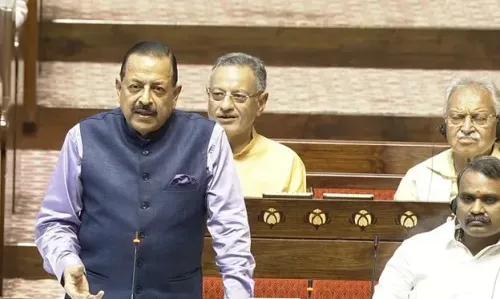
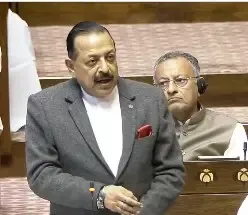
In a written response, Minister of State (MoS) for Science and Technology, Jitendra Singh, stated that additional measures being undertaken by the space agency to enhance Space Situational Awareness (SSA) for Indian satellites include ongoing evaluations of collision risks and executing Collision Avoidance Manoeuvres (CAMs) when necessary.
Responding to a different inquiry, the MoS reported that the total expenditure on the Gaganyaan program as of January 2026 is approximately Rs 6,018 crore.
Regarding satellite collision issues, MoS Singh mentioned the establishment of indigenous facilities to monitor space objects under the Network for Space Object Tracking and Analysis (NETRA) project, among other initiatives.
He also shared details about the Union government's comprehensive strategy to achieve zero debris in space, with the Debris Free Space Mission (DFSM) announced by ISRO in 2024 targeting zero debris from all Indian entities, both governmental and private, by 2030.
The MoS indicated that ISRO has formalized processes to ensure additional fuel margins for both spacecraft and launch vehicles for proper post-mission disposal.
Studies are currently being conducted on rendezvous and proximity operations along with robotic arms as preliminary steps for active debris removal, he added.
MoS Singh emphasized that India actively participates in international cooperation frameworks such as the Inter-Agency Debris Coordination Committee (IADC), the United Nations Working Group on Long Term Sustainability (UN-LTS), and provides technical contributions in these forums.
“Significant progress has been made in implementing these measures such as the end-of-life deorbiting and passivation of SCATSAT to shorten its orbital lifespan and the disposal of IRNSS-1D to a super-synchronous graveyard orbit while ensuring passivation to prevent interference with operational satellites,” MoS Singh added.
Point of View
It is crucial for us to recognize the proactive measures being taken by ISRO to ensure the safety of our satellites and the sustainability of space. The initiative not only reflects India's commitment to responsible space exploration but also positions us as a leader in international space safety efforts. It is essential for the nation to support and follow these advancements closely, as they have far-reaching implications for our technological future.
NationPress
3 Oct 2026
Frequently Asked Questions
What measures is ISRO taking to prevent satellite collisions?
ISRO is opting for operational orbits away from crowded zones and performing Collision Avoidance Manoeuvres when necessary. They are also enhancing Space Situational Awareness through continuous risk assessments.
What is the Debris Free Space Mission?
The Debris Free Space Mission aims to achieve zero debris from all Indian entities, both government and private, by 2030, with innovative strategies to manage space debris.
How much has been spent on the Gaganyaan program?
As of January 2026, the cumulative expenditure on the Gaganyaan program stands at approximately Rs 6,018 crore.
What role does India play in international space safety frameworks?
India actively participates in international cooperation frameworks like the Inter-Agency Debris Coordination Committee (IADC) and contributes technically to various forums.
What is the significance of the SCATSAT and IRNSS-1D actions?
The end-of-life deorbiting of SCATSAT and the disposal of IRNSS-1D to a super-synchronous graveyard orbit are crucial steps to reduce orbital clutter and avoid interference with operational satellites.