Jaipur Municipal Corporation polls: 13 nominations filed across 9 wards on Day 1
Synopsis
Jaipur's municipal election season opened quietly — just 13 nomination papers across 9 of 150 wards on Day 1. The real rush is still ahead: with BJP and Congress yet to announce candidates and only two working days left in the nomination window, the next 48 hours will define the contest's shape.
Key Takeaways
13 nomination papers were filed by 11 candidates on the opening day of Jaipur Municipal Corporation elections, 27 August .
Filings covered only 9 of 150 wards ; the remaining 141 wards saw no nominations on Day 1.
Eight papers were filed by independents; four by candidates identifying with Congress , though the party has not yet allotted symbols.
The next filing dates are 29 August and 31 August only — 28 August is a Raksha Bandhan holiday and 30 August is a Sunday.
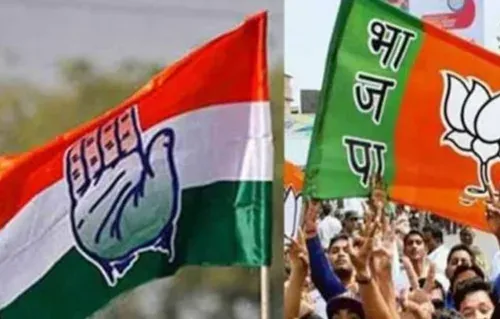
Both BJP and Congress are yet to release their official candidate lists, with the bulk of nominations expected in the final two days.
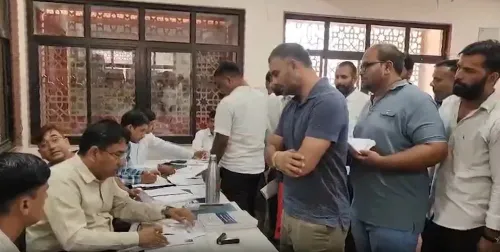
The nomination process for the Jaipur Municipal Corporation elections got underway on Thursday, 27 August, with 11 candidates filing 13 nomination papers across nine wards on the opening day — a modest start to what is expected to become a crowded contest once the Bharatiya Janata Party (BJP) and Indian National Congress (Congress) release their official candidate lists.
How Day 1 Unfolded
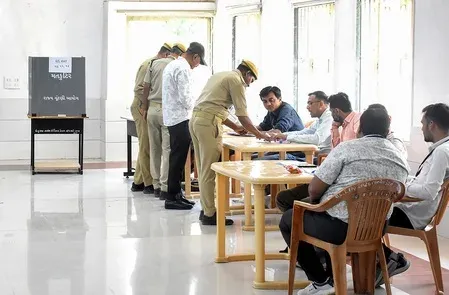
According to the District Election Branch, filing windows were open from 10:15 am to 3 pm at Returning Officer offices established at 15 locations across Jaipur. Nominations were received for Ward Nos. 148, 99, 50, 12, 14, 16, 25, 31 and 40 — covering just nine of the corporation's 150 wards. The remaining 141 wards saw no filings on the opening day.
Party-wise Breakdown
Of the 13 papers filed, eight were submitted by independent candidates and four by candidates who identified themselves with the Congress, even though the party has not yet formally allotted election symbols. Two candidates filed two papers each — one as a party nominee and one as an independent — a common hedge that candidates use before official ticket announcements are made.
Why Early Filing Matters
Officials noted that candidates are filing ahead of formal ticket announcements largely because of the compressed election schedule. The nomination window is now limited to 29 August and 31 August only. 28 August has been declared a holiday on account of Raksha Bandhan, while 30 August falls on a Sunday, keeping Returning Officer offices shut on both days. This leaves candidates with just two working days to complete the process.
What to Expect Next
With both the BJP and Congress yet to announce their official candidate lists for the 150-ward corporation, the bulk of nominations is expected to pour in over the remaining filing days. Once party tickets are formalised, the number of papers is likely to rise sharply. The Jaipur Municipal Corporation elections are closely watched as a bellwether for urban political sentiment in Rajasthan.
Point of View
But it is not unusual — candidates file early to preserve options before party tickets are confirmed, especially when the schedule is tight. The real story here is structural: two effective filing days, a holiday and a Sunday sandwiched in between, and neither major party having released its lists yet. That compression favours incumbents and well-networked independents who can move fast. If BJP and Congress delay their lists to the last day, fresher or outsider candidates may simply run out of time — a quiet but consequential feature of how the schedule was designed.
NationPress
12 Oct 2026
Frequently Asked Questions
When did Jaipur Municipal Corporation election nominations begin?
Nominations opened on Thursday, 27 August, with filing accepted between 10:15 am and 3 pm at Returning Officer offices across 15 locations in Jaipur. The process will continue on 29 August and 31 August only.
How many nominations were filed on the first day?
Eleven candidates filed 13 nomination papers on the opening day, covering nine of the corporation's 150 wards. The remaining 141 wards saw no filings on Day 1.
Why are candidates filing nominations before BJP and Congress announce their lists?
Officials attribute early filing to the tight election schedule, which leaves only two working days for nominations. Candidates hedge by filing both as party nominees and as independents before official tickets are confirmed.
Which wards received nominations on Day 1?
Nominations were filed for Ward Nos. 148, 99, 50, 12, 14, 16, 25, 31, and 40 out of 150 total wards in the Jaipur Municipal Corporation.
When is the last date to file nominations for the Jaipur Municipal Corporation elections?
The final nomination date is 31 August. No filings will be accepted on 28 August due to the Raksha Bandhan holiday or on 30 August, which is a Sunday.