Jaipur deaf school protest: Principal suspended, probe ordered amid Congress pressure

Synopsis
A student protest at one of Rajasthan's oldest institutions for hearing and speech-impaired learners has forced the state government's hand — triggering the suspension of the school's former principal and a formal departmental inquiry, even as Congress heavyweights Ashok Gehlot and Sachin Pilot publicly back the students against the Bhajan Lal Sharma administration.
Key Takeaways
The Rajasthan government suspended former principal Bharat Joshi under Rule 16 of the Rajasthan Civil Services Rules following disciplinary proceedings.
A departmental inquiry has been ordered into allegations of mismanagement at the Government Seth Anandilal Poddar School for the Hearing and Speech Impaired , Jaipur .
Chief Block Education Officer Mukul Kavia has been directed to personally head the inquiry committee and submit an urgent report.
Former Chief Minister Ashok Gehlot visited the school and urged CM Bhajan Lal Sharma to form a special committee to resolve student grievances.
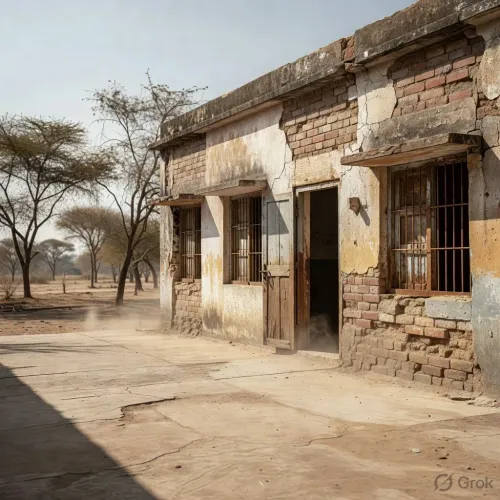
Congress leader Sachin Pilot alleged the school had suffered years of administrative neglect, citing a dilapidated building and shortage of trained teachers.
The school, established before Independence, has educated thousands of hearing and speech-impaired students over the decades.
The Rajasthan government suspended Bharat Joshi, former principal of the Government Seth Anandilal Poddar School for the Hearing and Speech Impaired in Jaipur, and ordered a departmental inquiry into allegations of mismanagement on 6 August, as a student protest at one of the state's oldest institutions for differently-abled learners escalated into a significant political and administrative crisis. Senior Congress leaders Ashok Gehlot and Sachin Pilot threw their weight behind the protesting students, demanding swift government intervention.
What the Students Are Demanding
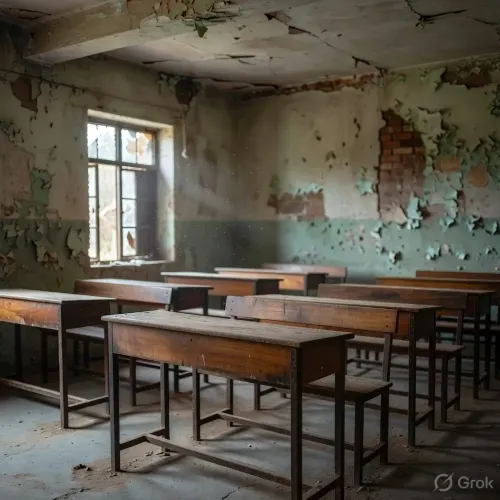
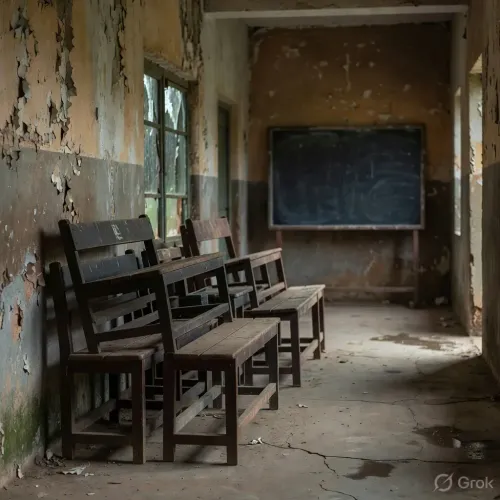
Students at the pre-Independence-era school have been staging an agitation over a range of long-pending grievances: the deteriorating condition of the school building, a shortage of trained teachers, inadequate infrastructure, and poor educational facilities. Their demands include immediate structural repairs, appointment of qualified teachers, and improved learning resources to ensure uninterrupted education.
The protest has drawn renewed attention to an institution that has educated thousands of hearing and speech-impaired students over several decades, yet reportedly struggles with basic administrative upkeep.
Government Action: Suspension and Inquiry
The School Education Department initiated disciplinary proceedings against Bharat Joshi under Rule 16 of the Rajasthan Civil Services (Classification, Control and Appeal) Rules, 1958, suspending him shortly after he had been relieved from the school following a promotion to District Education Officer (DEO). Joshi will receive a subsistence allowance during the suspension period, and his headquarters has been fixed at the Office of the Director of Secondary Education (Bikaner).
Separately, the Joint Director of School Education (Jaipur Division), Manju Sharma, directed Chief Block Education Officer (Jaipur East) Mukul Kavia to personally lead an inquiry committee and submit a detailed report on an urgent basis. The committee has been tasked with investigating the specific allegations raised during the protest and recommending disciplinary action against those found responsible.
Notably, while the suspension order against Joshi does not explicitly cite the student protest as its trigger, the inquiry order directly references the ongoing demonstration and the allegations of mismanagement at the school.
Congress Leaders Weigh In
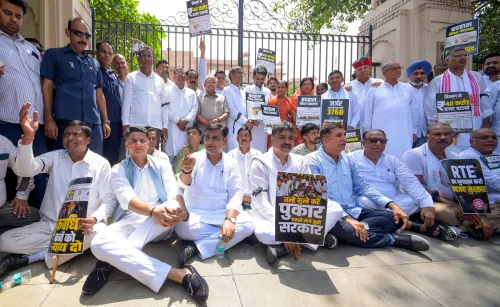
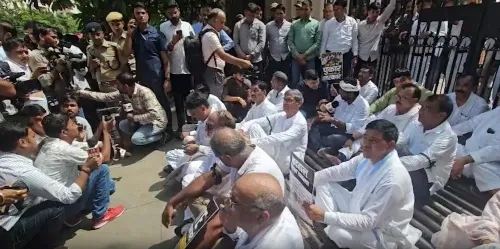
Former Chief Minister Ashok Gehlot visited the school and met the protesting students in person. Describing the situation as unfortunate, he said it was distressing that differently-abled children were compelled to take to the streets to make the government hear their concerns. Gehlot urged Chief Minister Bhajan Lal Sharma to constitute a special committee to resolve all outstanding issues at the earliest, so that the students' education is not disrupted.
Drawing on his own record, Gehlot recalled that nearly 45 years ago, after being elected as a Member of Parliament from Jodhpur, he had helped establish the Gandhi School for the Hearing and Speech Impaired, which has since grown into a college. He argued that institutions serving differently-abled students deserve special attention and sustained infrastructure investment.
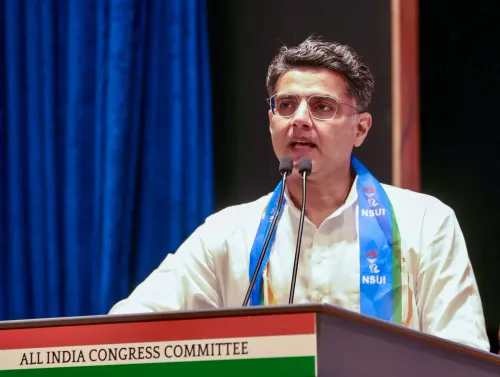
Congress leader Sachin Pilot also criticised the state government, alleging that the school — once regarded as a centre of quality education — had been allowed to fall into administrative neglect. He contended that the dilapidated building, shortage of trained teachers, and absence of basic facilities had left students with no option but to protest.
What Happens Next
With the suspension of the former principal, the launch of a formal departmental inquiry, and vocal opposition from senior Congress leaders, the campus agitation has evolved into a broader political and administrative matter. The findings of the inquiry committee are now expected to determine the state government's next course of action — and whether the students' demands will be met in full.
Point of View
Even as the parallel inquiry order does exactly that. This disconnect raises a question mainstream coverage has largely skipped: if the mismanagement was serious enough to warrant an urgent probe, why did it take a street protest by differently-abled children to trigger it? With Gehlot and Pilot amplifying the issue ahead of local political cycles, the ruling Bharatiya Janata Party faces pressure that goes beyond one school — it touches the broader narrative of governance for marginalised communities in Rajasthan.
NationPress
20 Sept 2026
Frequently Asked Questions
Why were students protesting at the Jaipur deaf school?
Students of the Government Seth Anandilal Poddar School for the Hearing and Speech Impaired in Jaipur have been protesting over long-pending issues including a deteriorating school building, shortage of trained teachers, inadequate infrastructure, and poor educational facilities. They are demanding immediate repairs, qualified staff appointments, and better learning resources.
Who is Bharat Joshi and why was he suspended?
Bharat Joshi was the former principal of the school who had recently been promoted as District Education Officer (DEO). The Rajasthan School Education Department initiated disciplinary proceedings against him under Rule 16 of the Rajasthan Civil Services (Classification, Control and Appeal) Rules, 1958, and suspended him shortly after he was relieved from the school. He will receive a subsistence allowance during the suspension period.
What has the Rajasthan government ordered in response to the protest?
The government has taken two parallel actions: it suspended former principal Bharat Joshi under civil service disciplinary rules, and ordered a departmental inquiry into allegations of mismanagement. Chief Block Education Officer Mukul Kavia has been asked to personally head the inquiry committee and submit a detailed, urgent report.
What did Ashok Gehlot and Sachin Pilot say about the protest?
Former Chief Minister Ashok Gehlot visited the school, called the situation distressing, and urged Chief Minister Bhajan Lal Sharma to form a special committee to resolve all issues without further delay. Congress leader Sachin Pilot alleged the school had suffered administrative neglect, pointing to the dilapidated building and shortage of trained teachers as evidence.
What is the history of the Government Seth Anandilal Poddar School?
The school was established before India's Independence and has educated thousands of hearing and speech-impaired students over the decades. It is considered one of Rajasthan's oldest institutions serving differently-abled learners, though it has reportedly struggled with infrastructure and staffing in recent years.