Jaipur cracker factory fire: 2 cops suspended, 5 units sealed after 8 die
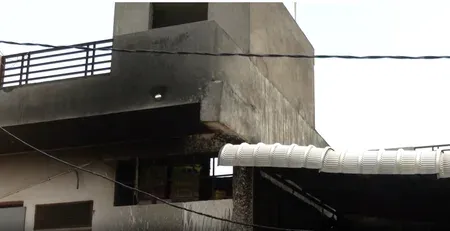
Synopsis
Eight people, including a child, died in a Jaipur firecracker factory fire on 10 June — and within 24 hours, two police personnel were suspended and five warehouses sealed. The accused factory owners are absconding, gunpowder was found across multiple sites, and investigators are now asking how such a large illegal operation ran undetected in a residential colony.
Key Takeaways
A fire at an illegal firecracker factory in Khoh Nagorian, Jaipur on 10 June killed eight people , including a child and two brothers.
ASI Amar Singh and Head Constable Pappu Ram of Khoh Nagorian police station were suspended on Wednesday .
Authorities sealed five factories and warehouses ; large quantities of illegally stored gunpowder were recovered.
Main accused Yakub (property owner) and Firoz (alleged factory operator, Delhi) have been absconding since the incident.
The factory was allegedly producing 'cold fire' crackers; the premises had been divided by a wall to conceal operations.
As of Wednesday afternoon, no arrests had been made despite ongoing raids.
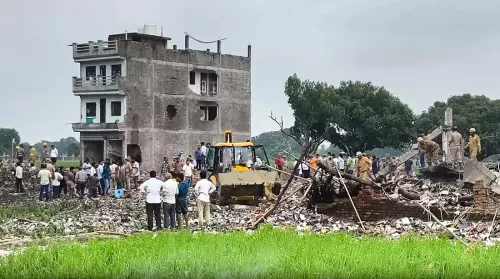
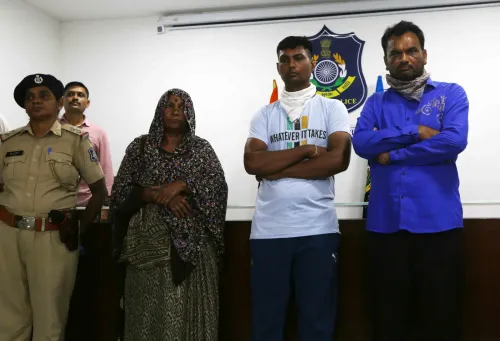
A fire at an illegal firecracker factory in Jaipur's Khoh Nagorian area on Tuesday, 10 June killed eight people, including a child and two brothers, triggering swift administrative action. By Wednesday, two police personnel from Khoh Nagorian police station — Assistant Sub-Inspector (ASI) Amar Singh and Head Constable Pappu Ram — had been suspended, and authorities had sealed five factories and warehouses linked to the illegal operation.
How the Fire Unfolded
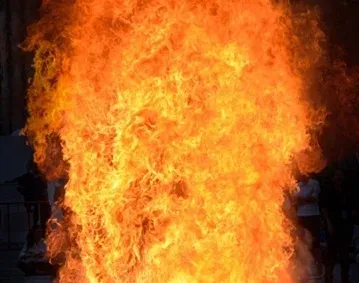
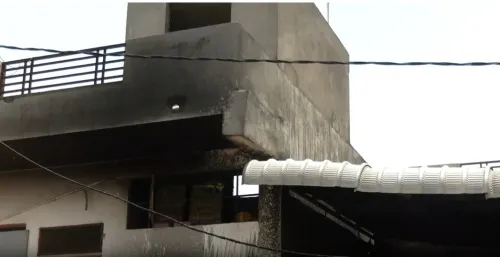
The blaze broke out at approximately 11 am on Tuesday at a property in Ayesha Colony, Khoh Nagorian, where an illegal firecracker manufacturing unit was allegedly operating. Preliminary investigations indicate the unit was producing 'cold fire' crackers — the kind commonly used at weddings and celebrations. The property belongs to Yakub, son of Nazir Khan, a resident of Rakshya Ki Dhani in the Khoh Nagorian area. The alleged factory operator, Firoz, a resident of Delhi, has been absconding since the incident. Both Yakub and his nephew Qayyum have been named as main accused in the case.
Police Action and Raids
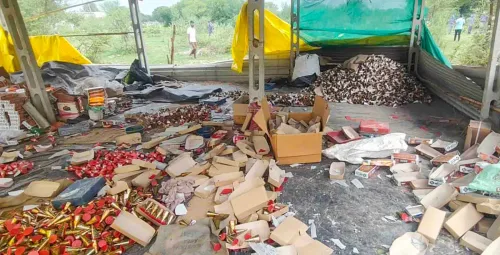
Since Tuesday night, police teams have conducted raids across Khoh Nagorian and adjoining localities. During operations in Javed Vihar, three warehouses at a single premises were sealed, and investigators recovered two machines allegedly used for manufacturing firecrackers. Large quantities of illegally stored gunpowder were also recovered from three separate factories and warehouses. Raids were additionally carried out at several houses in Ayesha Colony, where firecrackers were allegedly being produced. As of Wednesday afternoon, however, no arrests had been made.
How the Operation Was Concealed
Investigators found that the house had been physically divided into two sections by a wall — allegedly to facilitate manufacturing while concealing the operation from public view. Officials noted the warehouses were being used for both production and storage of explosive materials. The facilities are reportedly linked to Yakub and Qayyum, both of whom remain at large.
Accountability and Administrative Lapses
The tragedy has prompted serious allegations of administrative failure and police inaction. The suspension of ASI Amar Singh and Head Constable Pappu Ram signals that authorities are under pressure to establish accountability. Investigators are now examining how a large-scale illegal firecracker unit managed to operate in a densely populated residential area despite repeated concerns over safety and regulatory compliance. This is among the deadliest industrial accidents in Jaipur in recent years.
What Comes Next
Authorities continue to widen the crackdown on illegal firecracker manufacturing units in the region. With the two primary accused still absconding, the investigation is expected to intensify in the coming days. The absence of arrests as of Wednesday afternoon suggests the operation is still in early stages, and further sealed premises and potential detentions remain likely.
Point of View
Not accountability — the real question is how an illegal firecracker unit producing explosive materials operated inside a densely populated residential colony without triggering enforcement action. Rajasthan has seen recurring illegal firecracker tragedies, and the pattern is familiar: raids follow fatalities, accused abscond, and systemic failure gets buried under procedural action. Until the investigation addresses who enabled this operation — not just who ran it — the suspensions risk being the end of the story rather than the beginning of one.
NationPress
26 Oct 2026
Frequently Asked Questions
What happened at the Jaipur firecracker factory on 10 June?
A fire broke out at approximately 11 am on 10 June at an illegal firecracker manufacturing unit in Ayesha Colony, Khoh Nagorian, Jaipur, killing eight people including a child and two brothers. The factory was allegedly producing 'cold fire' crackers used at weddings and celebrations.
Why were two police personnel suspended after the Jaipur fire?
ASI Amar Singh and Head Constable Pappu Ram of Khoh Nagorian police station were suspended on Wednesday following allegations of administrative lapses and police inaction that allowed the illegal factory to operate. Their suspension came a day after the fatal fire.
Who are the accused in the Jaipur firecracker factory fire case?
The main accused are Yakub, the property owner and son of Nazir Khan, and Firoz, the alleged factory operator and a Delhi resident. Yakub's nephew Qayyum has also been named as an accused. All three were absconding as of Wednesday afternoon.
How many units have been sealed following the Jaipur factory fire?
Authorities have sealed five factories and warehouses in total — one in Ayesha Colony and three in Javed Vihar linked to the accused. Two machines allegedly used for firecracker manufacturing were also recovered during raids.
Why was the illegal factory difficult to detect?
Investigators found the premises had been physically divided into two sections by a wall, allegedly to conceal manufacturing activity from public view. The warehouses were reportedly used for both production and storage of explosive materials in a densely populated residential area.