Jaipur road deaths rise 3.1% in 2025 despite fewer accidents, fatality rate hits 5-year high
Synopsis
Jaipur's roads are getting a perverse report card: fewer crashes, more funerals. With fatalities up 3.1% to 1,273 even as accidents fell 5.6%, the city's fatality rate has hit a five-year high of 34.7 deaths per 100 crashes. The data signals a fundamental shift — Rajasthan's road safety battle is no longer about preventing collisions, but about surviving them.
Key Takeaways
Jaipur recorded 3,664 road accidents in 2025 , a 5.6% decline from 2024 — but fatalities rose 3.1% to 1,273 deaths .
The fatality rate reached 34.7 deaths per 100 accidents , the highest in five years.
Jaipur Rural was the deadliest zone, accounting for 426 deaths out of 805 accidents — roughly one in three Jaipur-region fatalities.
Jaipur North had only 218 accidents , yet deaths climbed from 58 to 71 , illustrating the severity trend even in low-crash areas.
Rajasthan Police issued 97,954 challans in the first five days of a statewide enforcement drive from 2–16 July 2026 .
Authorities say behavioural change, safer highway engineering, and improved trauma response are essential alongside enforcement.
Jaipur's road safety data for 2025 presents a troubling paradox: the city recorded 3,664 road accidents — a 5.6% decline from the previous year — yet fatalities climbed by 3.1% to 1,273 deaths, pushing the fatality rate to 34.7 deaths per 100 accidents, the highest in five years. The figures, drawn from Jaipur East, West, North, South and Rural police districts, confirm that crash severity, not crash frequency, has become Rajasthan's defining road safety crisis.
Five Years of Data Reveal a Dangerous Shift
The trend becomes starker when viewed across half a decade. Jaipur recorded 3,205 accidents and 1,106 deaths in 2021. Both figures surged in 2022 — accidents peaked at 3,935 and fatalities at 1,327. From 2023 onwards, accident counts fell steadily: 3,893 in 2023, 3,881 in 2024, and 3,664 in 2025. Deaths, however, have not tracked the same downward path, remaining above 1,200 annually for three consecutive years.
This decoupling — fewer crashes, but more lethal ones — points to structural problems that accident-reduction campaigns alone cannot address: excessive speed, high-risk overtaking, distracted driving, heavy-vehicle dominance on highways, and inadequate trauma response infrastructure.
Recent Tragedies Illustrate the Pattern
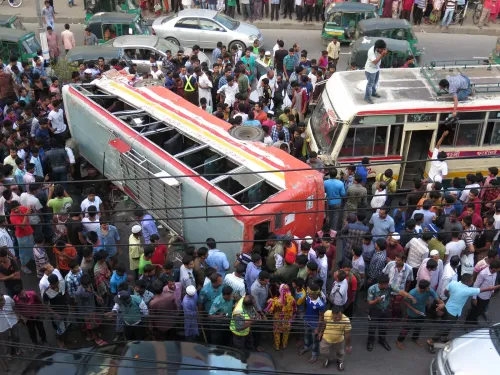
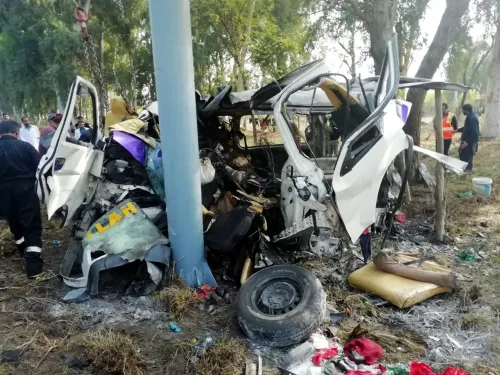
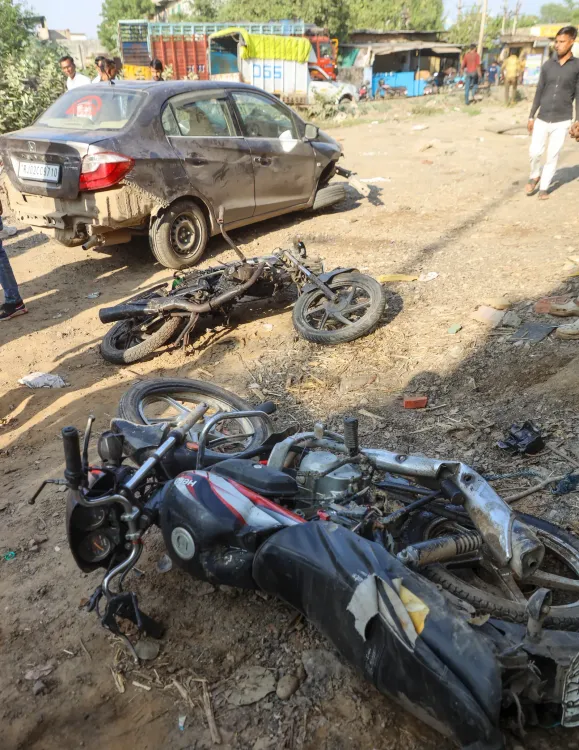
The statistics are not abstract. Earlier this week, four members of a family waiting near a bus stop on the Jaipur–Ajmer Highway were killed after a speeding trailer broke through a roadside barrier and struck them. A day later, a young woman on a motorcycle died after colliding with a heavy vehicle on the same stretch. Days prior, two people lost their lives when their car hit a container truck on the highway.
Taken together, these incidents illustrate a pattern of high-speed crashes involving heavy vehicles on highways — corridors where a single error routinely proves fatal.
District-Level Breakdown
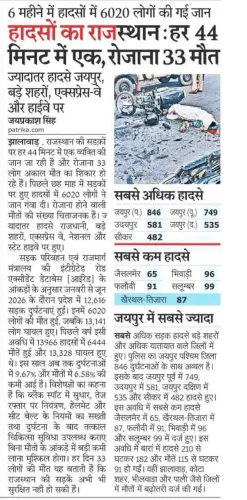
Jaipur Rural emerged as the most vulnerable zone, logging 805 accidents and 426 deaths — roughly one in every three road fatalities across the Jaipur region. It was also the only district where accident numbers increased year-on-year. Jaipur East recorded the highest accident count at 1,011, followed by Jaipur West at 964.
Jaipur South showed the most meaningful progress, with accidents falling from 783 to 666 and deaths declining from 216 to 184. Jaipur North registered the fewest accidents at 218, yet deaths rose from 58 to 71 — underscoring that even low-accident zones are not insulated from the severity trend.
What the Authorities Are Doing
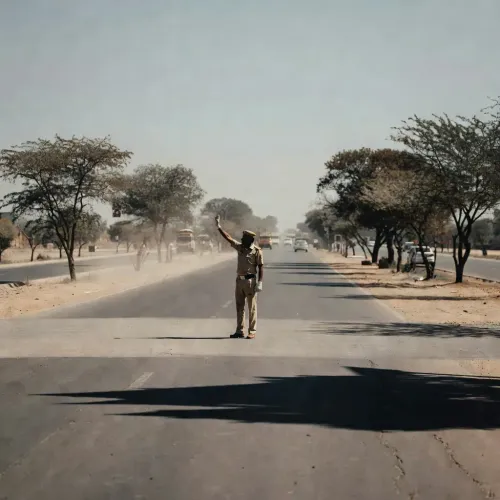
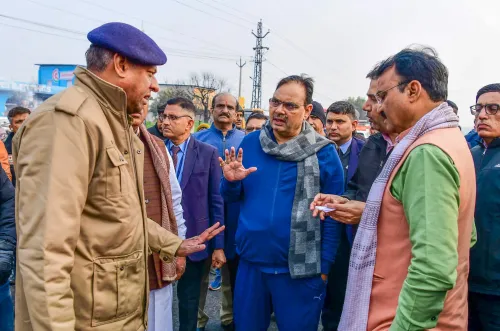
Traffic SP Yogesh Goyal said Jaipur is deploying more personnel, installing additional traffic signals, and expanding IT-enabled enforcement. He acknowledged, however, that the deeper challenge lies beyond city limits. 'The bigger challenge lies in rural areas, where traffic management infrastructure is limited and compliance with traffic rules remains poor. Along with stricter enforcement, we need behavioural change among drivers and pedestrians,' he said.
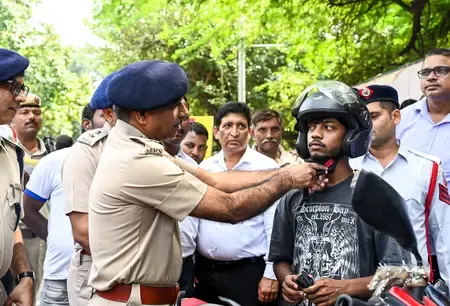
Rajasthan Police launched a statewide special traffic enforcement campaign from 2 July to 16 July 2026, under directions from DGP Rajiv Kumar Sharma and the supervision of DGP (Traffic) Anil Paliwal. Additional Director General of Police (Traffic) Dr. B.L. Meena said the campaign targeted accident reduction, helmet compliance, and highway discipline, with messaging centred on 'No travel without a helmet' and the use of ISI-certified helmets.
In the campaign's first five days (2–6 July), police issued 97,954 challans under the Motor Vehicles Act. On 6 July alone, action was taken against 19,901 motorists — including 8,447 helmet violators, 5,019 overspeeding drivers, 3,369 vehicles parked illegally, and 3,066 motorists violating lane discipline.
The Road Ahead
Enforcement campaigns can shift behaviour at the margins, but experts argue that reversing the fatality trend will require a broader response: safer highway engineering, better-lit rural roads, faster trauma care, and sustained pressure on heavy-vehicle operators. A falling accident count, without a falling death count, is not a road safety success — it is a warning. Rajasthan now faces the harder task of making each crash less deadly, not just less frequent.
Point of View
But the data does not support that reading — 1,273 people died on Jaipur's roads in 2025, more than the year before, on fewer crashes. The fatality rate of 34.7 per 100 accidents is not a statistical quirk; it reflects a system where speed enforcement is episodic, highway engineering is inadequate, and trauma response in rural corridors is too slow to matter. The Rajasthan Police's July enforcement blitz — nearly one lakh challans in five days — is the right instinct applied to the wrong timeline: a fortnight of action cannot offset a year of structural neglect. The harder accountability question is why Jaipur Rural, which accounts for one in three deaths, remains the only district where accident numbers actually increased.
NationPress
23 Oct 2026
Frequently Asked Questions
Why did road fatalities in Jaipur rise in 2025 even though accidents fell?
Jaipur recorded fewer road accidents in 2025 but each crash became more lethal, pushing the fatality rate to 34.7 deaths per 100 accidents — the highest in five years. Factors cited include excessive speed, heavy-vehicle involvement on highways, and limited trauma response infrastructure, particularly in rural areas.
How many people died in road accidents in Jaipur in 2025?
A total of 1,273 people died in road accidents in Jaipur in 2025, averaging nearly three to four deaths every day. This represents a 3.1% increase over 2024 despite a 5.6% drop in total accident numbers.
Which part of Jaipur has the worst road safety record?
Jaipur Rural is the most dangerous zone, recording 805 accidents and 426 deaths in 2025 — roughly one in every three road fatalities across the Jaipur region. It was also the only district where the number of accidents increased compared with the previous year.
What is Rajasthan Police doing to address the road safety crisis?
Rajasthan Police ran a statewide special traffic enforcement campaign from 2 to 16 July 2026, issuing 97,954 challans in the first five days alone. The campaign targeted helmet violations, overspeeding, illegal parking, and lane indiscipline, alongside public awareness drives promoting ISI-certified helmets.
What long-term measures are needed to reduce road crash severity in Rajasthan?
Authorities and road safety experts say reducing crash severity requires safer highway engineering, improved rural road infrastructure, faster trauma care, and sustained behavioural change among drivers — not just periodic enforcement drives. Traffic SP Yogesh Goyal has specifically highlighted poor compliance and limited infrastructure in rural areas as the core challenge.