Jaish-e-Mohammad plots IS-style comeback after Operation Sindoor
Synopsis
Jaish-e-Mohammad's silence after Operation Sindoor is reportedly a strategy, not a sign of defeat. IB officials say the ISI-backed outfit is copying the Islamic State model. Foreign-based handlers are radicalising Indian youths in self-replicating chains, with no visible link to the group, which leaves Indian agencies facing a far harder threat to trace.
Key Takeaways
Jaish-e-Mohammad was dealt a major blow in Operation Sindoor and is rebuilding slowly, according to IB officials.
The outfit is reportedly adopting an Islamic State -style model built on radicalisation rather than immediate attacks.
Recruitment is being run by foreign-based handlers, not handlers in Pakistan , which makes tracking extremely hard.
The ISI is said to favour the Jaish for this role because Masood Azhar is a bigger draw than Hafiz Saeed .
The group is expected to focus on northern states and is avoiding recruiting Jammu and Kashmir locals due to scrutiny.
The Jaish-e-Mohammad (JeM) is quietly rebuilding after the heavy blow it took during Operation Sindoor, and is moving towards an Islamic State-style model of radicalisation run by foreign-based handlers, according to Intelligence Bureau (IB) officials. The Pakistan-based terror outfit's top leadership has been conspicuously absent. The group is reportedly leaning on old propaganda material to sustain its narrative and recruitment, and officials say the silence should not be mistaken for retreat.
A Deliberate Silence
According to officials, the Jaish took considerable time to recover from Operation Sindoor and even begin rebuilding its organisational structure. The outfit is still grappling with leadership challenges, low morale among cadres and a shortage of human resources on the ground. Even so, it is making gradual efforts to regain its footing.
An Intelligence Bureau official said the Jaish is clearly taking matters slowly, but that it would not be right to write off the group yet. “In fact, the prolonged silence is deliberate, and the Jaish-e-Mohammad is set to emerge into a much more lethal terror group,” the official said.
The Islamic State Playbook
Officials describe a complete overhaul within the outfit, which is now looking to function more like the Islamic State. It is relying solely on foreign-based handlers to recruit youths from India.
“In most of these recruitment attempts, the handlers have focused more on radicalisation and brainwashing. There is little emphasis on carrying out attacks, and the push is being made to build a highly radicalised society,” the official said.
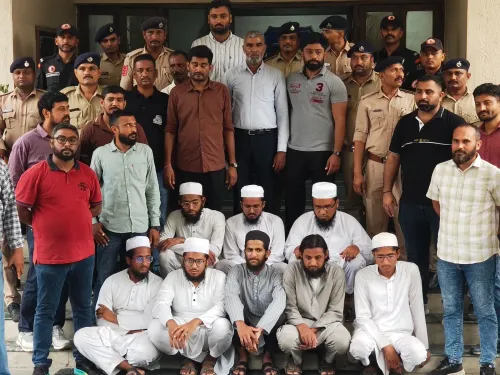
Several youths have been arrested in India in recent months for allegedly joining the Jaish. Officials say the modus operandi behind these recruitments is entirely different from earlier patterns. “The focus has been more on radicalisation and brainwashing the youth. These recruits are then expected to find more persons and brainwash them. This not only becomes a chain reaction, but the entire process goes on in autopilot mode,” the official said.
The ISI's Role and the LeT Contrast
The Inter-Services Intelligence (ISI), which officials say is backing these initiatives, wants the Jaish to concentrate on radicalisation and on changing the mindset of society. Officials say the ISI expects that if this focus is sustained, one of the recruits will eventually attempt a big strike. The aim is to build an Islamic State-styled outfit in which the players are largely unknown.
Another official said the strategy serves both the ISI and the Jaish. Working through unidentified individuals or groups lets the outfit hide its involvement. That makes it difficult for investigators to establish a direct link between a crime and the JeM.
The Lashkar-e-Taiba (LeT), by contrast, continues to focus on a solid ground network for fidayeen attacks in Jammu and Kashmir and other parts of the country. Officials say it would attempt to keep operations running while the JeM transforms into an entirely new outfit. They add that the ISI considers the Jaish better suited to this approach because its chief, Masood Azhar, is a bigger draw among potential recruits than LeT founder Hafiz Saeed.
Why Indian Agencies Are Concerned
Officials say the outfit is deliberately avoiding recruiting locals from Jammu and Kashmir because of intense scrutiny there. Instead, it is trying to radicalise as many youths as possible so they could strike in any part of the country or later join the outfit in the Union Territory. The Jaish is reportedly prepared to play a waiting game, since restarting operations in Jammu and Kashmir would require a pool of local operatives.
For now, the group is expected to concentrate on northern states. According to officials, southern operations would not be attempted immediately, given the Islamic State's control of that space.
Notably, none of the handlers in Pakistan is reportedly being used for the radicalisation process. Unassuming individuals based in various foreign countries are being roped in instead, which an official said makes tracking extremely hard.
Security agencies are likely to track online radicalisation and overseas handler networks more closely as the Jaish's slow-burn strategy takes shape.
Point of View
But intelligence officials are describing an adversary that has adapted rather than collapsed. A shift from fidayeen squads to leaderless, self-replicating radicalisation chains moves the battlefield from the LoC to smartphones across India. Kinetic deterrence alone cannot answer that kind of threat. Agencies need sustained counter-radicalisation, international cooperation to trace overseas handlers, and community-level early warning to keep this slow burn from becoming the next surprise.
NationPress
28 Nov 2026
Frequently Asked Questions
What is Jaish-e-Mohammad planning after Operation Sindoor?
According to Intelligence Bureau officials, Jaish-e-Mohammad is quietly rebuilding and moving towards an Islamic State-style model. The model relies on radicalising youths through foreign-based handlers rather than carrying out immediate attacks.
Why is the Jaish's new strategy hard to track?
Officials say handlers in Pakistan are not being used. Instead, unassuming individuals in various foreign countries radicalise recruits, which makes it difficult to link crimes directly to the JeM.
What role is the ISI playing in the Jaish's revival?
Officials say the ISI is backing the initiative and wants the Jaish to concentrate on radicalisation and changing the mindset of society. The expectation is that one of the recruits will eventually attempt a big strike.
How does the Jaish's approach differ from Lashkar-e-Taiba's?
The Lashkar-e-Taiba continues to focus on a strong ground network for fidayeen attacks in Jammu and Kashmir and elsewhere. The Jaish is shifting to a shadowy model built on radicalised networks whose members are largely unknown.
Which regions is the Jaish targeting for recruitment?
Officials say the Jaish will focus extensively on northern states in India. It is avoiding Jammu and Kashmir locals because of heavy scrutiny there and is not immediately attempting southern operations.