Jaishankar chairs India-FIPIC meet at UNGA, pushes Pacific agenda
Synopsis
EAM Dr. S. Jaishankar chaired the India-FIPIC Foreign Ministers' Meeting at UNGA in New York on September 24, reaffirming India's demand-driven, people-centric Pacific engagement and pushing for expanded Pacific membership in the International Solar Alliance and CDRI.
Key Takeaways
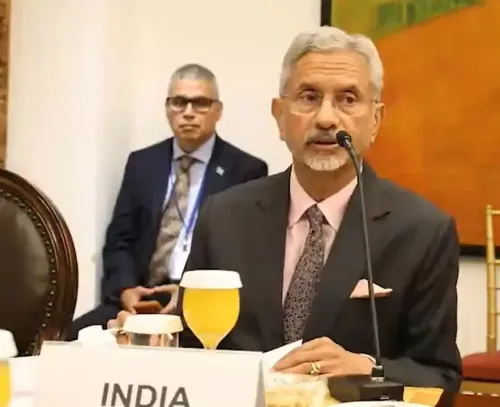
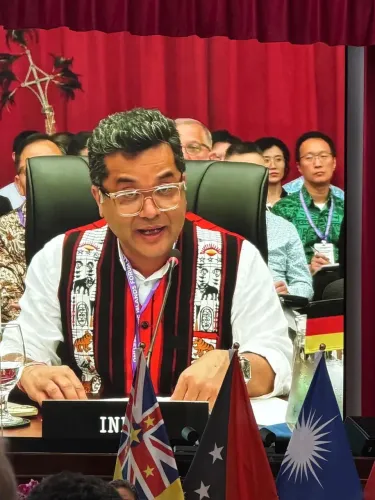
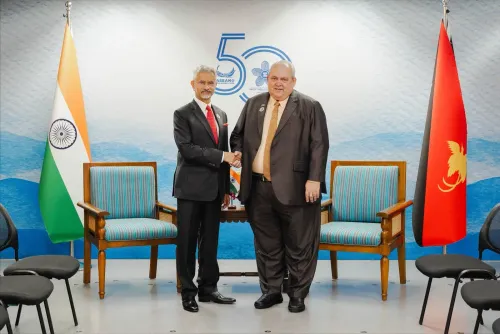
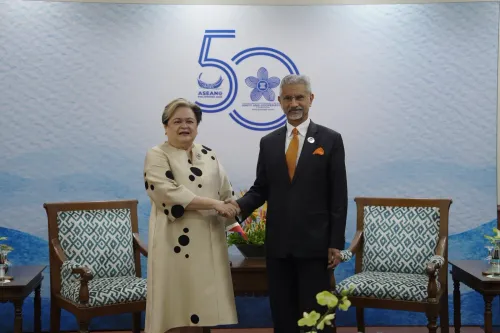
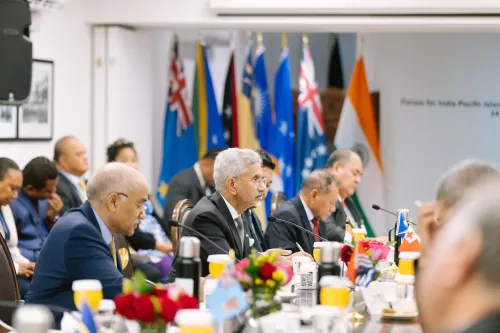
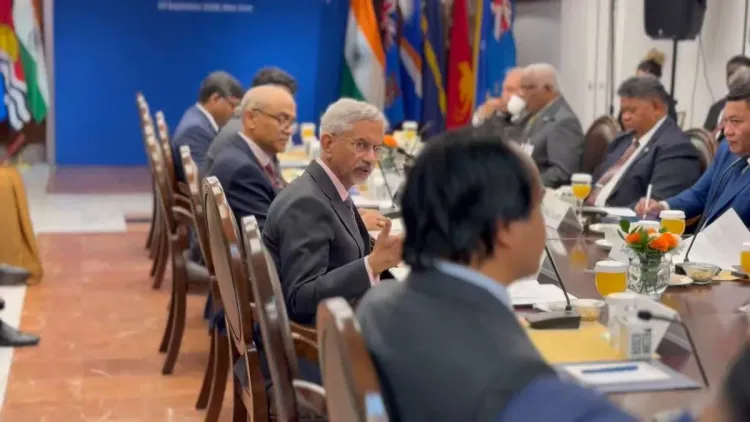
Jaishankar chaired the India-FIPIC Foreign Ministers' Meeting on September 24, 2026 in New York on the sidelines of UNGA High Level Week .
India reaffirmed its demand-driven, development-oriented, people-centric approach to Pacific Island engagement under the FIPIC framework, launched in 2014 .
India formally endorsed the Pacific Islands Forum's 2050 Strategy for the Blue Pacific Continent as the guiding framework for the partnership.
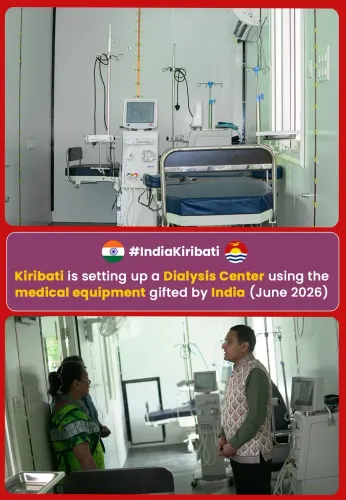
Jaishankar cited progress on PM Modi's Action Plan covering healthcare, renewables, connectivity, technology and capacity building for Pacific Island countries.
India signalled readiness to help Pacific nations cope with El Niño -related climate shocks, and raised cooperation on Space and ocean research .
Pacific Island nations were encouraged to join the International Solar Alliance and the Coalition for Disaster Resilient Infrastructure , both India-led multilateral platforms.
Diplomacy on the margins of the UN General Assembly moved into the Pacific on Thursday, September 24, 2026, as Union External Affairs Minister Dr. S. Jaishankar chaired the India-FIPIC Foreign Ministers' Meeting in New York — reinforcing India's strategic bet that its relationship with the world's smallest island nations carries outsized geopolitical weight.
A demand-driven playbook for the Pacific
The meeting brought together India and the 14 Pacific Island countries that form the Forum for India-Pacific Islands Cooperation (FIPIC), a platform born in 2014 when Prime Minister Narendra Modi visited Fiji and formalised what had until then been a largely episodic relationship. More than a decade on, Jaishankar used the UNGA platform to signal that the architecture is maturing — not just expanding. At the heart of India's pitch is a three-word doctrine: demand-driven, development-oriented, people-centric. The framing is deliberate. It positions India's Pacific engagement as a direct answer to Pacific Island priorities rather than a donor imposing its own agenda — a pointed contrast to how smaller nations often describe dealings with larger powers in the region.The 2050 Strategy and India's alignment with Pacific priorities
Jaishankar explicitly endorsed the Pacific Islands Forum's 2050 Strategy for the Blue Pacific Continent — the region's own long-term roadmap covering climate resilience, ocean governance, and sustainable development. By placing India's acknowledgement of this framework on the record at a ministerial meeting, New Delhi signals it will follow Pacific-defined priorities rather than substitute them with its own. That alignment matters because the 2050 Strategy is increasingly the lens through which Pacific nations evaluate every external partnership. India's public endorsement gives its development projects in the region a credibility anchor.Modi's Action Plan: Healthcare, renewables, and connectivity on the table
Jaishankar flagged 'significant progress' on the Action Plan announced by PM Modi spanning healthcare, renewables, connectivity, technology and capacity building — five pillars that map directly onto the vulnerabilities Pacific Island nations identify as most pressing. The specifics of that progress were not detailed in the post. Also raised: El Niño, whose irregular and intensifying cycles have battered Pacific Island economies. India signalled readiness to help 'ameliorate the adverse effects' of the phenomenon — a soft but significant commitment to climate-linked development assistance.ISA, CDRI and the push to grow India's multilateral footprint
Two Indian-led multilateral platforms took centre stage as Jaishankar pushed for expanded Pacific membership. The International Solar Alliance (ISA), co-launched by India and France at the 2015 Paris Climate Conference, and the Coalition for Disaster Resilient Infrastructure (CDRI), launched by India at the 2019 UN Climate Summit, are already running projects on climate change, renewable energy and sustainable development in the region. Every new Pacific Island nation that joins ISA or CDRI is not just a new member — it is a vote of confidence in India-led global governance architecture at a time when that architecture is being actively contested. India's call to cooperate on Space and sustainable coastal and ocean research rounds out a picture of engagement that has grown well beyond the infrastructure-and-aid paradigm. The Pacific's vast exclusive economic zones make ocean research a natural frontier, and India's growing space capability gives it a genuine offer to make. For a grouping of nations that controls some of the world's most strategically significant maritime territory, India's sustained attention is both economical and purposeful — and at UNGA High Level Week, New York is exactly the right room to say so.Point of View
Jaishankar is practising the 'listening first' diplomacy that differentiates India's pitch in a region where larger powers are often perceived as tone-deaf. The simultaneous push for Pacific accessions to ISA and CDRI reveals a secondary motive: every new member strengthens the institutional legitimacy of India-designed global governance frameworks ahead of future climate negotiations. If the Action Plan's healthcare and renewables deliverables begin to show visible results, India will have built genuine goodwill in a maritime zone whose geopolitical significance far exceeds its economic size.
NationPress
24 Sept 2026
Frequently Asked Questions
What is FIPIC and which countries are members?
FIPIC — the Forum for India-Pacific Islands Cooperation — is a multilateral platform launched in 2014 to structure India's engagement with 14 Pacific Island countries , including Fiji, Papua New Guinea, Vanuatu, Samoa and others across Melanesia, Micronesia and Polynesia.
What did Jaishankar say at the India-FIPIC meeting in New York?
Jaishankar outlined India's demand-driven Pacific approach, endorsed the Pacific Islands Forum's 2050 Strategy for the Blue Pacific Continent , flagged progress on PM Modi's Action Plan, raised El Niño challenges, and called on Pacific nations to join the International Solar Alliance and the Coalition for Disaster Resilient Infrastructure .
What is the Pacific Islands Forum's 2050 Strategy for the Blue Pacific Continent?
The 2050 Strategy for the Blue Pacific Continent is the Pacific Islands Forum's long-term regional roadmap addressing climate resilience, ocean governance, sustainable development and regional integration, and it serves as the benchmark by which Pacific nations evaluate all external partnerships.
What is India's Action Plan for Pacific Island countries?
The Action Plan was announced by PM Narendra Modi and spans five pillars — healthcare, renewables, connectivity, technology and capacity building — tailored to the development priorities of Pacific Island nations under the FIPIC framework.
What are the International Solar Alliance and CDRI?
The International Solar Alliance (ISA) is a treaty-based body co-launched by India and France at the 2015 Paris Climate Conference to expand solar energy deployment. The Coalition for Disaster Resilient Infrastructure (CDRI) is a global partnership launched by India at the 2019 UN Climate Summit to build climate- and disaster-resilient infrastructure in developing nations.