Jaishankar condemns deadly church attack in Karak, Jordan

Synopsis
External Affairs Minister Dr. S. Jaishankar expressed shock over a deadly church attack in Karak, Jordan, offered condolences to bereaved families, and reaffirmed India's commitment to fighting terrorism in all its forms, addressing Jordan's FM Ayman Safadi directly.
Key Takeaways
Jaishankar condemned a 'heinous' attack on a church in Karak, Jordan that killed several people and injured many others.
India extended heartfelt condolences to bereaved families and wished a swift recovery to the injured.
The minister addressed the post directly to Ayman Safadi , Jordan's Deputy Prime Minister and Foreign Minister, underscoring high-level diplomatic solidarity.
India reaffirmed its 'strong commitment to the fight against terrorism in all its forms and manifestations.' The statement reflects India's consistent foreign-policy posture of prompt, high-level outreach to friendly Middle Eastern nations following terror incidents.
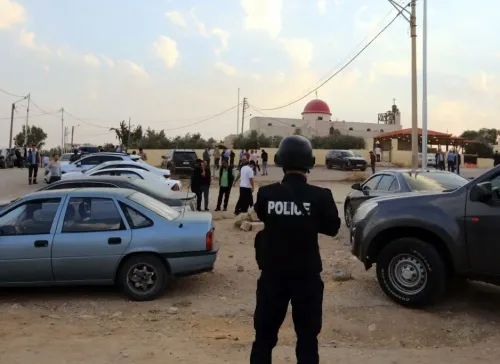
A terror attack on a church in Karak, Jordan has drawn an immediate and unequivocal response from India's top diplomat — Union External Affairs Minister Dr. S. Jaishankar on Saturday, 25 October 2026 expressed deep shock at the assault, which claimed several innocent lives and left many others injured.
India's message to Amman: solidarity in grief
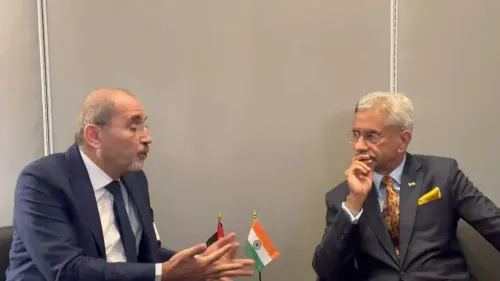
Describing the attack as 'heinous,' Dr. Jaishankar extended heartfelt condolences to the bereaved families and wished a swift recovery to the wounded. He addressed the post directly to Ayman Safadi, Jordan's Deputy Prime Minister and Minister of Foreign Affairs — signalling that the message of solidarity was being delivered at the highest diplomatic channel. 'India stands firmly with the Government and the friendly people of the Hashemite Kingdom of Jordan in this difficult hour,' he wrote.
The directness of the outreach to Safadi matters. The two ministers are regular interlocutors on regional security and bilateral affairs, and addressing him personally transforms a formal condolence into a pointed diplomatic gesture — one state to another, hand extended.
Karak: a city struck, a community in mourning
Karak is a historic Jordanian city known for its crusader-era citadel and its diverse, long-settled communities — including a significant Christian population. An attack on a house of worship there carries a weight that goes beyond the immediate casualties; it strikes at Jordan's tradition of interfaith coexistence that Amman has carefully cultivated as a point of national identity. The targeting of a church amplifies the international outrage.
India's anti-terrorism commitment — consistent, not ceremonial
The closing line of Dr. Jaishankar's post was pointed: India reaffirmed its 'strong commitment to the fight against terrorism in all its forms and manifestations.' That phrase is no diplomatic boilerplate — it is the precise formulation India has deployed at the United Nations and in bilateral communiqués since the early 2000s, deliberately worded to leave no ideological loophole for any variety of political violence.
India and Jordan maintain longstanding diplomatic and economic ties. New Delhi's pattern of prompt, high-level condolences following attacks in friendly Middle Eastern states reflects a deliberate foreign-policy posture — one that combines political solidarity with an expectation of reciprocal support on counter-terrorism frameworks at multilateral forums.
As the investigation into the Karak attack unfolds, watch for whether this bilateral exchange evolves into a joint statement or a dedicated security consultation — the kind of follow-through that separates a condolence from a commitment.
Point of View
Minister-level condolence — addressed personally to Jordan's top diplomat — is a calibrated signal that New Delhi's Middle East partnerships are built on more than trade. By invoking opposition to terrorism 'in all its forms and manifestations,' Dr. Jaishankar uses the language of India's long-standing multilateral counter-terrorism doctrine, keeping the framing universal and coalition-ready. The direct tag to Safadi also positions this as a relationship call, not a press release — consistent with India's growing ambition to be seen as a dependable security-dialogue partner in the Gulf and Levant. Expect this to feed into bilateral consultations at the next available multilateral window.
NationPress
24 Oct 2026
Frequently Asked Questions
What happened in the Karak church attack in Jordan?
A church in Karak , a historic Jordanian city, was targeted in a violent attack that resulted in the deaths of several people and injuries to many others, prompting international condemnation including from India.
What did Jaishankar say about the Jordan church attack?
Dr. S. Jaishankar called the attack 'heinous,' offered condolences to bereaved families, wished a swift recovery to the injured, and declared that India stands firmly with the government and people of Jordan. He also reaffirmed India's commitment to fighting terrorism in all its forms.
Who is Ayman Safadi, and why did Jaishankar tag him?
Ayman Safadi is Jordan's Deputy Prime Minister and Minister of Foreign Affairs. Dr. Jaishankar tagged him directly to ensure the condolence reached its counterpart at the highest diplomatic level, reflecting the bilateral relationship between the two countries.
What is India's policy on terrorism abroad?
India maintains a consistent policy of condemning terrorism 'in all its forms and manifestations' and has repeatedly reaffirmed this stance at the United Nations and in bilateral engagements since the early 2000s. This formulation is deliberately all-encompassing, leaving no ideological exceptions.
What are India-Jordan relations like?
India and the Hashemite Kingdom of Jordan share longstanding diplomatic and economic ties. New Delhi engages Amman regularly on regional security, trade, and people-to-people matters, with the two foreign ministers serving as key points of contact.