Jaishankar Greets Bahamas on 53rd Independence Day
Synopsis
External Affairs Minister Dr. S. Jaishankar on 10 July 2026 greeted Bahamas FM Fred Mitchell and the Bahamian people on their 53rd Independence Day, reaffirming India's longstanding bonds of friendship with the Caribbean nation.
Key Takeaways
Jaishankar , Union External Affairs Minister, extended Independence Day greetings to the Bahamas on 10 July 2026 .
The Bahamas celebrates its 53rd Independence Day in 2026, having gained sovereignty on 10 July 1973 .
Jaishankar addressed the message specifically to Bahamian Foreign Minister Fred Mitchell , the government, and the people.
India established diplomatic relations with the Bahamas in 1977 and maintains cordial bilateral ties.
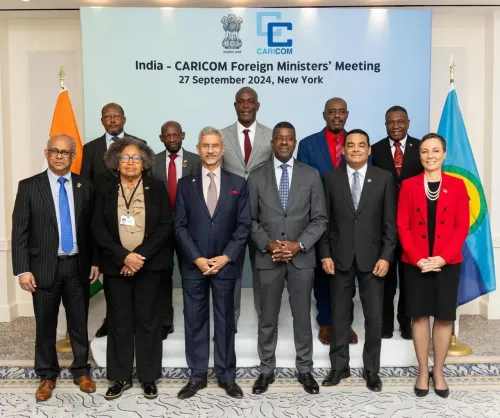
The outreach is part of India's sustained engagement with CARICOM nations on multilateral issues including climate resilience and UN reform.
Union External Affairs Minister Dr. S. Jaishankar extended warm greetings to the Bahamas on Friday, 10 July 2026, marking the Caribbean nation's 53rd Independence Day and reaffirming India's ties of friendship with Nassau. The minister addressed his message directly to Bahamian Foreign Minister Fred Mitchell, the government, and the people of the Bahamas.
Context
The Bahamas attained independence on 10 July 1973, making this year its 53rd anniversary of sovereignty. India established formal diplomatic relations with the Bahamas in 1977, four years after independence, and the two countries have maintained cordial bilateral ties since. Dr. Jaishankar's post on X addressed FM Fred Mitchell — a senior Bahamian diplomat who has served as Foreign Minister — reiterating 'strong bonds of friendship' between the two nations.
Policy Backdrop
India's outreach to Caribbean small-island developing states is a consistent feature of its foreign policy architecture. New Delhi engages the Caribbean Community (CARICOM) bloc on multilateral issues ranging from climate resilience and sustainable development to reform of the United Nations Security Council. Ceremonial national-day messages are a diplomatic instrument that signals continuity of engagement, particularly with nations where high-level bilateral visits may be infrequent.
The India-Caribbean relationship is also shaped by a shared Commonwealth heritage and cooperation within multilateral forums. India has consistently positioned itself as a partner for small island nations on climate finance and disaster resilience, issues of acute importance to low-lying Caribbean states like the Bahamas.
Stakeholders and Impact
The primary stakeholders are the Government of the Bahamas, its diplomatic establishment, and the Indian diaspora and business community with interests in the Caribbean. For the Bahamian government, acknowledgement from a major emerging economy like India carries symbolic weight in reinforcing multilateral solidarity. For New Delhi, maintaining warm ties with CARICOM members supports India's broader goal of building a wide coalition of partners across the Global South.
Such gestures also reflect India's sustained effort to deepen its presence in regions where it has historically had limited physical diplomatic footprint, using high-level political messaging to keep bilateral channels active.
What's Next
Diplomatic observers will watch for any follow-up engagement between Indian and CARICOM representatives at the United Nations General Assembly session later in 2026, where India and Caribbean nations often coordinate on shared positions. Future India-CARICOM ministerial consultations could provide a platform for translating these expressions of goodwill into substantive cooperation on climate, trade, and UN reform. Dr. Jaishankar's consistent pattern of national-day outreach to Caribbean states suggests New Delhi views this region as an important, if quieter, pillar of its multi-alignment foreign policy.
Point of View
Including small-island developing states that carry disproportionate multilateral weight relative to their size. With UN Security Council reform and climate finance negotiations ongoing, CARICOM votes matter to New Delhi. The direct address to FM Fred Mitchell by name also signals a degree of personal diplomatic engagement that goes slightly beyond boilerplate, suggesting India is investing in relationship-building at the ministerial level. Over time, such consistent outreach could lay the groundwork for more structured India-CARICOM cooperation.
NationPress
10 Jul 2026
Frequently Asked Questions
When did the Bahamas gain independence?
The Bahamas gained independence on 10 July 1973 , making 2026 its 53rd Independence Day.
What did Jaishankar say to the Bahamas on Independence Day 2026?
Dr. S. Jaishankar extended warm greetings to Bahamian FM Fred Mitchell, the government, and the people of the Bahamas, reiterating India's 'strong bonds of friendship' with the nation.
When did India establish diplomatic relations with the Bahamas?
India established diplomatic relations with the Bahamas in 1977 , four years after the Caribbean nation gained independence.
Who is Fred Mitchell of the Bahamas?
Fred Mitchell is the Foreign Minister of the Bahamas and a senior Bahamian diplomat whom Dr. Jaishankar addressed directly in his Independence Day message.
Why does India engage with Caribbean nations like the Bahamas?
India engages Caribbean nations through the CARICOM forum on multilateral issues such as climate resilience, sustainable development, and UN Security Council reform , where small-island states hold significant voting influence.