Jaishankar Greets Mongolia on Naadam, Eyes Strategic Partnership
Synopsis
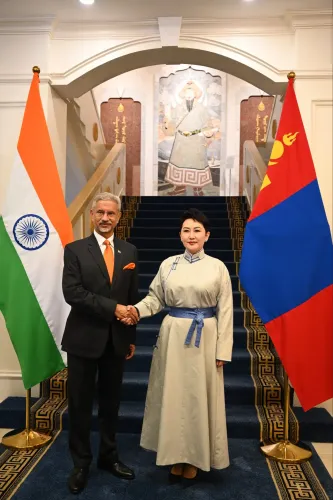
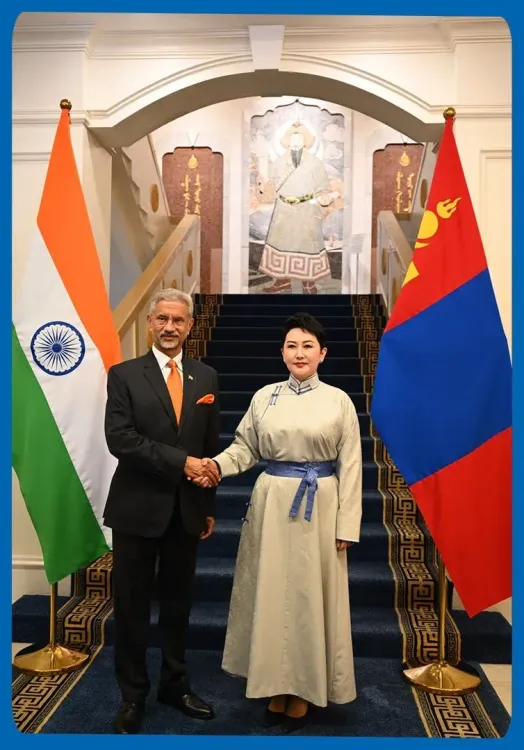
External Affairs Minister Dr. S. Jaishankar greeted Mongolia on its National Naadam Festival on 11 July 2026, directly addressing FM Battsetseg Batmunkh and reaffirming commitment to the India-Mongolia Strategic Partnership built on economic, cultural and spiritual cooperation.
Key Takeaways
Jaishankar posted Naadam Festival greetings to Mongolia on 11 July 2026 , addressing FM Battsetseg Batmunkh directly.
He cited 'economic cooperation, cultural and spiritual connect' as the pillars of the bilateral relationship.
The India-Mongolia Strategic Partnership was established during PM Modi's 2015 visit to Ulaanbaatar — the first by an Indian Prime Minister.
India has extended lines of credit and training programmes in IT, education and defence to Mongolia since the early 2000s.
Mongolia's location between Russia and China makes it strategically relevant to India's Central Asia and Act East outreach.
Next India-Mongolia Foreign Office Consultations will be a key moment to watch for concrete follow-up on connectivity and mining cooperation.
Union External Affairs Minister Dr. S. Jaishankar on Saturday, 11 July 2026, extended greetings to Mongolian Foreign Minister Battsetseg Batmunkh, the Mongolian government and its people on the occasion of the National Naadam Festival, reaffirming India's intent to deepen the bilateral Strategic Partnership.
Context
The Naadam Festival is Mongolia's foremost national celebration, featuring the traditional 'Three Games of Men' — wrestling, archery and horse racing — and is recognised by UNESCO as an intangible cultural heritage. Jaishankar's message, addressed directly to Foreign Minister Battsetseg Batmunkh, cited the pillars of the relationship as 'economic cooperation, cultural and spiritual connect,' mirroring the language embedded in the formal partnership framework.
The post, shared on the minister's official X account, is part of a consistent diplomatic practice of using national celebrations as touchpoints to signal the health of bilateral ties.
Policy Backdrop
The India-Mongolia Strategic Partnership was elevated during Prime Minister Narendra Modi's landmark visit to Ulaanbaatar in 2015 — the first-ever visit by an Indian Prime Minister to Mongolia. That visit foregrounded shared Buddhist heritage, defence training cooperation, and lines of credit extended by New Delhi for development projects.
Since the early 2000s, India has run programmes with Mongolia spanning IT training, education and defence capacity-building. Trade remains modest but covers minerals and pharmaceuticals, with soft-power projection through Buddhism and scholarship programmes forming a durable underpinning of the relationship.
Mongolia's strategic geography — landlocked between Russia and China — makes it a notable node in India's broader outreach to Central Asia and its 'Act East' engagement, offering New Delhi a partner that is neither aligned against India nor absorbed into any single great-power orbit.
Stakeholders and Impact
Diplomatic missions in both capitals, Buddhist communities across India and Mongolia, and Indian scholars and students on exchange programmes are the most immediate stakeholders in the bilateral relationship. The cultural and spiritual thread — rooted in shared Vajrayana Buddhist traditions — gives the partnership a people-to-people dimension that outlasts any single government's tenure.
For Mongolia, engagement with India provides a counterbalance within its 'third-neighbour' foreign policy doctrine, which seeks partnerships beyond its two giant neighbours. For India, the relationship is a low-friction, high-goodwill asset in a region where diplomatic space is otherwise contested.
What's Next
Observers will watch for the next round of India-Mongolia Foreign Office Consultations, where connectivity proposals and mining-sector cooperation flagged in earlier joint statements could be taken forward. Jaishankar's explicit mention of 'strengthening' the Strategic Partnership suggests the relationship remains a live diplomatic priority rather than a ceremonial formality, and follow-up at the ministerial or official level is plausible in the months ahead.
Point of View
Sustaining a relationship that punches above its weight in India's strategic calculus. By naming FM Battsetseg directly and invoking the Strategic Partnership framework, the message goes beyond ceremonial courtesy to reaffirm institutional continuity. Mongolia sits at the intersection of India's Buddhist soft-power outreach and its effort to cultivate partners in China's immediate periphery — making even routine diplomatic upkeep geopolitically meaningful. The explicit forward-looking phrase 'look forward to strengthening' suggests New Delhi is keeping the channel warm ahead of a potential high-level engagement.
NationPress
11 Jul 2026
Frequently Asked Questions
What is the India-Mongolia Strategic Partnership?
The India-Mongolia Strategic Partnership is a bilateral framework elevated in 2015 during PM Modi's visit to Ulaanbaatar, covering defence training, economic cooperation, and cultural and spiritual ties rooted in shared Buddhist heritage.
What is the Naadam Festival in Mongolia?
The Naadam Festival is Mongolia's premier national celebration, held annually in July, featuring the traditional sports of wrestling, archery and horse racing. It is recognised by UNESCO as an intangible cultural heritage of humanity.
Why did Jaishankar greet Mongolia's Foreign Minister?
EAM Jaishankar extended greetings to FM Battsetseg Batmunkh on the occasion of the National Naadam Festival , using the occasion to reaffirm India's commitment to strengthening the bilateral Strategic Partnership.
What are India's main areas of cooperation with Mongolia?
India cooperates with Mongolia in defence training, IT, education, pharmaceuticals and minerals trade , complemented by strong soft-power ties through Buddhism and scholarship programmes that have been active since the early 2000s.
Why does Mongolia matter to India's foreign policy?
Mongolia's landlocked position between Russia and China and its 'third-neighbour' foreign policy make it a useful partner for India's Central Asia outreach and Act East strategy, offering New Delhi a goodwill relationship in a geopolitically sensitive neighbourhood.