Jaishankar greets Rwanda on Liberation Day, cites Strategic Partnership
Synopsis
Union External Affairs Minister Dr. S. Jaishankar on 4 July 2026 congratulated Rwanda on Liberation Day, addressing Rwandan FM Olivier Nduhungirehe directly and reaffirming India's commitment to the bilateral Strategic Partnership that spans development assistance, capacity-building and multilateral coordination.
Key Takeaways
Jaishankar extended Liberation Day greetings to Rwanda on 4 July 2026 .
The message was addressed personally to Rwandan Foreign Minister Amb.
Rwanda's Liberation Day marks the end of the 1994 genocide in which an estimated 8 lakh people were killed.
India and Rwanda maintain a Strategic Partnership anchored in lines of credit, capacity-building and development assistance.
Rwandan President Paul Kagame participated in the third India-Africa Forum Summit in New Delhi in October 2015 .
The outreach is part of India's sustained diplomatic engagement with African nations ahead of future India-Africa Forum Summit cycles.
Union External Affairs Minister Dr. S. Jaishankar on Saturday, 4 July 2026 extended congratulations to Rwanda on its Liberation Day, addressing the message to Rwandan Foreign Affairs Minister Olivier J. P. Nduhungirehe and reaffirming India's commitment to the bilateral Strategic Partnership.
Context
Rwanda observes Liberation Day on 4 July each year, marking the end of the devastating 1994 genocide when the Rwandan Patriotic Front ended the mass killings that claimed an estimated 8 lakh lives. The day is among the most solemn national commemorations in East Africa and draws diplomatic acknowledgement from partner nations across the world.
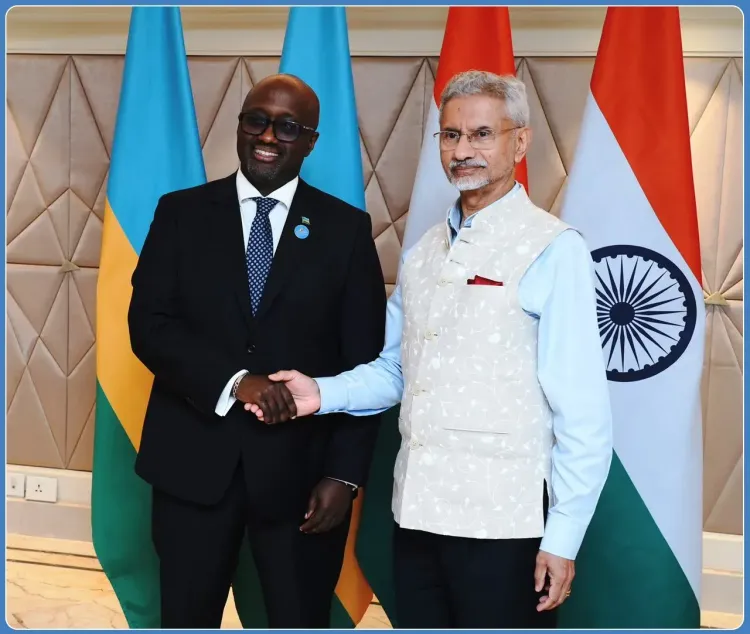
Dr. Jaishankar addressed his message directly to Foreign Minister Amb. Olivier J. P. Nduhungirehe, signalling the personal diplomatic rapport maintained at the ministerial level between the two countries. The post, accompanied by the Indian and Rwandan flags, read: 'Congratulations to FM Amb Olivier J. P. Nduhungirehe, the Government and people of Rwanda on their Liberation Day. Committed to strengthening our Strategic Partnership.'
Policy Backdrop
India and Rwanda have cultivated a Strategic Partnership built on development assistance, capacity-building programmes and lines of credit extended through Indian financial institutions. The relationship received a visible boost when Rwandan President Paul Kagame attended the third India-Africa Forum Summit in New Delhi in October 2015, where bilateral development cooperation was a central agenda item.
India's engagement with Rwanda sits within a broader continental framework. New Delhi has consistently used the India-Africa Forum Summit platform to deepen ties with African nations through concessional financing, technical training and coordination on multilateral issues including United Nations reform. Rwanda, as one of Africa's fastest-growing economies, occupies a notable place in that architecture.
Stakeholders and Impact
The message carries significance for the Rwandan government, which values international recognition of Liberation Day as an affirmation of its post-genocide recovery and state-building narrative. For Indian businesses operating or seeking entry in East Africa, sustained high-level diplomatic engagement reinforces a stable commercial environment.
Capacity-building initiatives — including training programmes run by Indian institutions for Rwandan civil servants, defence personnel and technical professionals — have been a practical pillar of the partnership. Such programmes are typically renewed and expanded through periodic bilateral consultations at the foreign-minister level.
What's Next
Attention will now turn to whether the Liberation Day exchange catalyses a higher-level engagement, such as a bilateral visit or a fresh line of credit announcement ahead of the next India-Africa Forum Summit. India's diplomatic calendar with African nations has grown increasingly structured, with national-day messages often serving as a prelude to substantive consultations. Any new agreements or ministerial meetings between New Delhi and Kigali in the months ahead would mark the next concrete step in translating the stated commitment into deliverables.
Point of View
Consistent with India's practice of using African national days to keep bilateral channels warm at the ministerial level. Addressing Foreign Minister Nduhungirehe by name elevates the gesture beyond a generic congratulatory note, suggesting active personal diplomacy rather than a protocol formality. Set against the backdrop of India's expanding Africa strategy — combining development finance, South-South cooperation and UN reform advocacy — the reaffirmation of the Strategic Partnership keeps Kigali firmly within New Delhi's continental outreach architecture. The message also positions India favourably as African nations increasingly weigh partnerships with multiple global powers.
NationPress
2 Oct 2026
Frequently Asked Questions
Why does Rwanda celebrate Liberation Day on 4 July?
Rwanda observes Liberation Day on 4 July each year to commemorate the day in 1994 when the Rwandan Patriotic Front ended the genocide that had claimed an estimated 8 lakh lives , marking the beginning of the country's post-genocide reconstruction.
What is the India-Rwanda Strategic Partnership?
The India-Rwanda Strategic Partnership encompasses development assistance through lines of credit, capacity-building programmes for Rwandan professionals and civil servants, and coordination on multilateral issues such as UN reform.
Who is Olivier J. P. Nduhungirehe?
Olivier J. P. Nduhungirehe is Rwanda's Minister of Foreign Affairs and International Cooperation, to whom EAM Dr. Jaishankar addressed the Liberation Day congratulatory message on 4 July 2026 .
What did Jaishankar say to Rwanda on Liberation Day 2026?
Dr. Jaishankar congratulated FM Nduhungirehe , the Rwandan government and its people on Liberation Day and stated that India is 'committed to strengthening our Strategic Partnership.'
What is India's broader policy towards Africa?
India engages African nations through the India-Africa Forum Summit framework, offering concessional lines of credit, technical training and support for multilateral causes like UN Security Council reform , with Rwanda being one of the key East African partners in this architecture.