Jaishankar hails India-Denmark Green Strategic Partnership
Synopsis
India wants Denmark for more than green tech. At the 5th Joint Commission, Jaishankar praised the Green Strategic Partnership but put defence, space and emerging technologies on the table. He also pushed for a 2026-31 action plan and credited Copenhagen with backing the India-EU FTA.
Key Takeaways
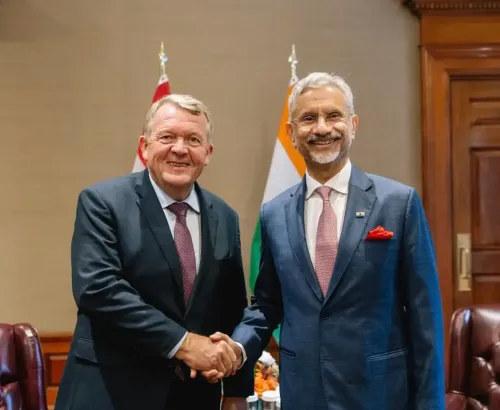
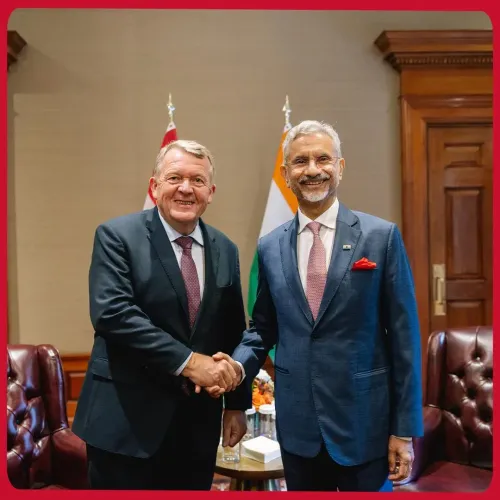
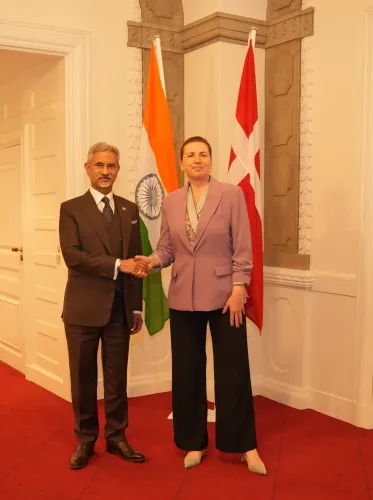
EAM S Jaishankar co-chaired the 5th India-Denmark Joint Commission with Danish FM Lars Lokke Rasmussen in New Delhi on 28 November 2026 .
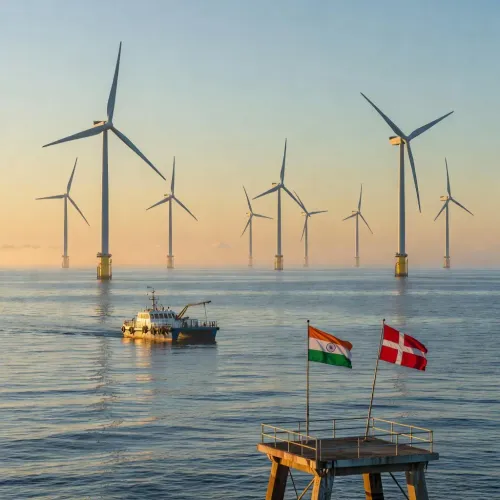
He said the Green Strategic Partnership gives bilateral ties a “very distinctive character,” spanning water, renewable energy, power and green shipping.
He called Denmark a key partner for Viksit Bharat 2047 and sought deeper cooperation in defence, security, space and emerging technologies.
Both sides are working towards a new India-Denmark Joint Action Plan for 2026-31 .
Jaishankar thanked Denmark for supporting the conclusion of the India-EU Free Trade Agreement .
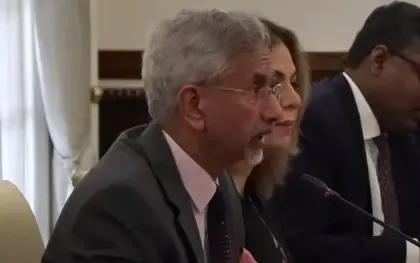
External Affairs Minister S Jaishankar on Saturday, 28 November 2026, called the India-Denmark Green Strategic Partnership (GSP) the defining feature of bilateral ties. He said it has given the relationship a “very distinctive character.” He made the remarks in New Delhi while opening the 5th India-Denmark Joint Commission meeting with Danish Foreign Minister Lars Lokke Rasmussen.
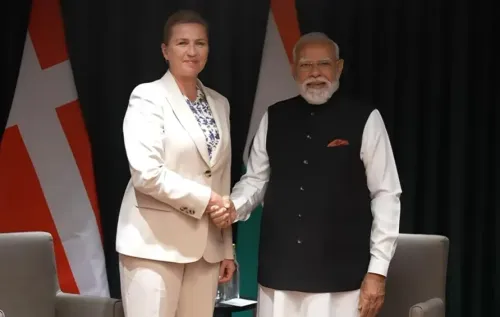
Jaishankar used the meeting to review the progress made since Prime Minister Narendra Modi and Danish Prime Minister Mette Frederiksen met earlier this year. He also set out an agenda covering defence, emerging technologies and a new joint action plan for 2026-31.
Green Partnership at the Centre of Ties
Jaishankar referred to the leaders' meeting in May, held on the sidelines of the third India-Nordic Summit. He said the Joint Commission offered a chance to assess what has been achieved and follow up on the issues the two Prime Ministers discussed.
“Among, in our agenda, of course, most important is our Green Strategic Partnership, which has given our relationship a very distinctive character. It brings together Danish capabilities and India's scale and development,” the EAM said.
He listed water, renewable energy, power and green shipping as key areas of work under the GSP. He added that cooperation in health, food processing, agriculture and science & technology has also “added substance” to the relationship.
Denmark as a Partner for Viksit Bharat 2047
Jaishankar described Denmark as an important partner in India's goal of becoming a developed nation by 2047. He noted that Danish expertise already supports several of India's national missions.
“We particularly value the contribution of Danish companies in India, and welcome a larger business presence and activities in both directions. Our governments, of course, can do our part by facilitating business and addressing issues that businesses may face,” he said.
He also flagged areas where he wants the relationship to grow. These include defence and security, emerging technologies, space, education, skills and mobility. Notably, this marks a move beyond the climate and sustainability focus that has shaped India-Denmark ties so far.
Institutional Push and the 2026-31 Action Plan
Jaishankar called for stronger institutional engagement between the two countries. He urged joint working groups that have not yet met to convene.
“We have a number of joint working groups between us. Many of them have met. Those who have not, we should encourage them to do that. We look forward to a new joint action plan for 2026-31,” he said. He added that this work takes place “in the larger context of our deepening ties with the European Union.”
India-EU Context and Global Uncertainty
The minister thanked Denmark for supporting closer India-EU relations, including the conclusion of the India-EU Free Trade Agreement. “We very much appreciate the support that Denmark has given to the deepening of that partnership, and particularly to the conclusion of the India-EU Free Trade Agreement,” he said.
He also stressed the value of exchanging views on geopolitical and strategic developments at a time of growing global uncertainty. With India's trade deal with the EU now in place, the Nordic countries are increasingly seen as gateways to European technology and capital.
Attention will now turn to whether the two sides finalise the 2026-31 Joint Action Plan and expand cooperation into defence and space, beyond the green agenda that has defined the partnership so far.
Point of View
Space and emerging technologies. New Delhi is using small, tech-rich European states as entry points into the EU after the FTA, and Denmark is an obvious choice. His comment that some joint working groups have not even met, though, suggests that implementation has lagged behind the language. The 2026-31 action plan will need clear deliverables and timelines if this is to be more than another review meeting.
NationPress
28 Nov 2026
Frequently Asked Questions
What is the India-Denmark Green Strategic Partnership?
It is the main framework of India-Denmark ties, combining Danish capabilities with India's scale in areas such as water, renewable energy, power and green shipping. EAM Jaishankar said it gives the relationship a very distinctive character.
What did Jaishankar say at the 5th India-Denmark Joint Commission?
Jaishankar called Denmark an important partner for Viksit Bharat 2047. He sought deeper cooperation in defence, emerging technologies, space, education, skills and mobility, and welcomed a larger Danish business presence in India.
What is the India-Denmark Joint Action Plan 2026-31?
It is a proposed new roadmap for bilateral cooperation from 2026 to 2031. Jaishankar said both sides look forward to it, and urged joint working groups that have not yet met to do so.
How is Denmark linked to the India-EU Free Trade Agreement?
Jaishankar thanked Denmark for supporting closer India-EU relations, particularly the conclusion of the India-EU Free Trade Agreement. He said India-Denmark ties sit within the wider context of India's deepening relationship with the EU.
When did PM Modi and Danish PM Mette Frederiksen last meet?
They met in May 2026 on the sidelines of the third India-Nordic Summit. The Joint Commission reviewed progress on the issues they discussed.