Jaishankar Holds India-UAE-US Trilateral on Energy and Connectivity
Synopsis
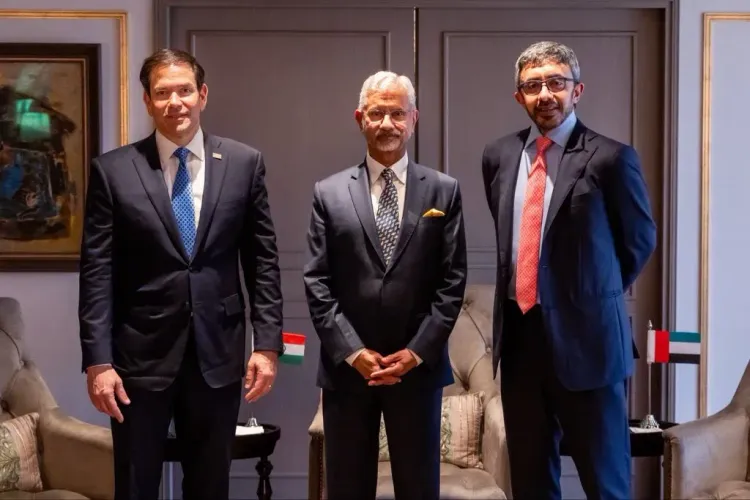
External Affairs Minister Dr. S. Jaishankar met UAE Deputy PM and FM Sheikh Abdullah bin Zayed and the US Secretary of State in a trilateral focused on energy security, connectivity, and regional developments — deepening a minilateral partnership anchored in the 2022 I2U2 framework and India-UAE CEPA.
Key Takeaways
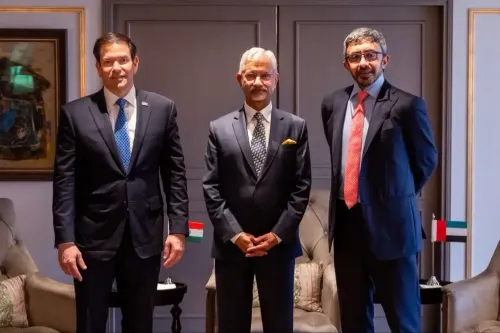
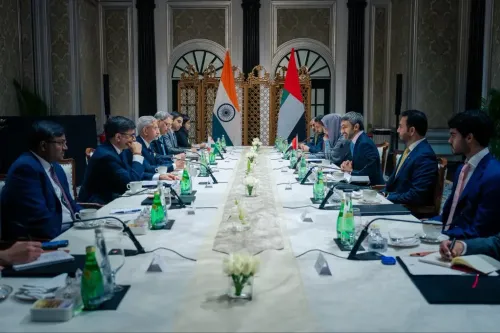
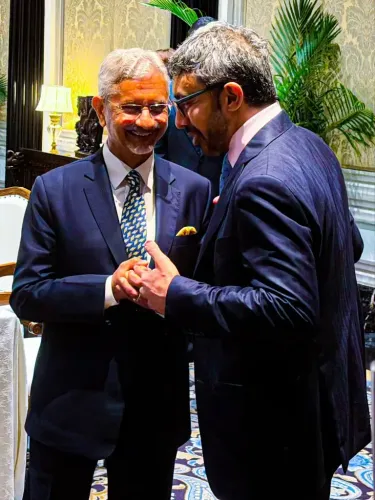
Jaishankar held a trilateral meeting with UAE DPM & FM Sheikh Abdullah bin Zayed and the US Secretary of State on 20 October 2026 .
The three-way talks covered energy security, connectivity corridors, and contemporary regional developments .
The meeting builds on the I2U2 grouping (India, Israel, UAE, US) launched in 2022 , focused on energy, food security, and infrastructure.
India and the UAE signed the Comprehensive Economic Partnership Agreement (CEPA) in 2022 , forming the bilateral trade backbone for such engagements.
Sheikh Abdullah bin Zayed has been a long-standing architect of the India-UAE strategic relationship.
India's growing use of minilateral formats reflects a deliberate strategy to drive faster, more targeted diplomatic outcomes on shared interests.
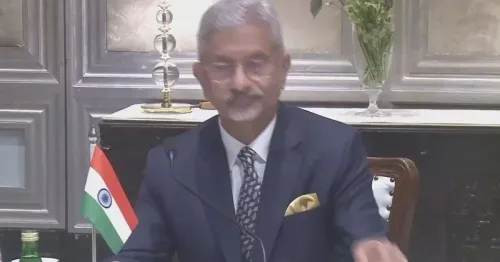
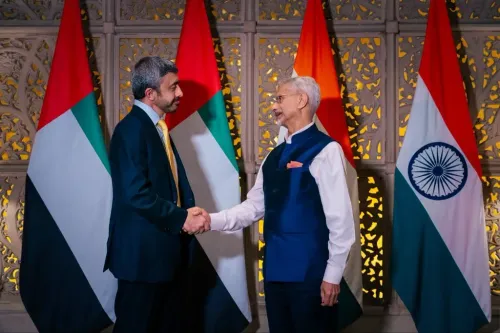
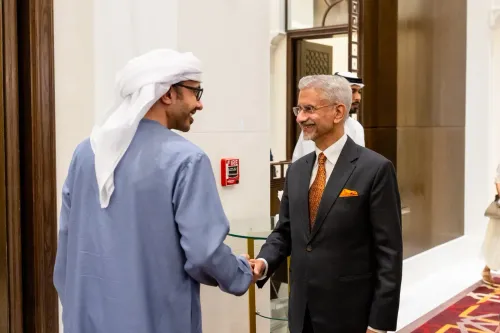
In a meeting that brought together three of the world's most consequential economic partnerships under one roof, Union External Affairs Minister Dr. S. Jaishankar convened a trilateral with UAE Deputy Prime Minister and Foreign Minister Sheikh Abdullah bin Zayed Al Nahyan and US Secretary of State on Tuesday, 20 October 2026 — a focused exchange on energy security, connectivity corridors, and fast-moving regional developments.
Three Flags, One Agenda
Dr. Jaishankar described the session as 'a useful exchange of perspectives on energy, connectivity and contemporary developments,' flagging the three interlocking pillars that have come to define the India-UAE-US minilateral space. Short and deliberate, that phrasing signals structured dialogue — not a courtesy call. The meeting brought together India, the United Arab Emirates, and the United States at the foreign-minister level, underlining the diplomatic weight each side has chosen to invest in this format.
The Architecture Behind the Meeting
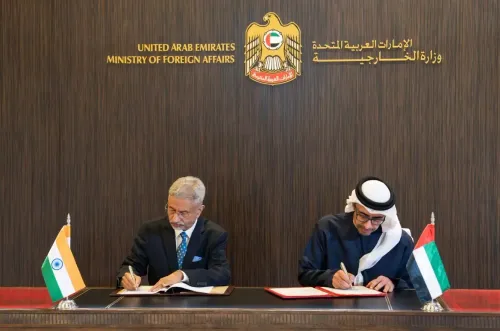
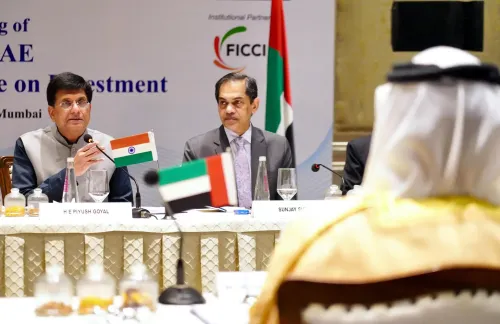
This trilateral did not emerge in a vacuum. India and the UAE formalised their trade ambitions with the Comprehensive Economic Partnership Agreement (CEPA) in 2022, a deal that dramatically accelerated bilateral commerce. That same year, the I2U2 grouping — bringing together India, Israel, UAE, and the United States — was launched specifically to coordinate on energy, food security, and infrastructure, establishing a shared vocabulary for exactly the themes discussed on Tuesday.
Sheikh Abdullah bin Zayed has been a central figure in deepening the India-UAE strategic relationship across multiple administrations, while the US-India bilateral partnership anchors the broader Indo-Pacific architecture that New Delhi has made a cornerstone of its foreign policy.
Why Energy and Connectivity Are the Story Right Now
West Asia's energy flows are never far from geopolitical turbulence — and 2026 is no exception. India, as one of the world's largest energy importers, has a direct stake in stable Gulf supply chains. Connectivity is the other half of the equation: India's ambitions to link South Asia to West Asia and Europe through infrastructure corridors depend on exactly the kind of trilateral alignment that Tuesday's meeting represents. The reference to 'contemporary developments' in Jaishankar's post is diplomatically terse — and deliberately so. It points to a live regional picture that the three sides are clearly tracking closely together.
India has increasingly favoured minilateral formats — small, purposeful groupings with a defined agenda — over sprawling multilateral forums where consensus dilutes action. A foreign-minister-level trilateral on this specific cluster of issues is a deliberate choice to move faster and with greater precision.
What Comes After the Conversation
Meetings of this kind typically set the table for follow-on project announcements, joint statements, or coordinated positions in multilateral forums. With energy infrastructure and connectivity corridors both requiring long lead times and political commitment from multiple capitals, Tuesday's exchange is likely the beginning of a visible diplomatic thread — one worth watching closely in the weeks ahead.
Point of View
New Delhi is signalling that these are not peripheral issues but core strategic priorities, worth direct top-table time with both its Gulf and Western partners. The invocation of 'contemporary developments' — deliberately vague — points to a shared regional-security read that the three capitals are aligning on outside of public view. If followed by concrete project or corridor announcements, this meeting will be remembered as the diplomatic moment that pushed the India-UAE-US energy-connectivity axis from framework to execution.
NationPress
20 Oct 2026
Frequently Asked Questions
What was the trilateral meeting held by Jaishankar about?
EAM Dr. S. Jaishankar met UAE Deputy PM and FM Sheikh Abdullah bin Zayed and the US Secretary of State on 20 October 2026 to discuss energy security, regional connectivity, and current geopolitical developments.
What is the I2U2 grouping involving India, UAE and US?
I2U2 is a minilateral grouping of India, Israel, UAE, and the United States launched in 2022, focused on coordinating cooperation on energy, food security, and infrastructure in the region.
What is the India-UAE CEPA agreement?
The India-UAE Comprehensive Economic Partnership Agreement (CEPA) was signed in 2022 to significantly boost bilateral trade, investment, and economic connectivity between the two countries.
Who is Sheikh Abdullah bin Zayed Al Nahyan?
Sheikh Abdullah bin Zayed Al Nahyan is the Deputy Prime Minister and Foreign Minister of the United Arab Emirates, a key figure in deepening UAE-India strategic and economic ties over many years.
Why is India pursuing minilateral diplomacy with UAE and US?
India uses minilateral formats to drive faster, more targeted outcomes on specific shared interests — such as energy security and connectivity corridors — avoiding the slower consensus-building required in larger multilateral forums.