Jaishankar chairs India-CARICOM FM meet in New York
Synopsis
EAM Dr. S. Jaishankar met Caribbean foreign ministers at UN High-Level Week in New York, reviewing Quick Impact Projects and health deliverables, and pushing CARICOM to join India's International Solar Alliance and Global Biofuels Alliance while deepening digital and mobility ties.
Key Takeaways
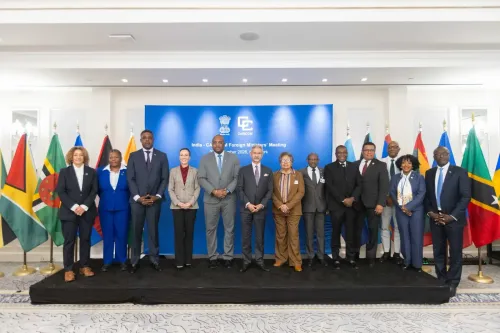
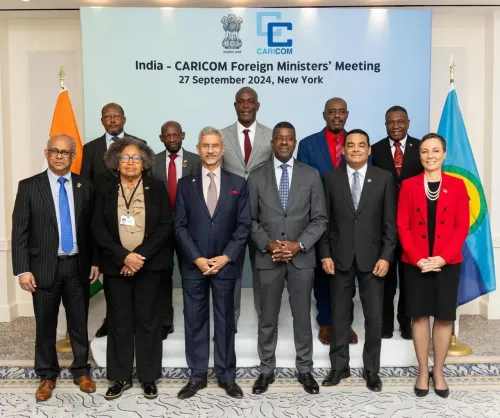
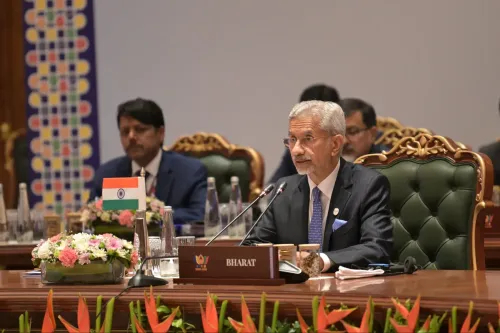
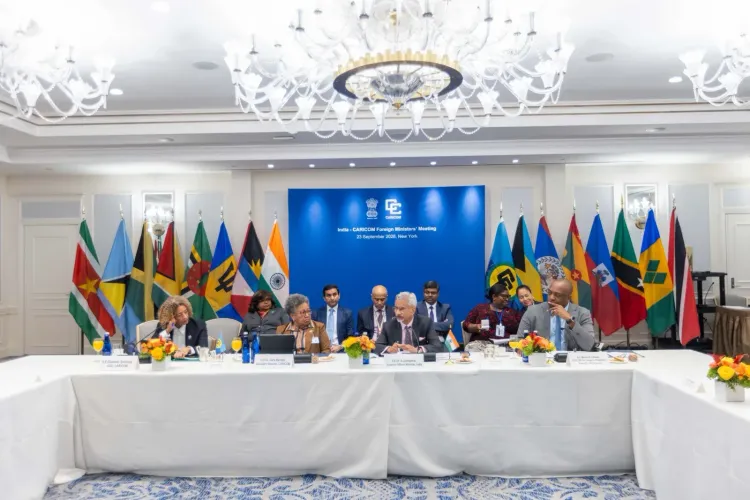
India-CARICOM Foreign Ministers' Meeting held on the sidelines of UN High-Level Week in New York on September 24, 2026 .
CARICOM Secretary-General Dr.
Carla Barnett and Surinamese FM Melvin Bouva co-chaired the proceedings alongside EAM Jaishankar.
India has deployed BHISHM Cube portable medical units, gifted haemodialysis units , and conducted limb fitment camps in select CARICOM nations.
Jaishankar urged CARICOM members to join the International Solar Alliance (launched 2015) and the Global Biofuels Alliance (launched 2023).
India called on Caribbean nations to utilise available ITEC training slots and offered customised capacity-building programmes.
Priority areas for deeper engagement identified as economic, digital, and mobility domains.
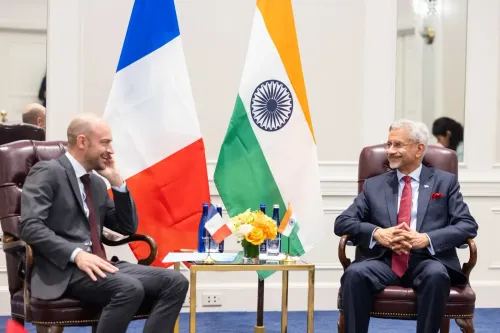
On the sidelines of the UN High-Level Week in New York, Union External Affairs Minister Dr. S. Jaishankar convened the India-CARICOM Foreign Ministers' Meeting on Thursday, September 24, 2026 — pressing the Caribbean bloc to deepen ties on solar energy, digital connectivity, healthcare, and mobility, and turning a multilateral corridor into a platform for India's most consequential Global South outreach.
Shared history, concrete deliverables
Dr. Jaishankar opened by grounding the relationship in something deeper than diplomacy. Solidarity, he said, flows from a shared history and shared developmental challenges — a framing that speaks directly to the common colonial past and the vulnerability to climate shocks that bind India and the Caribbean. CARICOM Secretary-General Dr. Carla Barnett and Surinamese Foreign Minister Melvin Bouva co-chaired the proceedings.
The minister pointed to on-the-ground proof of the partnership's substance. Small and Medium Enterprise (SME) and Quick Impact Projects committed to Caribbean nations have been completed in several member states and remain ongoing in others. India has also conducted limb fitment camps, gifted haemodialysis units, and deployed the BHISHM Cube — India's compact, modular medical facility designed for rapid humanitarian response — to select CARICOM partners.
The BHISHM Cube and India's health diplomacy playbook
The BHISHM Cube is worth pausing on. Built under India's Bharat Health Initiative, it is a portable, self-contained medical unit capable of deployment in disaster zones or health-infrastructure-thin environments — exactly the profile of several small island developing states in the Caribbean. Gifting these units is not charity; it is strategic health diplomacy, positioning India as the first-responder partner of choice in a region where climate-driven disasters are a near-annual reality.
Solar, biofuels, and the clean-energy push
On energy, Dr. Jaishankar underlined that India has already pushed solarisation across the CARICOM region — and now wants the bloc to formalise that commitment by joining the International Solar Alliance (ISA) and the Global Biofuels Alliance (GBA). The ISA, launched in 2015, was India's signature multilateral bet on solar adoption; the GBA, an India-initiated platform launched in 2023, adds biofuels to that clean-energy architecture. For small island states wrestling with fossil-fuel import bills and climate vulnerability, both frameworks carry obvious appeal.
Training, digital ties, and the mobility ask
Dr. Jaishankar urged CARICOM governments to fill the training slots India has already offered — capacity-building delivered through the long-running Indian Technical and Economic Cooperation (ITEC) programme — and offered customised programmes in areas of Caribbean interest. The forward agenda, he stressed, must go further: deeper integration in the economic, digital, and mobility domains. That last word — mobility — carries weight in a region where easier movement of Caribbean professionals to and from India remains an understated priority.
India's consistent use of UN High-Level Week margins for focused regional summits reflects a deliberate diplomatic architecture — multilateral corridors are not just photo-ops, but working sessions where bilateral pledges are reviewed and new ones made. The Caribbean is a small region in population terms, but its 15 CARICOM member states represent meaningful voting weight in multilateral forums. For India, that arithmetic matters.
Point of View
Digital, and mobility' domains suggests India is eyeing a second-generation upgrade of the relationship — moving beyond project aid toward structural integration. CARICOM's uptake of these offers will be the real test of whether the partnership has genuinely shifted gear.
NationPress
24 Sept 2026
Frequently Asked Questions
What is the India-CARICOM Foreign Ministers' Meeting?
It is a ministerial-level dialogue between India and the 15-member Caribbean Community (CARICOM) bloc, held periodically to review bilateral cooperation on development, health, energy and trade. The 2026 edition took place in New York on the sidelines of the UN High-Level Week .
What is the BHISHM Cube and why was it mentioned at the CARICOM meeting?
The BHISHM Cube is India's portable, modular medical unit built for rapid humanitarian and disaster response under the Bharat Health Initiative . EAM Jaishankar highlighted its gifting to select CARICOM partners as evidence of India's health diplomacy in a region highly exposed to climate-driven disasters.
Why is India pushing CARICOM to join the International Solar Alliance?
The International Solar Alliance , launched in 2015 , promotes solar energy deployment among member states. India has already supported solarisation projects in the Caribbean and wants CARICOM members to formalise that partnership through ISA membership, amplifying both clean-energy impact and India's multilateral influence.
What is the Global Biofuels Alliance and when was it launched?
The Global Biofuels Alliance is an India-initiated platform launched in 2023 to accelerate worldwide adoption of biofuels through knowledge sharing and technology transfer. India invited CARICOM nations to join at the 2026 Foreign Ministers' Meeting in New York.
What training does India offer to Caribbean countries?
India offers capacity-building to CARICOM nations through the Indian Technical and Economic Cooperation (ITEC) programme , which provides training slots across a range of sectors. At the 2026 meeting , EAM Jaishankar also offered customised training programmes in areas of specific Caribbean interest.