Jaishankar meets Greek FM Gerapetritis at Gymnich in Cyprus
Synopsis
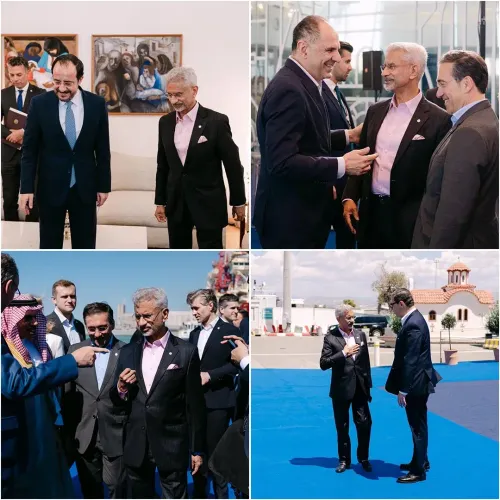
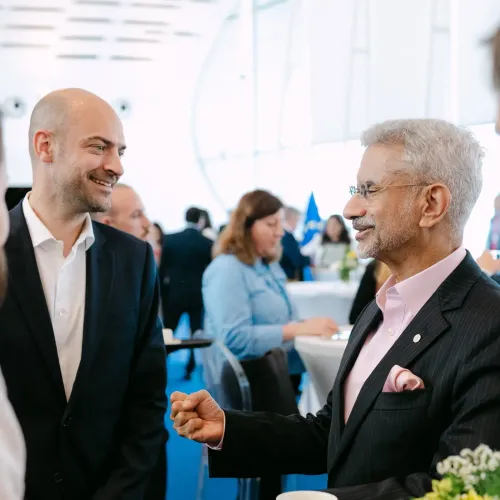
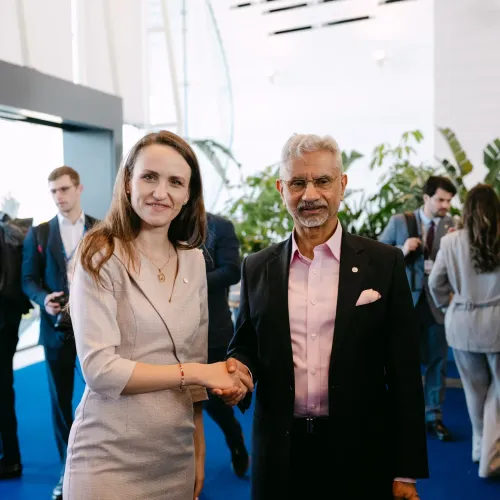
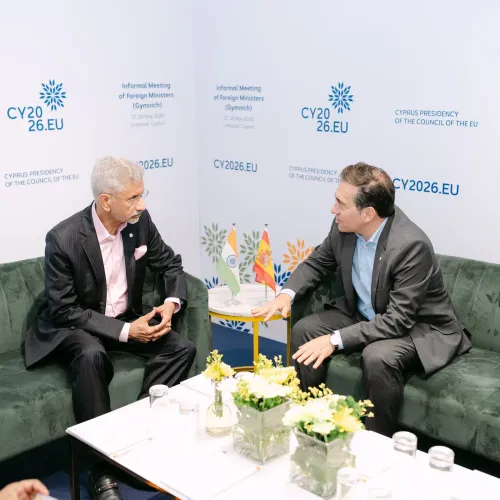
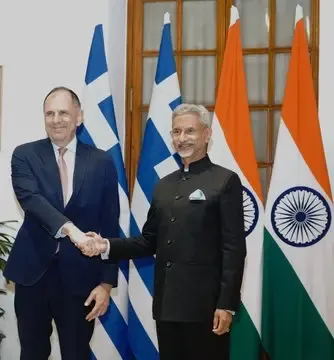
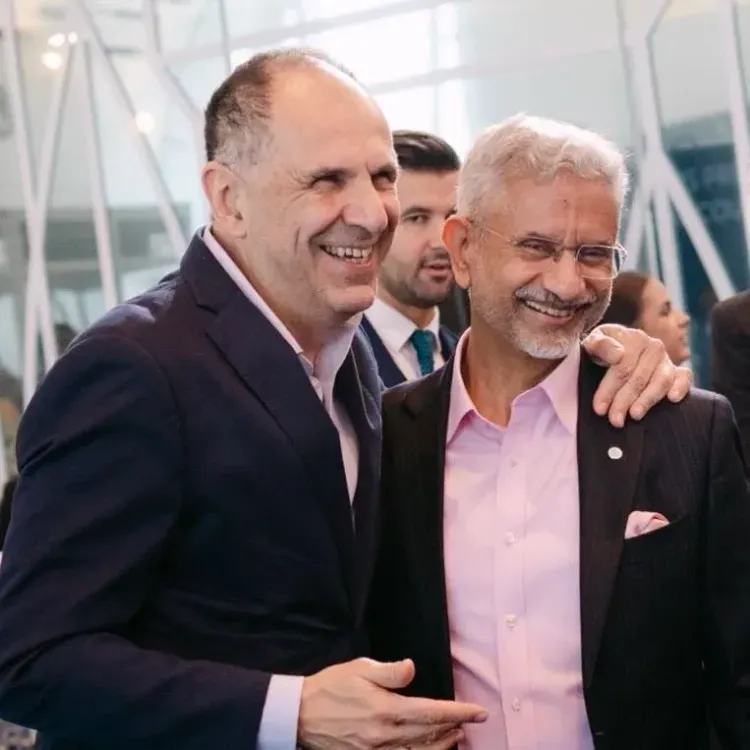
External Affairs Minister Dr. S. Jaishankar held a bilateral meeting with Greek Foreign Minister Giorgos Gerapetritis on the sidelines of the Gymnich informal EU foreign ministers' gathering in Cyprus, reinforcing India's targeted outreach to individual EU member states.
Key Takeaways
Jaishankar met Greek FM Giorgos Gerapetritis on the sidelines of the Gymnich EU foreign ministers' forum in Cyprus on 29 May 2026 .
India and Greece have maintained diplomatic relations since 1950 , with ties spanning political, economic and cultural domains.
The Gymnich format is the EU's informal Foreign Affairs Council gathering, used for candid exchanges outside formal summits.
Greece is both an EU and NATO member, fitting New Delhi's strategy of engaging southern European nations with shared maritime interests.
The meeting continues India's established pattern of conducting targeted bilateral diplomacy on the margins of multilateral forums to complement its broader India-EU engagement.
Union External Affairs Minister Dr. S. Jaishankar met with Greek Foreign Minister Giorgos Gerapetritis on the sidelines of the Gymnich informal EU Foreign Affairs Council gathering in Cyprus on Thursday, 29 May 2026, marking a fresh bilateral touchpoint between India and Greece.
Context
Dr. Jaishankar shared news of the meeting on X, writing: 'Great to meet with FM Giorgos Gerapetritis. #Gymnich #Cyprus', accompanied by the Indian and Greek flag emojis. The brief but pointed post signals a deliberate diplomatic engagement on the margins of a major multilateral forum.
The Gymnich format is the European Union's informal gathering of foreign ministers, designed for candid, off-the-record exchanges outside the constraints of formal EU Council sessions. Hosting it in Cyprus underscores the island nation's active role in EU diplomatic processes.
Policy Backdrop
India and Greece established formal diplomatic relations in 1950, and the two countries have held periodic foreign office consultations over the decades to expand political, economic and cultural ties. Greece, as both an EU and NATO member, occupies a strategically significant position in New Delhi's outreach to southern European nations.
The meeting fits a well-established pattern in Indian foreign policy: using the margins of multilateral forums to conduct targeted bilateral diplomacy with individual EU member states. This complements India's broader engagement with Brussels and reflects New Delhi's multi-alignment approach, which seeks diversified partnerships in trade, defence technology and connectivity across the Mediterranean and Indo-Pacific regions.
Stakeholders and Impact
The foreign ministries of both nations are the immediate stakeholders, but the meeting carries wider resonance for India-EU ties. Greece, with its extensive maritime tradition and positioning along critical sea lanes, shares interests with India in secure and open shipping routes — a concern that has grown in salience given ongoing instability in the Red Sea and broader Indo-Pacific.
For Athens, deepening ties with one of the world's fastest-growing major economies offers commercial and strategic diversification. For New Delhi, building a stronger relationship with a southern EU member state adds another node to its expanding European diplomatic network.
What's Next
Attention will now turn to whether this sideline meeting at Gymnich translates into a formal bilateral visit or a structured foreign office consultation between India and Greece in the coming months. The next India-EU summit will also be a key moment to gauge how individual member-state relationships, including with Athens, feed into the broader bilateral architecture. Dr. Jaishankar's active engagement across European capitals suggests New Delhi is methodically building its EU outreach one bilateral at a time.
Point of View
Reducing its dependence on the Brussels channel alone. Greece, with its maritime geography and EU-NATO dual membership, is a natural partner for India's Indo-Mediterranean connectivity ambitions. The optics of the Indian and Greek flags posted together signal a warmth that diplomatic language alone rarely conveys.
NationPress
20 Sept 2026
Frequently Asked Questions
Why did Jaishankar meet the Greek Foreign Minister at Gymnich?
Dr. Jaishankar used the sidelines of the Gymnich EU foreign ministers' gathering in Cyprus to hold a bilateral meeting with Greek FM Giorgos Gerapetritis, continuing India's practice of conducting targeted diplomacy at multilateral forums.
What is the Gymnich meeting?
Gymnich is the European Union's informal Foreign Affairs Council gathering, held periodically to allow EU foreign ministers candid, off-the-record discussions outside formal summit structures.
What are India-Greece diplomatic relations like?
India and Greece established formal diplomatic relations in 1950 and have maintained periodic foreign office consultations, with shared interests in maritime security, trade and cultural cooperation.
Why is Greece important for India's foreign policy?
Greece is both an EU and NATO member situated along critical Mediterranean sea lanes, making it a strategically valuable partner for India's multi-alignment approach and Indo-Mediterranean connectivity goals.
What could follow the Jaishankar-Gerapetritis meeting?
The meeting could lead to a formal bilateral visit or structured foreign office consultation between India and Greece, with the next India-EU summit also a likely moment to advance outcomes from such sideline engagements.