Jaishankar meets Mongolia Education Minister, ex-President
Synopsis
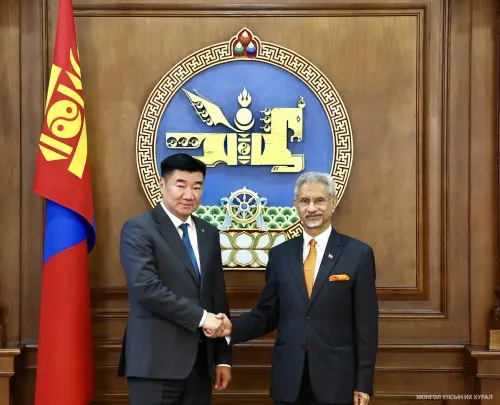
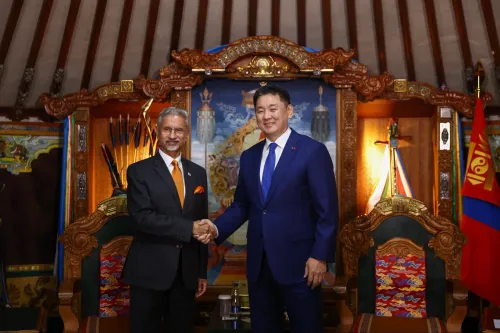
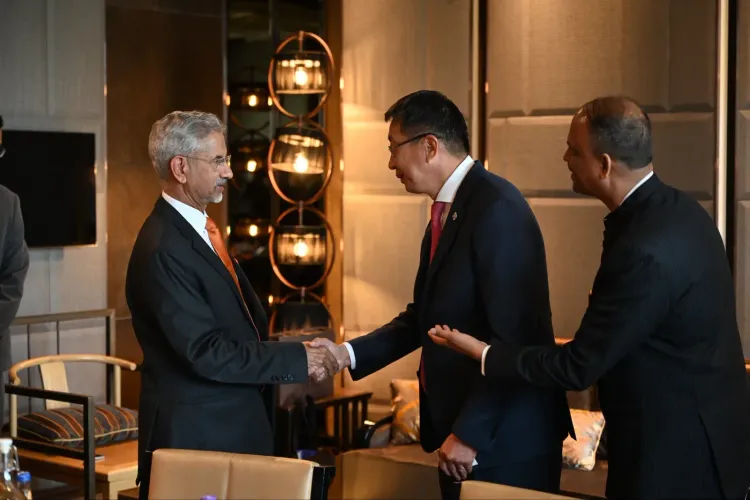
External Affairs Minister Dr. S. Jaishankar held a 'warm interaction' with Mongolia's Education Minister L. Enkh-Amgalan and former President N. Enkhbayar on 22 June 2026, reaffirming New Delhi's commitment to deepening the India-Mongolia Strategic Partnership across education and people-to-people ties.
Key Takeaways
Jaishankar met Mongolia's Education Minister L.
Enkh-Amgalan and former President N.
Enkhbayar on 22 June 2026 .
The meeting focused on deepening the India-Mongolia Strategic Partnership , established in 2015 during PM Modi's visit to Ulaanbaatar.
Education and people-to-people exchanges — including Indian government scholarships for Mongolian students — form a core pillar of bilateral ties.
The participation of a former Mongolian president alongside a serving minister signals broad, cross-institutional support for stronger India-Mongolia relations.
The interaction aligns with India's Act East Policy and extended neighbourhood approach, which positions Mongolia as a strategic partner amid regional power dynamics.
Follow-on steps may include new education MoUs or expanded scholarship announcements ahead of upcoming multilateral events.
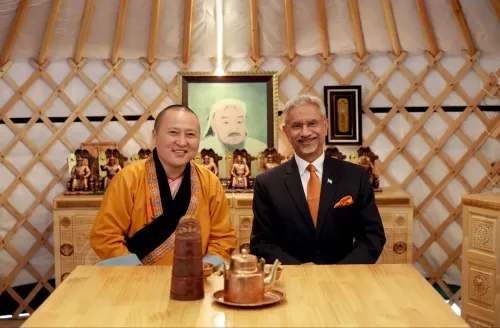
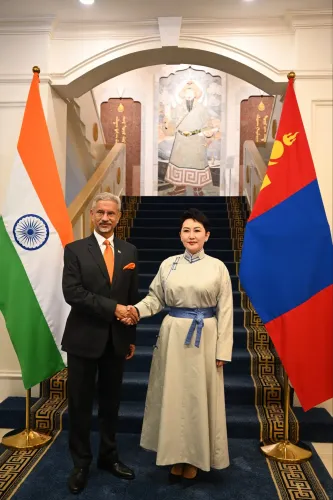
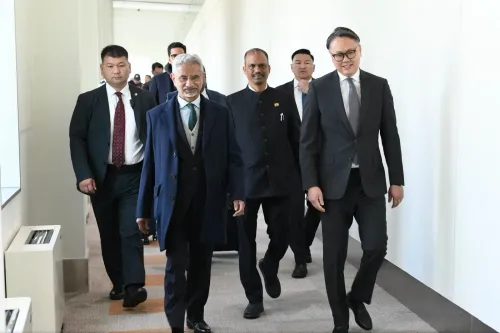
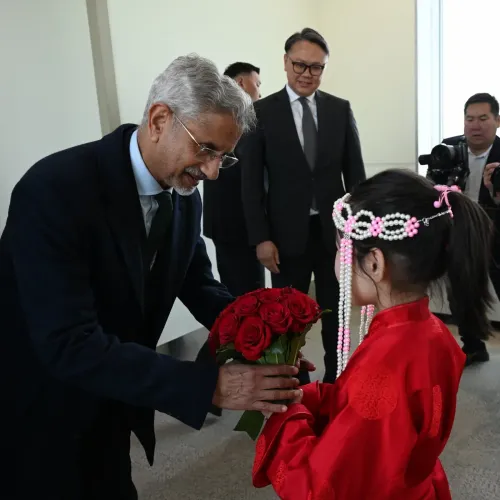
Union External Affairs Minister Dr. S. Jaishankar met Mongolia's Minister of Education L. Enkh-Amgalan and former Mongolian President N. Enkhbayar on the afternoon of Monday, 22 June 2026, in what he described as a 'warm interaction' focused on deepening the India-Mongolia Strategic Partnership.
Context
Posting on X, Dr. Jaishankar wrote: 'Had a warm interaction with Minister of Education L Enkh-Amgalan and former President N Enkhbayar of Mongolia this afternoon. Value their support for deepening our Strategic Partnership.' The meeting brought together a serving cabinet minister and a former head of state from Mongolia, signalling broad cross-institutional support in Ulaanbaatar for stronger ties with New Delhi.
The presence of former President Enkhbayar, who led Mongolia between 2005 and 2009, alongside the current education minister underscores that India-Mongolia engagement draws on both political and policy networks in Ulaanbaatar.
Policy Backdrop
The India-Mongolia Strategic Partnership was formally established in 2015 during Prime Minister Narendra Modi's visit to Ulaanbaatar — the first-ever visit by an Indian Prime Minister to Mongolia. The joint declaration signed then elevated ties across political, economic, defence, and cultural domains.
Education has been a consistent pillar of bilateral cooperation. India has extended annual scholarships and capacity-building programmes to Mongolian students and officials since the early 2000s, with Mongolia's Ministry of Education serving as a key implementing partner on the Ulaanbaatar side.
Mongolia, a landlocked nation situated between Russia and China, has historically sought to diversify its international partnerships. India's engagement fits within its broader 'extended neighbourhood' and Act East Policy frameworks, which treat Mongolia as a natural interlocutor given shared Buddhist heritage and converging interests in a rules-based regional order.
Stakeholders and Impact
The meeting directly involves the education ministries of both countries, diplomatic officials, and people-to-people exchange programmes. Mongolian students enrolled under Indian government scholarship schemes, as well as officials participating in capacity-building initiatives run by Indian institutions, stand to benefit from any follow-on decisions.
Minister Enkh-Amgalan's participation suggests the conversation may have touched on expanding academic exchanges, joint research initiatives, or cultural cooperation — areas where the two sides have an established but still-developing track record.
What's Next
High-level meetings of this nature often precede or follow multilateral gatherings where both countries are represented, including forums linked to the Shanghai Cooperation Organisation (SCO) and other regional platforms. Observers will watch for the announcement of new education memoranda of understanding or scholarship enhancements in the coming weeks.
The engagement reinforces New Delhi's intent to maintain steady, multi-level dialogue with Ulaanbaatar — not only through summits but through ministerial and track-1.5 interactions that keep the partnership operationally active between headline events.
Point of View
Even when it lacks headline-grabbing deliverables. The emphasis on education — a soft-power domain — fits a long-standing Indian diplomatic pattern of building durable influence through scholarships and capacity-building rather than transactional deals alone. This interaction, modest in optics, is consistent with the steady-state diplomacy that underpins India's Act East Policy beyond its more prominent Southeast Asian engagements.
NationPress
22 Jun 2026
Frequently Asked Questions
What is the India-Mongolia Strategic Partnership?
The India-Mongolia Strategic Partnership is a bilateral framework established in 2015 during Prime Minister Modi's visit to Ulaanbaatar, covering political, economic, defence, and cultural cooperation between the two countries.
Who is L. Enkh-Amgalan?
L. Enkh-Amgalan is Mongolia's Minister of Education, responsible for educational policy and overseeing academic and cultural exchange programmes, including those with India.
Who is N. Enkhbayar?
N. Enkhbayar is a former President of Mongolia who served from 2005 to 2009 and has remained engaged in promoting Mongolia's international partnerships, including ties with India.
Why does India engage with Mongolia diplomatically?
India engages with Mongolia under its Act East Policy and extended neighbourhood approach, valuing Mongolia's strategic location between Russia and China, shared Buddhist heritage, and Mongolia's interest in diversifying its international partnerships.
What role does education play in India-Mongolia relations?
Education is a core pillar of India-Mongolia ties; India has provided annual scholarships and capacity-building programmes for Mongolian students and officials since the early 2000s, with Mongolia's Education Ministry as a key partner.