Jaishankar Meets Mongolia FM Battsetseg in Ulaanbaatar

Synopsis
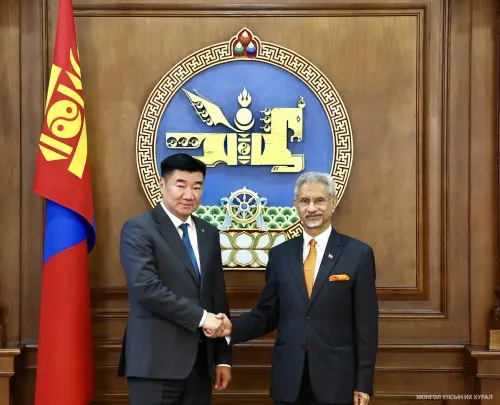
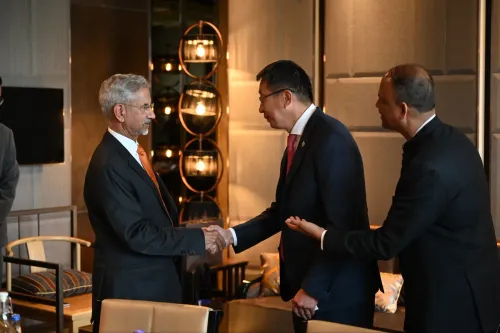
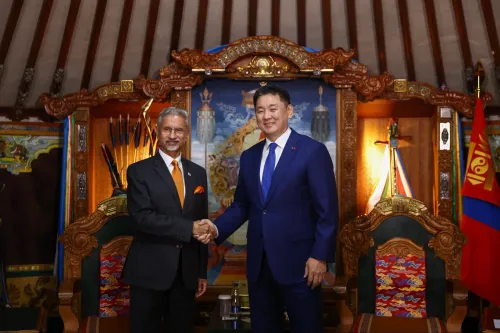
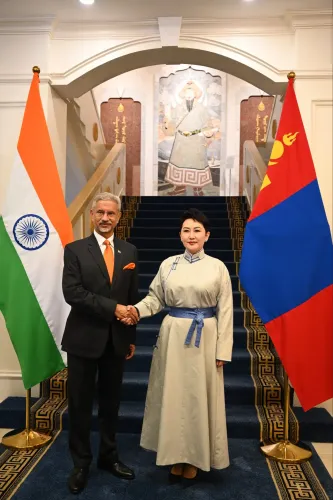
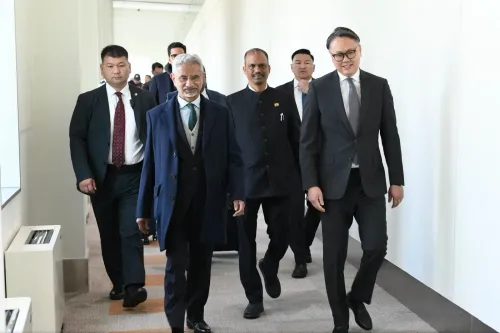
External Affairs Minister Dr. S. Jaishankar met Mongolian Foreign Minister Battsetseg Batmunkh in Ulaanbaatar on 22 June 2026, addressing the press after talks that reinforce India's strategic partnership with the landlocked democracy.
Key Takeaways
Jaishankar met Mongolian FM Battsetseg Batmunkh in Ulaanbaatar on 22 June 2026 .
Jaishankar issued a press statement after the bilateral meeting, sharing it publicly on social media.
India and Mongolia have maintained diplomatic relations since 1955 and elevated ties to a Strategic Partnership in 2015 under PM Modi's first-ever visit by an Indian PM to Mongolia.
The meeting aligns with India's extended neighbourhood policy , prioritising engagement with democratic partners in regions shaped by China and Russia.
Key areas of cooperation include defence training , Buddhist cultural links , and coordination in multilateral forums such as the United Nations .
Follow-up developments on defence cooperation and potential economic agreements are expected to emerge from the Ulaanbaatar visit.
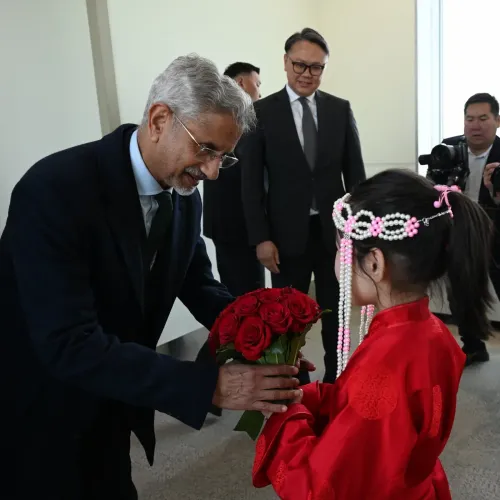
Union External Affairs Minister Dr. S. Jaishankar held talks with Mongolian Foreign Minister Battsetseg Batmunkh in Ulaanbaatar on Monday, 22 June 2026, and addressed the press following the bilateral meeting. Jaishankar shared his statement to the media after the talks, flagging the engagement between the two nations with India and Mongolia flag emojis on the post.
Context
India and Mongolia share diplomatic relations dating back to 1955, making theirs one of the older bilateral ties India maintains in the broader Asian neighbourhood. The relationship was significantly upgraded when Prime Minister Narendra Modi visited Ulaanbaatar in May 2015 — the first visit by an Indian Prime Minister to Mongolia — and elevated the partnership to a Strategic Partnership. That upgrade formalised cooperation across defence, culture, and multilateral diplomacy.
Mongolia is a landlocked democracy bordered by China and Russia, and its alignment with democratic partners such as India carries strategic significance in a geopolitically contested region. Regular high-level exchanges have since become a feature of the relationship, reinforcing its substance beyond ceremonial goodwill.
Policy Backdrop
The bilateral relationship rests on several pillars: defence capacity building, Buddhist cultural heritage, and coordination in multilateral forums including the United Nations. India has provided defence training slots to Mongolian military personnel over the years, and the two countries share a civilisational affinity rooted in Buddhist traditions that predates modern diplomacy.
The meeting in Ulaanbaatar fits within India's broader extended neighbourhood policy, which seeks to deepen ties with smaller democracies across Asia as a way of diversifying regional influence and countering the gravitational pull of larger powers. Mongolia's position between China and Russia makes sustained Indian engagement particularly significant from a strategic standpoint.
Stakeholders and Impact
Indian diplomats and defence training institutions stand to benefit from any follow-through on cooperation frameworks discussed during the meeting. On the Mongolian side, the government of Foreign Minister Battsetseg Batmunkh has pursued active engagement with democratic partners to balance its geopolitical position. Mongolian civil society and institutions connected to capacity-building programmes are also stakeholders in the outcome of such high-level visits.
For India, the visit reinforces its image as a reliable partner for smaller nations, consistent with the 'Neighbourhood First' and extended neighbourhood dimensions of its foreign policy. The press statement format — where both sides address media after talks — signals a degree of transparency and diplomatic weight attached to the engagement.
What's Next
Observers will watch for any follow-up announcements on defence training slots, potential mining-sector agreements, or cooperation frameworks in multilateral settings. Mongolia's rich reserves of coal and rare earth minerals have long been a point of interest for partners seeking resource diversification, and India has periodically explored economic linkages in this space.
The broadcast statement shared by Dr. Jaishankar on social media suggests the meeting's outcomes will be communicated publicly, keeping both domestic and international audiences informed of the diplomatic progress made in Ulaanbaatar on this June visit.
Point of View
The meeting reinforces a pattern of using high-level ministerial visits to lock in partnerships that serve as strategic buffers in China's and Russia's immediate neighbourhood. Mongolia's rare position as a democratic, landlocked state between two major powers makes Indian engagement here symbolically and strategically disproportionate to the bilateral trade volumes. The visit also demonstrates Jaishankar's personal diplomatic style — public, transparent, and calibrated to signal intent to both domestic and international audiences.
NationPress
22 Jun 2026
Frequently Asked Questions
Why did Jaishankar visit Mongolia in June 2026?
Jaishankar travelled to Ulaanbaatar to hold bilateral talks with Mongolian Foreign Minister Battsetseg Batmunkh, reinforcing India's Strategic Partnership with Mongolia and discussing areas including defence cooperation and multilateral coordination.
What is India's relationship with Mongolia?
India and Mongolia established diplomatic relations in 1955. The relationship was upgraded to a Strategic Partnership in 2015 when Prime Minister Narendra Modi made the first-ever visit by an Indian PM to Mongolia, deepening ties in defence, culture, and multilateral diplomacy.
Who is Battsetseg Batmunkh?
Battsetseg Batmunkh is the Foreign Minister of Mongolia, responsible for managing the country's bilateral and multilateral diplomatic engagements, including with India.
What are the main areas of India-Mongolia cooperation?
The primary pillars of India-Mongolia cooperation include defence capacity building and training, Buddhist cultural heritage links, and coordination in international forums such as the United Nations.
What is India's extended neighbourhood policy?
India's extended neighbourhood policy refers to New Delhi's strategic effort to deepen ties with countries beyond its immediate South Asian neighbourhood, including Central and East Asian democracies like Mongolia, to diversify regional influence and build partnerships in geopolitically significant areas.