CM Hemant Soren Orders Ranchi DC to Link Woman, Children to Welfare
Synopsis
Chief Minister Hemant Soren publicly directed the Ranchi Deputy Commissioner on 22 June 2026 to investigate a welfare case, enrol Seema Lohra in all applicable government schemes, and connect her children to Anganwadi and school education services.
Key Takeaways
Chief Minister Hemant Soren posted a directive on X on 22 June 2026 addressed to the Ranchi Deputy Commissioner .
He ordered an investigation into the case of Seema Lohra and her children.
The DC has been asked to enrol Seema Lohra in every applicable government welfare scheme.
Her children are to be linked to school education and Anganwadi services under the national ICDS framework.
The DC is required to report back on action taken, creating a public accountability trail.
The directive reflects Jharkhand's broader push to improve last-mile welfare delivery among marginalised communities.
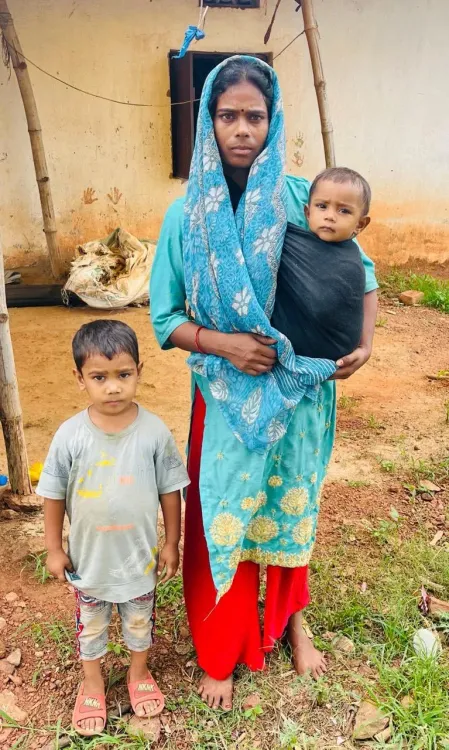
Jharkhand Chief Minister Hemant Soren on Monday, 22 June 2026, directed the Deputy Commissioner of Ranchi to investigate a welfare case and ensure that a woman identified as Seema Lohra is enrolled in all applicable government schemes, while her children are connected to education and Anganwadi services.
Context
In a post on X addressed to @DC_Ranchi, Chief Minister Soren instructed the district administration to 'ukta mamle ki janch kar' (investigate the said matter) and take action to link Seema Lohra to every necessary government scheme. He further directed that her children be enrolled in school education and brought under the coverage of the Anganwadi network, with a report submitted thereafter.
The post was accompanied by two images, the contents of which appear to document the circumstances of the case brought to the Chief Minister's attention. The specific details of how the case reached Soren have not been officially stated.
Policy Backdrop
Anganwadi centres operate under the national Integrated Child Development Services (ICDS), launched in 1975, and are the primary delivery mechanism for nutrition, preschool education, and basic health services for children under six and lactating mothers across India. In Jharkhand, a state with a large tribal and rural population, enrolment in such schemes has historically been uneven, with last-mile delivery remaining a persistent administrative challenge.
Since Jharkhand Mukti Morcha came to power in 2019, the state government has periodically run enrolment drives targeting women and children in marginalised communities. The state has also sought to use district-level administration as the primary enforcement arm for welfare delivery.
Stakeholders and Impact
The immediate beneficiaries are Seema Lohra and her children, residents within the jurisdiction of the Ranchi Deputy Commissioner. If the directive is acted upon, the family stands to gain access to nutrition support, early childhood education, and a range of state and central welfare entitlements.
More broadly, the public directive signals to district officials across Jharkhand that individual welfare gaps brought to the Chief Minister's notice will be escalated through formal administrative channels. It also reflects a documented pattern among Indian chief ministers of using social media as a real-time grievance redressal tool, particularly for cases involving women and children from vulnerable communities.
What's Next
The Ranchi Deputy Commissioner's office is now formally on record to investigate the case, complete enrolment of Seema Lohra in applicable schemes, and report back to the Chief Minister's office. The outcome of this directive could inform whether the state undertakes a broader review of automatic enrolment systems for welfare programmes in the 2026-27 administrative cycle. Advocates for tribal and women's welfare will be watching whether the individual intervention translates into systemic corrective action.
Point of View
Leaving little room for bureaucratic inaction. This approach has become a recognisable governance style in Jharkhand, where the ruling JMM has consistently framed welfare delivery as a political commitment to tribal and marginalised communities. The directive also implicitly acknowledges a systemic failure: that eligible beneficiaries like Seema Lohra are not being automatically enrolled in schemes they qualify for. Whether this intervention catalyses a structural review of enrolment processes, or remains a one-off case resolution, will be the real test of its policy significance.
NationPress
22 Jun 2026
Frequently Asked Questions
What did Jharkhand CM Hemant Soren order regarding Seema Lohra?
CM Hemant Soren directed the Ranchi Deputy Commissioner on 22 June 2026 to investigate the case of Seema Lohra, enrol her in all applicable government welfare schemes, and connect her children to school education and Anganwadi services.
What is an Anganwadi centre and what services does it provide?
An Anganwadi centre is a government-run facility under the Integrated Child Development Services (ICDS), launched in 1975, that provides nutrition support, preschool education, and basic health services to children under six and to pregnant or lactating mothers.
Why did CM Soren tag the Ranchi DC on social media?
By publicly tagging the Ranchi Deputy Commissioner on X, CM Soren created a visible, accountable instruction that compels the district administration to act and report back, a method increasingly used by Indian chief ministers for real-time grievance redressal.
What government schemes could Seema Lohra be enrolled in under this order?
While the specific schemes were not listed in the post, eligible welfare programmes in Jharkhand for women include nutrition, livelihood, and social protection entitlements under both state and central government frameworks, which the DC has been asked to identify and apply.
What happens after the Ranchi DC investigates the case?
The Ranchi Deputy Commissioner is required to report back to the Chief Minister's office after completing the investigation and enrolling Seema Lohra and her children in the relevant schemes, creating a formal accountability record.