Jaishankar Meets Mongolia Parliament Speaker, Backs Bilateral Ties
Synopsis
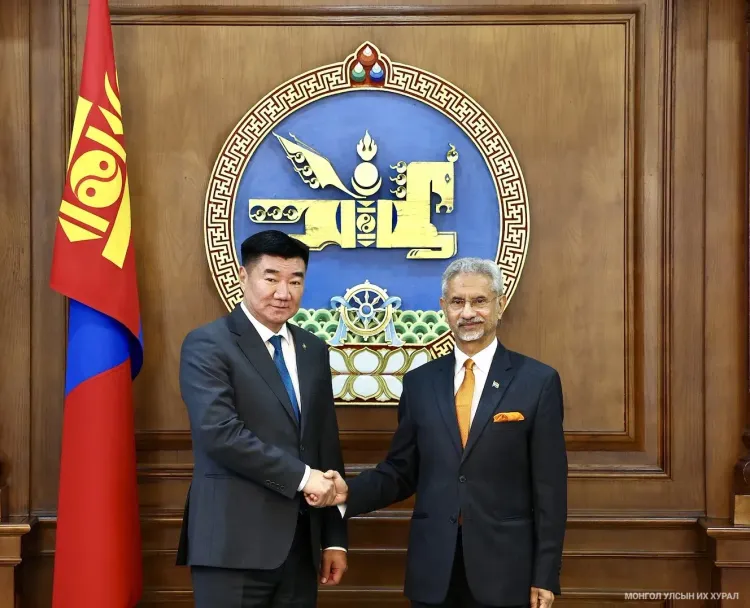
External Affairs Minister Dr. S. Jaishankar met Mongolia's Parliament Speaker Sandag Byambatsogt on 22 June 2026, welcoming his support for India-Mongolia parliamentary friendship and reiterating commitment to people-centric development cooperation under the bilateral Strategic Partnership.
Key Takeaways
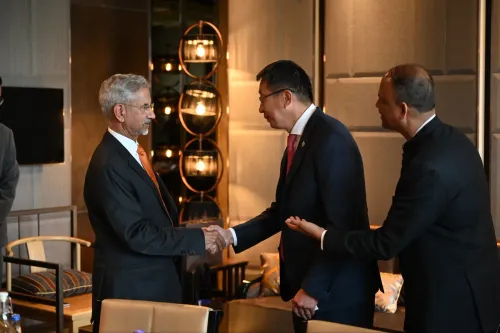
Jaishankar met Sandag Byambatsogt , Speaker of Mongolia's State Great Khural , on 22 June 2026 .
Jaishankar welcomed the Speaker's 'strong support for India-Mongolia parliamentary exchanges and friendship.' Both sides reaffirmed commitment to a people-centric development partnership .
India and Mongolia have maintained diplomatic relations since 1955 , elevated to a Strategic Partnership in 2015 .
The engagement aligns with India's extended neighbourhood policy , prioritising institutional and parliamentary diplomacy with Mongolia.
Reciprocal visits by Indian parliamentary delegations and the next bilateral consultation round are expected to follow.
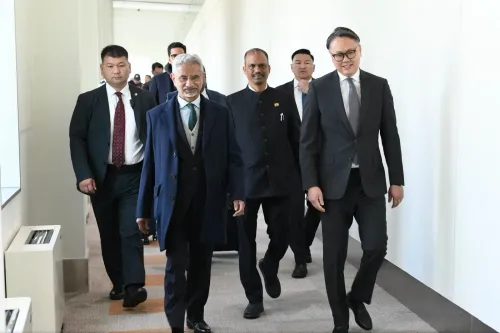
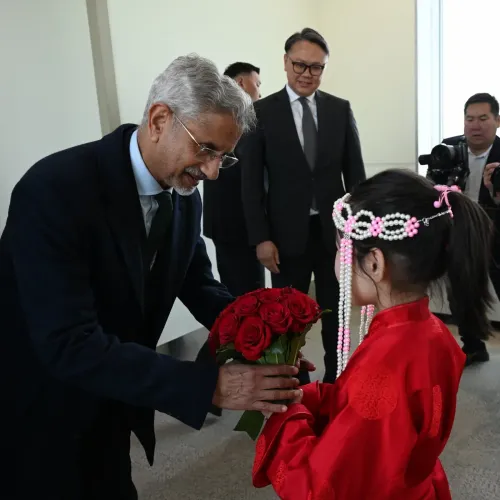
Union External Affairs Minister Dr. S. Jaishankar met Sandag Byambatsogt, Speaker of the State Great Khural — Mongolia's unicameral parliament — on Monday, 22 June 2026, reaffirming India's commitment to deepening parliamentary exchanges and people-centric development cooperation between the two nations.
Context
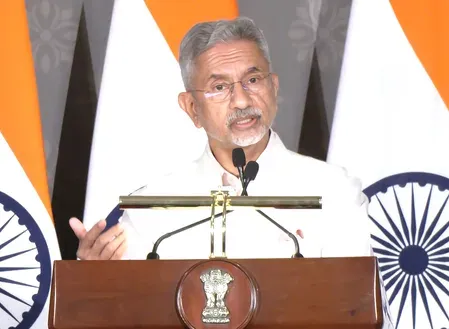
Taking to X, Dr. Jaishankar described the meeting as 'a pleasure' and welcomed Speaker Byambatsogt's 'strong support for India-Mongolia parliamentary exchanges and friendship.' He also 'reiterated support to deepening our people-centric development partnership,' signalling continuity in the bilateral engagement framework.
The State Great Khural is the supreme legislative body of Mongolia, and the Speaker's direct engagement with India's top diplomat underscores the institutional weight both sides place on parliamentary diplomacy as a pillar of the relationship.
Policy Backdrop
India and Mongolia established diplomatic relations in 1955, building a relationship grounded in shared democratic values and cultural affinity rooted in Buddhism. The ties were elevated to a Strategic Partnership during Prime Minister Narendra Modi's landmark visit to Ulaanbaatar in 2015 — the first-ever visit by an Indian Prime Minister to Mongolia.
Since then, the relationship has been sustained through Indian lines of credit extended for Mongolian development projects, capacity-building initiatives, and regular high-level exchanges. India's approach with Mongolia deliberately emphasises people-centric and institutional cooperation over large-scale infrastructure, distinguishing it from the model of engagement pursued by other regional powers.
Stakeholders and Impact
Parliamentarians on both sides stand to benefit most directly from the reaffirmed commitment to legislative exchanges, which typically include study visits, inter-parliamentary delegations, and knowledge-sharing on democratic governance. Such ties help insulate the bilateral relationship from diplomatic fluctuations by building institutional familiarity at the legislative level.
For Mongolia — a landlocked nation navigating its position between Russia and China — sustaining close ties with a major democratic partner like India carries strategic value. For India, the engagement fits within its broader extended neighbourhood policy, which seeks to maintain a consistent diplomatic presence across Central and East Asia.
What's Next
The meeting is expected to set the ground for scheduling reciprocal visits by Indian parliamentary delegations to Ulaanbaatar, as well as the next round of bilateral consultations. Both governments are likely to explore further avenues under the Strategic Partnership framework, particularly in development cooperation and capacity-building programmes that directly benefit Mongolian citizens.
As India continues to deepen its engagement across its extended neighbourhood, the pattern of high-level reciprocal contacts with Mongolia signals that New Delhi views Ulaanbaatar not merely as a peripheral partner but as a consistent democratic ally in a strategically significant region.
Point of View
New Delhi signals a conscious differentiation from the engagement models of China and Russia in Mongolia's neighbourhood. The emphasis on legislative exchanges also reflects India's broader strategy of anchoring its extended neighbourhood relationships in democratic institution-building, which carries both soft-power and strategic value. Sustaining this pattern of reciprocal high-level contacts keeps India relevant in Ulaanbaatar at a moment when major powers are actively competing for influence across Central and East Asia.
NationPress
22 Jun 2026
Frequently Asked Questions
Who is Sandag Byambatsogt?
Sandag Byambatsogt is the Speaker of the State Great Khural, Mongolia's unicameral parliament. He met India's External Affairs Minister Dr. S. Jaishankar on 22 June 2026 to discuss parliamentary exchanges and bilateral friendship.
What is the State Great Khural?
The State Great Khural is the unicameral, or single-chamber, legislature of Mongolia and its supreme law-making body. Its Speaker's engagement with India's top diplomat highlights the importance both nations place on parliamentary diplomacy.
What is the India-Mongolia Strategic Partnership?
India and Mongolia elevated their bilateral relationship to a Strategic Partnership during Prime Minister Narendra Modi's visit to Ulaanbaatar in 2015 — the first visit by an Indian Prime Minister to Mongolia. The partnership covers development cooperation, cultural ties, and institutional exchanges.
When did India and Mongolia establish diplomatic relations?
India and Mongolia established diplomatic relations in 1955. The relationship has since grown through regular high-level exchanges, Indian lines of credit for development projects, and capacity-building initiatives.
What does India's extended neighbourhood policy mean for Mongolia?
India's extended neighbourhood policy involves proactive diplomatic engagement with countries beyond its immediate borders, including Mongolia. For Ulaanbaatar, this translates into parliamentary exchanges, development partnerships, and high-level visits that position India as a consistent democratic partner in the region.