Jaishankar Meets PNG FM Tkatchenko on Sidelines of ASEAN in Manila
Synopsis
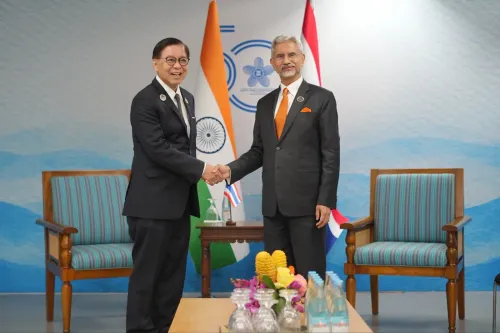
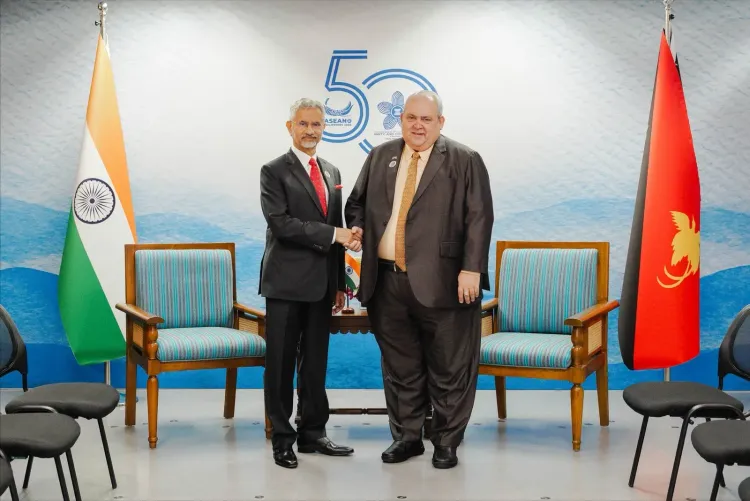
EAM Dr. S. Jaishankar met Papua New Guinea FM Justin Tkatchenko on the sidelines of ASEAN in Manila on 23 July 2026. The two sides discussed bilateral cooperation under FIPIC, with India reaffirming its readiness to support Pacific Island Countries on development, capacity building, and maritime security.
Key Takeaways
Jaishankar met Papua New Guinea FM Justin W.
Tkatchenko in Manila on 23 July 2026 on the sidelines of ASEAN meetings.
Discussions covered bilateral cooperation channelled through the Forum for India-Pacific Islands Cooperation (FIPIC) , launched in 2014 .
India reaffirmed readiness to partner with Pacific Island Countries on development, capacity building, and maritime security .
FIPIC brings together India and 14 Pacific Island Countries ; its first summit was held in Jaipur in August 2015 .
The meeting reflects India's broader Indo-Pacific strategy of engaging small island states as structured development and security partners.
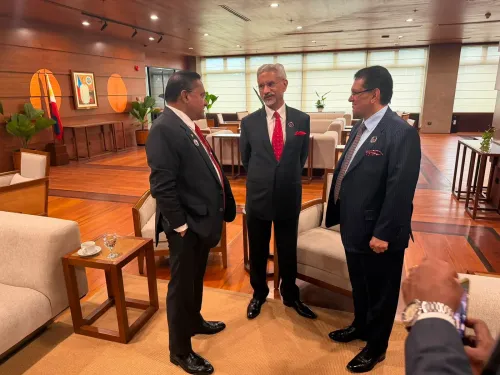
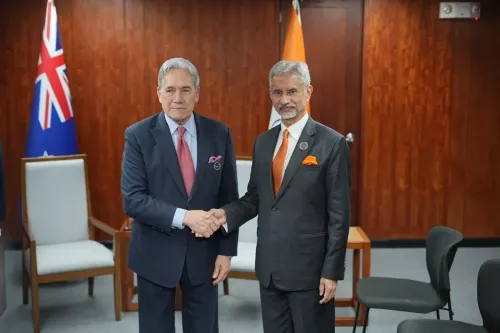
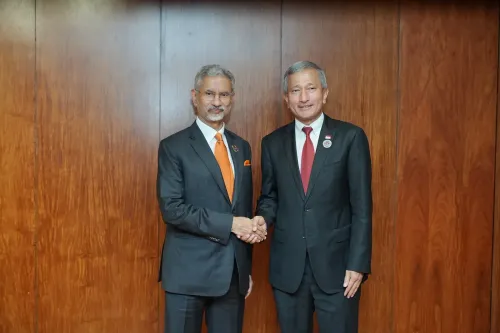
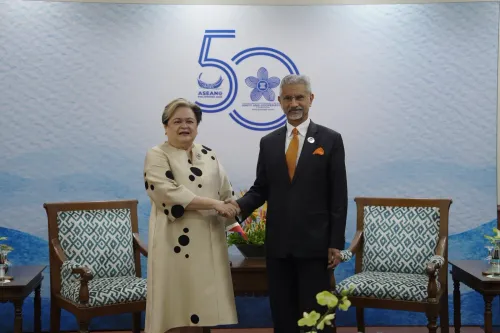
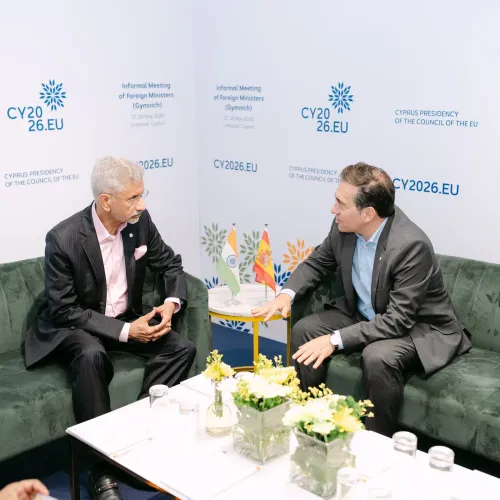
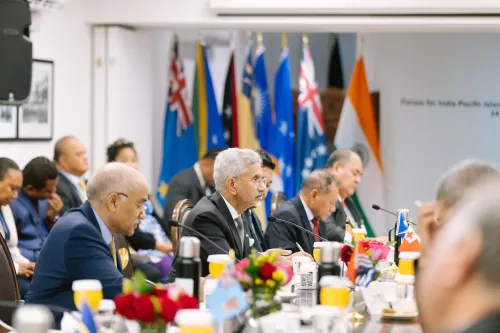
Union External Affairs Minister Dr. S. Jaishankar met Papua New Guinea Foreign Minister Justin W. Tkatchenko on the sidelines of the ASEAN meetings in Manila, Philippines, on 23 July 2026, reaffirming India's commitment to partnering with Pacific Island Countries on development, capacity building, and maritime security.
Posting on X, Dr. Jaishankar described it as a 'pleasure to meet' FM Tkatchenko, noting that the two sides 'spoke about bilateral cooperation including through the Forum for India-Pacific Islands Cooperation (FIPIC).' He added that 'India stands ready to partner with the Pacific Island Countries for their development and capacity building priorities, while supporting their maritime security.'
Context
The meeting took place in Manila where Dr. Jaishankar is attending ASEAN-related engagements, using the multilateral platform to hold a series of bilateral pull-asides with counterparts from across the Indo-Pacific. Papua New Guinea is among the most significant Pacific Island nations in terms of size and strategic location, making it a key interlocutor under the FIPIC framework.
FM Justin W. Tkatchenko represents Papua New Guinea, a country that has deepened engagement with India over recent years, particularly on infrastructure, health, and maritime domain awareness.
Policy Backdrop
The Forum for India-Pacific Islands Cooperation (FIPIC) was launched by Prime Minister Narendra Modi in Fiji in November 2014, bringing together India and 14 Pacific Island Countries under a structured cooperation architecture. India hosted the first FIPIC Summit in Jaipur in August 2015, followed by a leaders-level meeting in 2019.
FIPIC has served as India's primary diplomatic vehicle for engaging small island states in the Pacific, covering areas such as renewable energy, digital connectivity, climate resilience, and capacity building for government officials. Maritime security has grown as an increasingly prominent pillar, reflecting shared concerns over illegal fishing, exclusive economic zone monitoring, and broader Indo-Pacific stability.
India's outreach to Pacific Island nations is consistent with its wider Indo-Pacific strategy, which emphasises partnerships with smaller states as a counterweight to growing great-power competition in the region.
Stakeholders and Impact
Papua New Guinea and the broader group of Pacific Island Countries stand to benefit from India's offers of technical assistance, capacity-building programmes, and maritime surveillance support. For island nations whose vast exclusive economic zones are difficult to monitor independently, India's naval and Coast Guard cooperation carries practical value.
The meeting also signals continued Indian diplomatic momentum in the Pacific, a region where multiple major powers are competing for influence through infrastructure investment and security partnerships. India's FIPIC-anchored approach positions it as a development partner that does not attach political conditionalities.
What's Next
The Manila meeting is likely to feed into the agenda for the next FIPIC summit, where concrete project commitments on maritime security and capacity building are expected to be formalised. Bilateral follow-up between New Delhi and Port Moresby on specific cooperation projects could follow in the months ahead.
With India's Indo-Pacific engagement accelerating, the FIPIC framework may see expanded programming, particularly on maritime domain awareness and digital public infrastructure — areas where India has sought to offer alternatives to other large-economy partners active in the Pacific.
Point of View
A framework that Prime Minister Modi built from scratch in 2014. By anchoring the conversation around maritime security alongside development, New Delhi is signalling that its Pacific outreach has matured beyond soft-power gestures into a more substantive strategic partnership offer. The choice of a multilateral venue like ASEAN for bilateral pull-asides also reflects India's efficient diplomatic choreography — maximising engagement without requiring dedicated bilateral visits. If the next FIPIC summit delivers concrete maritime cooperation deliverables, it would mark a meaningful step-up in India's Indo-Pacific architecture.
NationPress
23 Jul 2026
Frequently Asked Questions
What is FIPIC and why does it matter for India?
FIPIC, the Forum for India-Pacific Islands Cooperation, is India's multilateral platform for engaging 14 Pacific Island Countries, launched by PM Modi in Fiji in 2014. It covers development, capacity building, climate resilience, and maritime security, and is central to India's Indo-Pacific strategy.
Why did Jaishankar meet the Papua New Guinea FM in Manila?
The meeting took place on the sidelines of ASEAN engagements in Manila on 23 July 2026, where Dr. Jaishankar used the multilateral setting for bilateral discussions on India-PNG cooperation and FIPIC priorities.
What did India offer Papua New Guinea in the Manila meeting?
India reaffirmed its readiness to partner with Pacific Island Countries, including Papua New Guinea, on development priorities, capacity building, and maritime security support under the FIPIC framework.
What is India's maritime security role in the Pacific?
India has been expanding maritime cooperation with Pacific Island Countries through FIPIC, offering support for exclusive economic zone monitoring, maritime domain awareness, and Coast Guard capacity building.
When was the first FIPIC Summit held?
The first FIPIC Summit was held in Jaipur, India, in August 2015, following the forum's launch by PM Modi in Fiji in November 2014.