Jaishankar meets Thailand DPM & FM Sihasak in Manila at ASEAN
Synopsis
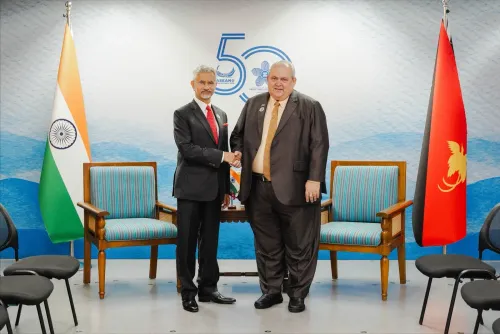
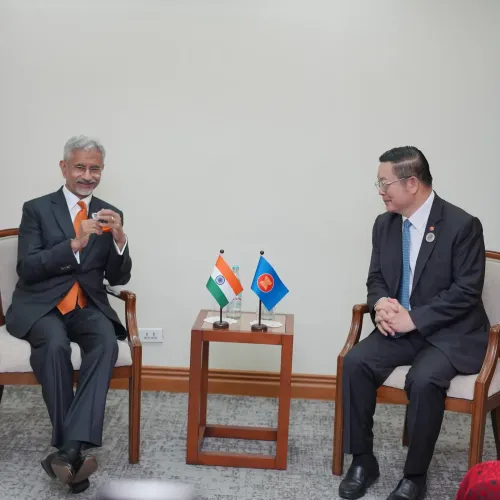
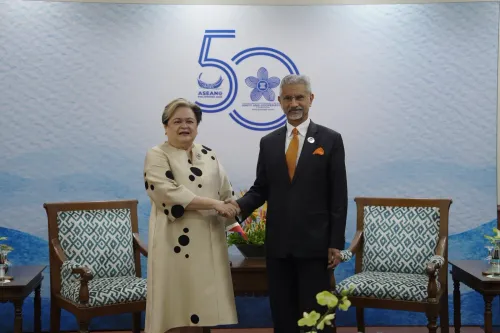
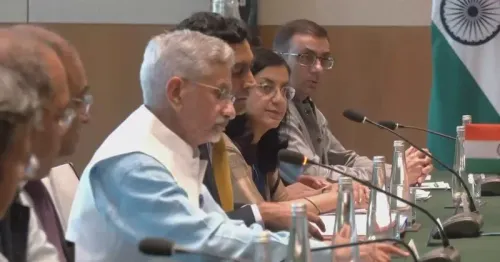
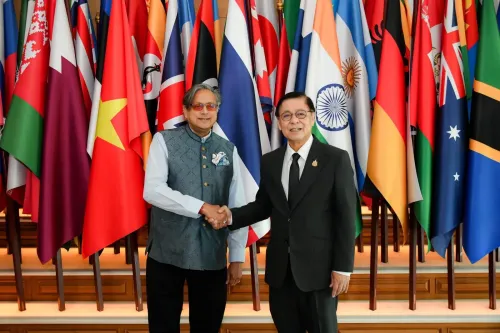
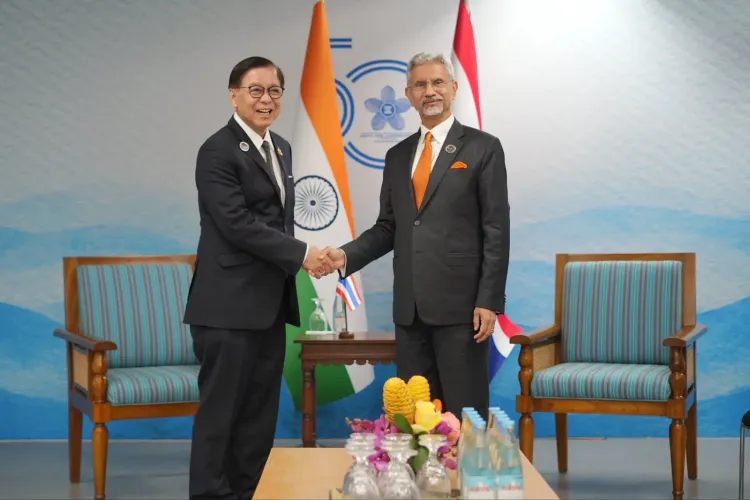
EAM Dr. S. Jaishankar met Thailand's Deputy Prime Minister and Foreign Minister Sihasak Phuangketkeow on the sidelines of the ASEAN ministerial in Manila on 22 July 2026. Talks focused on deepening bilateral ties and exchanging views on developments in Myanmar, reinforcing India's Act East Policy engagement.
Key Takeaways
Jaishankar held a bilateral meeting with Thailand's DPM and FM Sihasak Phuangketkeow in Manila on 22 July 2026 .
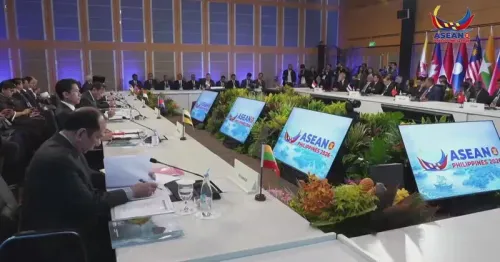
The meeting took place on the sidelines of the ASEAN foreign ministers' gathering in Manila .
Talks centred on 'deepening bilateral engagements' between India and Thailand .
Both sides exchanged views on 'developments in Myanmar ', reflecting shared border-security and stability concerns.
India and Thailand have been linked by a bilateral free trade agreement since 2004 and by India's Act East Policy since 2014 .
A follow-up India-Thailand Joint Commission meeting and the next ASEAN-India Summit are the key forums to watch for concrete outcomes.
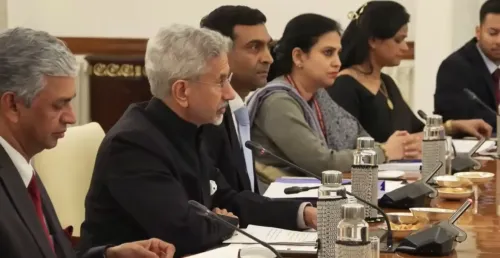
Union External Affairs Minister Dr. S. Jaishankar met Deputy Prime Minister and Foreign Minister Sihasak Phuangketkeow of Thailand on the sidelines of the ASEAN ministerial meeting in Manila on Wednesday, 22 July 2026, with talks centred on deepening bilateral ties and the evolving situation in Myanmar.
Context
Dr. Jaishankar posted on X that he had 'a good meeting' with DPM and FM Sihasak Phuangketkeow, noting that 'our discussion centered around deepening bilateral engagements' and that the two sides 'also exchanged views on the developments in Myanmar.' The meeting took place in Manila, where ASEAN foreign ministers had convened, providing a natural diplomatic forum for India to conduct parallel bilateral engagements with member states.
Sihasak Phuangketkeow is a seasoned diplomat who has steered Thailand's ASEAN and bilateral foreign policy. His engagement with India reflects the sustained importance both sides place on the relationship within the broader Indo-Pacific framework.
Policy Backdrop
India and Thailand share a relationship anchored by the 2004 bilateral free trade agreement that expanded merchandise trade between the two economies. India's Act East Policy, unveiled in 2014, further elevated engagement with ASEAN members including Thailand, embedding bilateral ties within a wider strategic and economic architecture.
On Myanmar, both India and Thailand share land borders with the country and carry overlapping concerns about stability, cross-border movement, and humanitarian conditions following the 2021 military coup. ASEAN foreign ministers endorsed the Five-Point Consensus on Myanmar in April 2021, a framework that India has subsequently supported through diplomatic channels.
Stakeholders and Impact
ASEAN partners and Indian traders stand to benefit from any forward movement on bilateral economic corridors and connectivity projects that such high-level meetings help advance. The two countries' shared border with Myanmar means that any diplomatic momentum on the Five-Point Consensus carries direct implications for border security and refugee management on both sides.
For India, the Manila engagement is part of a consistent pattern of using multilateral ASEAN platforms to lock in face-to-face bilateral time with counterparts — maximising diplomatic bandwidth at a single venue and signalling continued commitment to ASEAN centrality in India's Indo-Pacific approach.
What's Next
Observers will watch for a follow-up India-Thailand Joint Commission meeting that could translate the Manila conversation into concrete deliverables on trade, connectivity, and people-to-people ties. The next ASEAN-India Summit will provide another high-profile checkpoint for progress on the agenda items discussed by Dr. Jaishankar and DPM Sihasak. Movement on Myanmar diplomacy — particularly any coordinated push to revive the Five-Point Consensus — will be closely tracked given both nations' direct stakes in the country's stability.
Point of View
Both sides signal coordinated concern at a moment when ASEAN's Five-Point Consensus remains stalled, lending quiet diplomatic weight to the consensus framework. For Thailand, engaging India at the deputy-prime-minister level in a multilateral setting elevates the bilateral relationship beyond routine trade mechanics into the realm of strategic consultation. This pattern of parallel bilaterals at ASEAN forums is likely to intensify as India deepens its Indo-Pacific footprint ahead of the next ASEAN-India Summit.
NationPress
21 Oct 2026
Frequently Asked Questions
Why did Jaishankar meet Thailand's FM in Manila?
EAM Dr. S. Jaishankar met Thailand's Deputy Prime Minister and Foreign Minister Sihasak Phuangketkeow on the sidelines of the ASEAN foreign ministers' meeting in Manila on 22 July 2026 to discuss deepening bilateral ties and share views on developments in Myanmar.
What is India's relationship with Thailand?
India and Thailand share a bilateral free trade agreement signed in 2004 and are connected through India's Act East Policy launched in 2014, which elevated strategic and economic engagement with ASEAN member states including Thailand.
What did India and Thailand discuss about Myanmar?
Both sides 'exchanged views on the developments in Myanmar,' reflecting their shared concerns as neighbouring countries over stability, border security, and the humanitarian situation following Myanmar's 2021 military coup.
What is the ASEAN Five-Point Consensus on Myanmar?
The Five-Point Consensus is a framework endorsed by ASEAN foreign ministers in April 2021 calling for an immediate cessation of violence, dialogue among all parties, and humanitarian assistance to Myanmar — a process India has supported diplomatically.
What comes next after the Jaishankar-Sihasak meeting in Manila?
Observers will watch for a follow-up India-Thailand Joint Commission meeting for concrete trade and connectivity outcomes, as well as the next ASEAN-India Summit, which will serve as a broader checkpoint for the bilateral agenda discussed in Manila.