Jaishankar meets UN Deputy Chief Amina Mohammed, talks climate and SDGs
Synopsis
UN Deputy Secretary-General Amina J. Mohammed's three-day New Delhi visit — spanning talks with EAM Jaishankar, MEA's Secretary (West), and an IIT student engagement — signals how seriously India is investing in its multilateral standing, especially with the 2030 SDG deadline looming and its UNSC seat campaign already underway.
Key Takeaways
Jaishankar met UN Deputy Secretary-General Amina J.
Mohammed in New Delhi on 27 August .
Talks covered sustainable development, renewable energy, climate change, and food security .
MEA Secretary (West) Sibi George separately discussed AI governance, peacekeeping, disaster risk reduction, and UN reform with Mohammed.
Mohammed is on a three-day official visit to India and will also meet students at IIT on digital innovation and SDGs.
In July , Jaishankar launched India's bid for a UNSC non-permanent seat for the 2028–29 term .
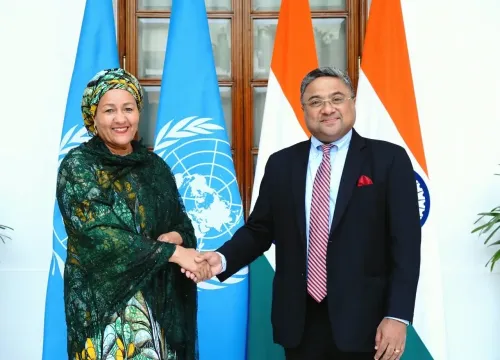
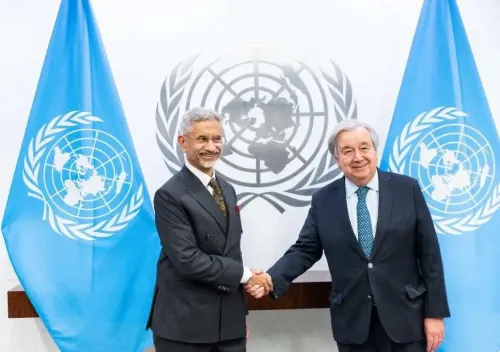
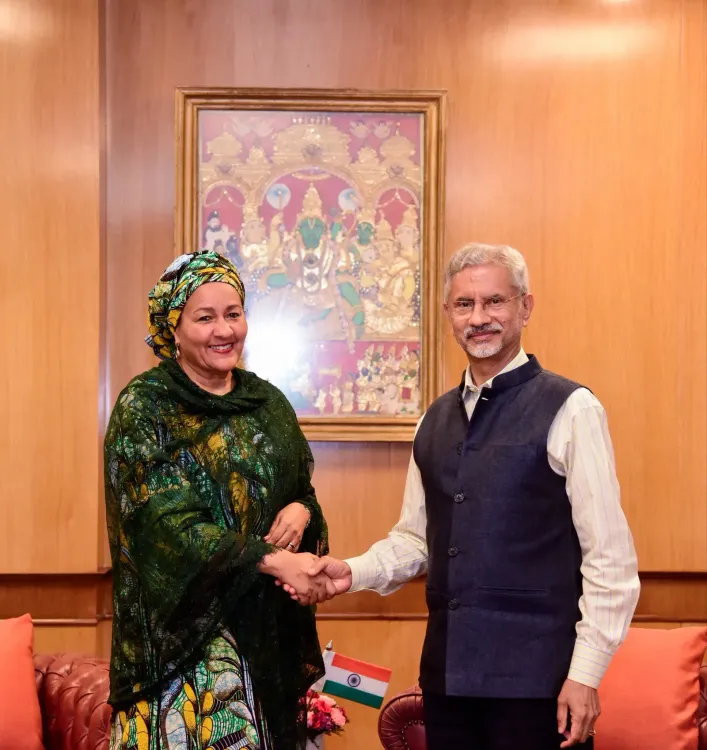
External Affairs Minister S. Jaishankar on Thursday, 27 August held talks with United Nations Deputy Secretary-General Amina J. Mohammed in New Delhi, covering a broad agenda that included sustainable development, renewable energy, climate change, and food security. The meeting came on the second day of Mohammed's three-day official visit to India.
What Was Discussed
'Pleased to meet UN Deputy Secretary-General, Amina J Mohammed, in New Delhi today. Had wide-ranging discussions on various issues, including sustainable development, renewable energy, climate change and food security,' Jaishankar said in a post on social media platform X.
Earlier the same day, Ministry of External Affairs (MEA) Secretary (West) Sibi George also held a separate round of talks with Mohammed, focusing on India-United Nations cooperation, progress on Sustainable Development Goals (SDGs), the transformational impact of artificial intelligence, peacekeeping operations, disaster risk reduction, and reform of the UN system.
Mohammed's Agenda in India
Mohammed arrived in New Delhi on Wednesday for the visit. Ahead of her arrival, UN Spokesperson Stephane Dujarric confirmed she would meet senior Indian government officials to discuss UN-India cooperation and India's role in advancing the SDGs. She is also scheduled to visit the Indian Institute of Technology (IIT) to engage with students on leveraging digital innovation for sustainable development.
Broader India-UN Engagement
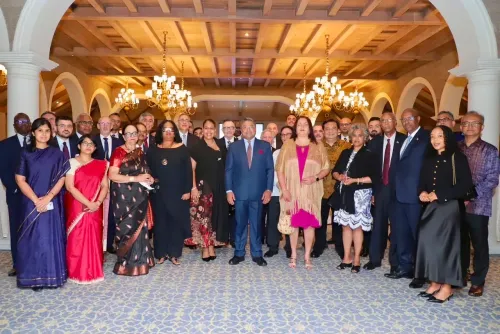
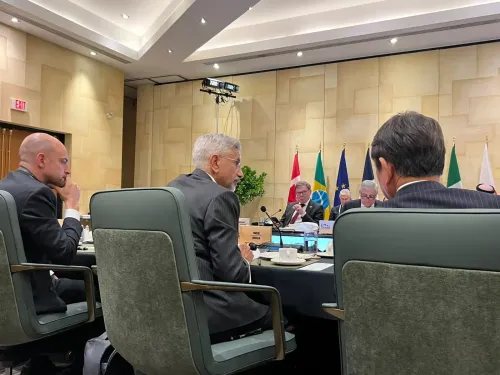
The meeting fits into a pattern of intensifying India-UN engagement in recent months. Earlier in August, Jaishankar interacted with Permanent Representatives from 17 countries visiting India on a UN study tour, where discussions ranged across technology, maritime safety, peacekeeping, development partnerships, and disaster response.
Notably, in July, Jaishankar formally launched India's campaign for a non-permanent seat on the United Nations Security Council (UNSC) for the 2028–29 term in New York, articulating New Delhi's vision for a more representative, effective, and future-ready global order. 'As the global order transforms, reformed multilateralism reflecting the aspirations of the Global South is the need of the hour,' he said.
What This Signals
India's sustained diplomatic outreach to UN leadership — from the UNSC seat campaign to high-level bilateral visits — underscores New Delhi's push to position itself as a central voice in shaping the post-2025 multilateral order. With the 2030 SDG deadline approaching and global AI governance still unsettled, the timing of Mohammed's visit adds weight to these conversations.
Point of View
From AI governance to peacekeeping reform, reflects India's attempt to be seen as a rule-shaper rather than a rule-taker at the UN. What remains untested is whether New Delhi's multilateral ambition translates into concrete commitments — on climate finance, peacekeeping troop contributions, or SDG funding — that back the rhetoric of 'reformed multilateralism.'
NationPress
12 Oct 2026
Frequently Asked Questions
Why did UN Deputy Secretary-General Amina J. Mohammed visit India?
Mohammed visited India for a three-day official engagement to discuss UN-India cooperation, progress on Sustainable Development Goals, climate change, and digital innovation. She met senior government officials including EAM Jaishankar and MEA Secretary (West) Sibi George.
What did Jaishankar and Mohammed discuss?
The two discussed sustainable development, renewable energy, climate change, and food security, according to Jaishankar's post on X. Separately, MEA's Sibi George covered AI governance, peacekeeping, disaster risk reduction, and UN reform with Mohammed.
What is India's current relationship with the United Nations?
India is actively deepening its UN engagement, having launched a campaign in July for a non-permanent UNSC seat for the 2028–29 term. New Delhi has also hosted UN Permanent Representatives from 17 countries on a study tour and is pushing for multilateral reform reflecting the Global South's priorities.
What is India's UNSC campaign about?
EAM Jaishankar launched India's bid for a non-permanent seat on the UN Security Council for the 2028–29 term in New York in July, calling for a more representative and effective global order. India frames the campaign around the aspirations of the Global South and reformed multilateralism.
What will Amina Mohammed do at IIT during her India visit?
Mohammed is scheduled to engage with students at the Indian Institute of Technology to discuss opportunities and challenges in leveraging digital innovation in support of the Sustainable Development Goals.