Jaishankar at BBG Forum: Middle Powers Must Move the Needle
Synopsis
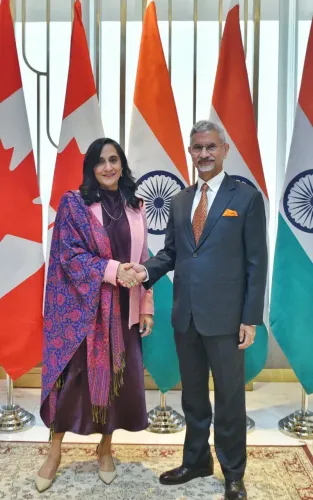
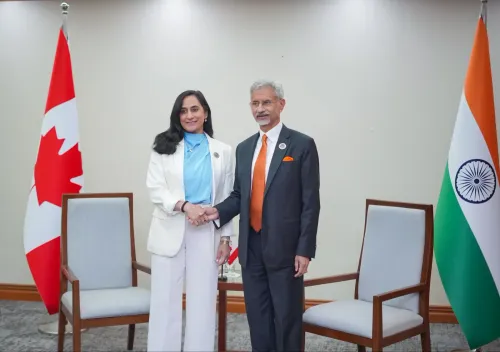
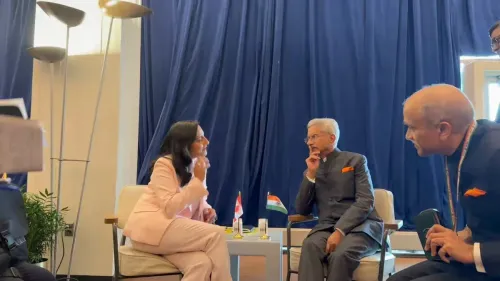
At the BBG New Economy Forum, External Affairs Minister Dr. S. Jaishankar joined Canadian FM Anita Anand, former Australian PM Kevin Rudd, and former UK PM Rishi Sunak to argue that middle powers can reshape a competition-defined global order — most powerfully by collaborating with each other.
Key Takeaways
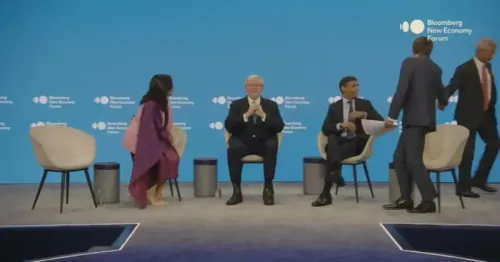
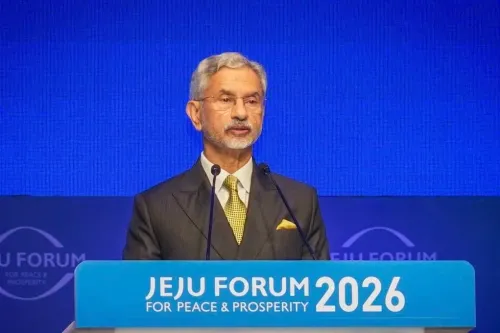
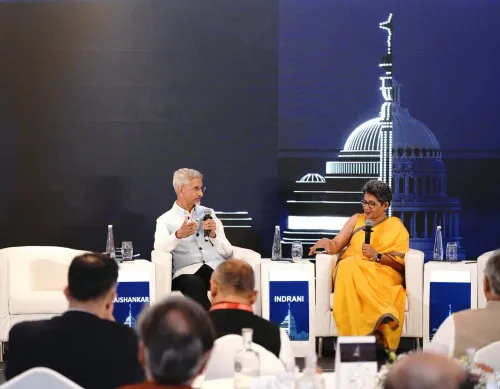
Jaishankar participated in the 'Is this the Middle Power Moment?' panel at the BBG New Economy Forum on October 14, 2026 .
Panellists included Canadian FM Anita Anand , former Australian PM Kevin Rudd , and former UK PM Rishi Sunak .
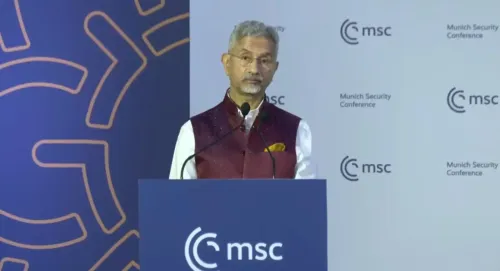
Jaishankar described the global order as characterised by 'greater competition and chokepoints' in trade, technology, and supply chains.
He argued the evolving order rewards self-interest aligned with common ground among like-minded powers, not fixed-bloc loyalty.
His central thesis: middle powers can 'move the needle' individually, but their leverage is greatest when they collaborate.
The panel continues India's broader strategic posture — anchored by the Quad revival and its G20 presidency in 2023 — of building interest-based coalitions outside the US-China binary.
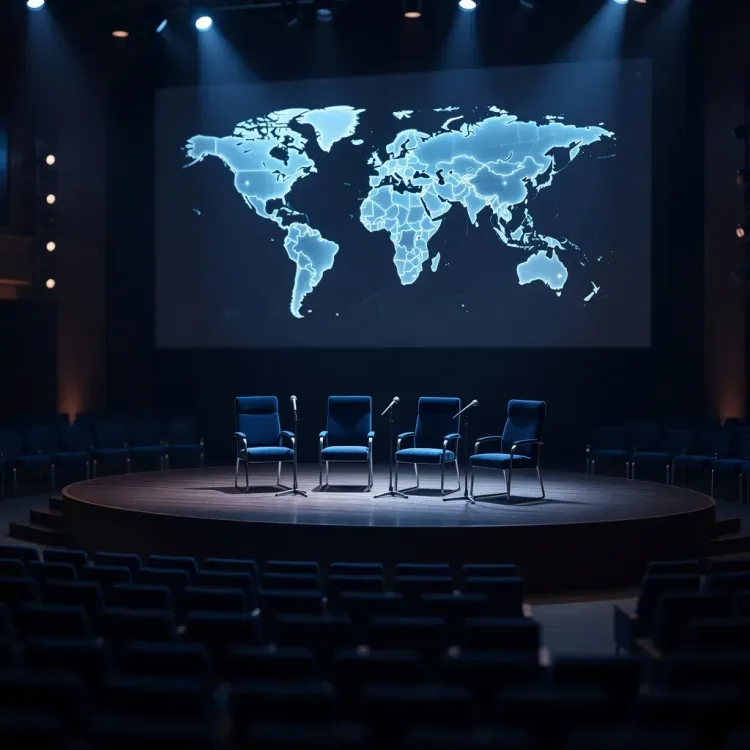
When the world's established order fractures along new fault lines, who fills the vacuum? That question framed a marquee panel at the BBG New Economy Forum on Wednesday, October 14, 2026, where Union External Affairs Minister Dr. S. Jaishankar joined a rare gathering of sitting and former top diplomats to debate whether this moment truly belongs to the middle powers.
A Room Full of Middle-Power Heavyweights
The panel brought together Canadian Foreign Minister Anita Anand, former Australian Prime Minister Kevin Rudd, and former British Prime Minister Rishi Sunak — a lineup that itself illustrated the breadth of the 'middle-power' conversation. The forum, an annual Bloomberg-organised convening on global economic and geopolitical fault lines, served as the backdrop for a wide-ranging discussion on how nations outside the US-China duopoly can shape outcomes in an era of compounding uncertainty.
Dr. Jaishankar outlined three interlocking arguments. First, the global order is in constant, accelerating flux — defined not by stable hierarchies but by sharpening competition and strategic chokepoints in trade, technology, and supply chains. Second, that churning order rewards nations that act on self-interest aligned with shared ground among like-minded partners, rather than loyalty to fixed blocs. Third, and most pointedly: middle powers can 'move the needle' on their own, but their real leverage multiplies when they collaborate.
India's Strategic Logic Behind the 'Middle Power' Framing
The argument is not new for Dr. Jaishankar — but its urgency keeps growing. Since 2019, India's foreign policy has consistently resisted the pressure to pick a lane in the US-China binary. The revival of the Quad in 2017 and India's stewardship of the G20 presidency in 2023 both carried the same underlying message: structured coalitions of like-minded nations, not superpower dependence, are how mid-sized democracies protect and project their interests.
The 'chokepoints' framing is particularly telling. From semiconductor supply chains to critical mineral corridors to undersea cable routes, the past several years have demonstrated that leverage in the modern global order is less about territory and more about control over flow — who moves goods, data, capital, and energy, and on whose terms. Middle powers that sit astride these chokepoints, or can collectively bypass them, hold cards that raw GDP rankings might not suggest.
Collaboration as the Real Force Multiplier
Dr. Jaishankar's third underlined point — that middle powers gain more by working together than by acting alone — carries direct policy implications. India has in recent years deepened frameworks with Australia through the Comprehensive Strategic Partnership, anchored its Indo-Pacific positioning through Quad, and used its G20 presidency to amplify Global South voices in institutions shaped by the post-1945 order.
The presence of Anita Anand is worth noting: India-Canada relations have navigated turbulence in recent years, and a joint appearance at a multilateral forum signals at minimum a willingness to engage on shared global questions even while bilateral strains exist. The panel format — not a bilateral meeting — provides useful diplomatic distance without foreclosing dialogue.
Whether the forum's conversations translate into concrete middle-power initiatives will be tested at the next Quad leaders' summit and in follow-up engagements through 2026. For now, Dr. Jaishankar has put a sharp intellectual stake in the ground: in a world of chokepoints and competition, the middle is not a passive position — it is a strategic one.
Point of View
It is active coalition-building among nations that share interests without sharing a patron. By publicly sitting alongside Canada's FM even amid unresolved bilateral tensions, he signals that idea-level convergence on global governance can coexist with — and perhaps gradually soften — relationship stress. The 'chokepoints' language is a deliberate upgrade from older 'multipolarity' rhetoric; it grounds an abstract concept in the supply-chain and technology realities that audiences in 2026 immediately grasp. Watch whether the middle-power collaboration thesis finds institutional expression in a new Indo-Pacific or G20-linked initiative before the year closes.
NationPress
14 Oct 2026
Frequently Asked Questions
What is the BBG New Economy Forum?
The BBG New Economy Forum is an annual Bloomberg-organised gathering that brings together world leaders, policymakers, and economists to discuss pressing global economic and geopolitical issues.
Who were the other panellists with Jaishankar at the BBG Forum?
The panel featured Canadian Foreign Minister Anita Anand , former Australian Prime Minister Kevin Rudd , and former British Prime Minister Rishi Sunak alongside Dr. Jaishankar.
What does 'middle power' mean in geopolitics?
Middle powers are countries that are not superpowers but wield significant regional or global influence — such as India, Australia, Canada, and the UK — often shaping international norms through coalitions rather than unilateral force.
What is India's position on the global order under Jaishankar?
India under Dr. Jaishankar has consistently argued for a multipolar world where like-minded nations act on shared interests rather than aligning with a single superpower, a stance reinforced through the Quad framework and India's G20 presidency in 2023.
Why is the 'chokepoints' concept significant in Jaishankar's speech?
Chokepoints — critical nodes in supply chains, technology networks, and trade routes — are where real leverage lies in the modern global economy. Jaishankar's use of the term signals India's awareness that geopolitical power in 2026 is as much about controlling flows of goods, data, and energy as about traditional hard power.