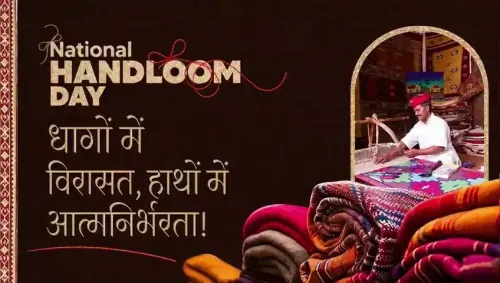
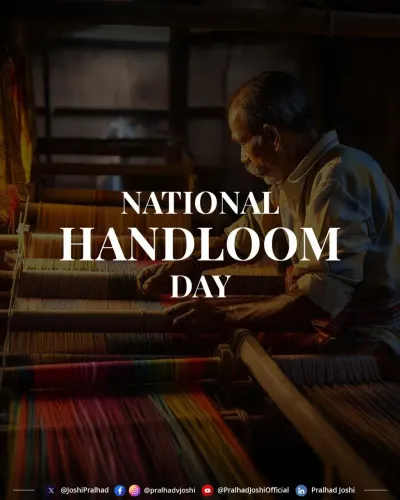
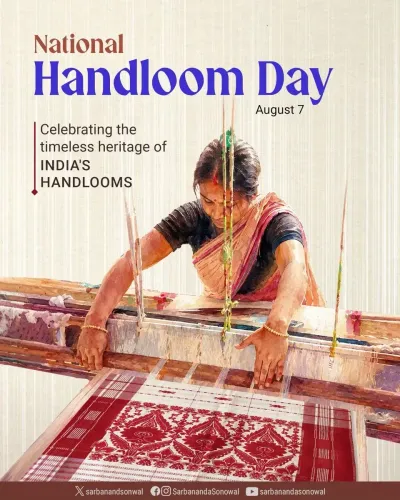
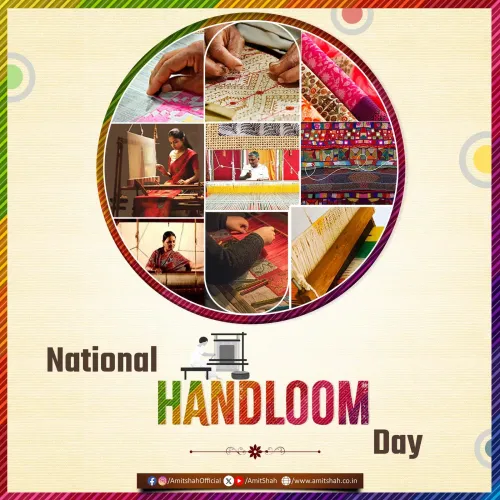
Jal Shakti Minister Paatil salutes weavers on National Handloom Day
Synopsis
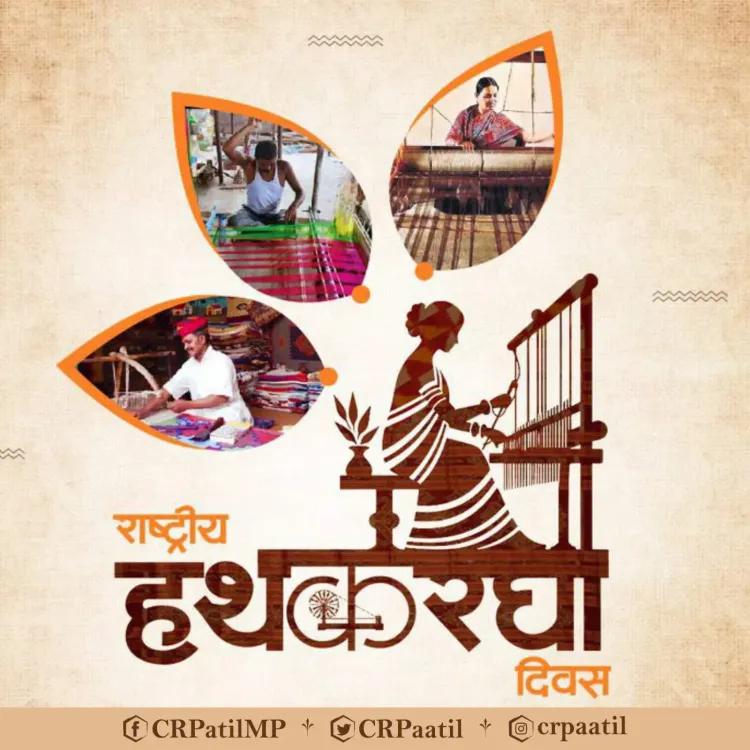
Union Jal Shakti Minister C. R. Paatil marked National Handloom Day on 7 August 2026 with a tribute to India's weavers, crediting PM Modi's Vocal for Local, Aatmanirbhar Bharat, and Make in India campaigns with giving the sector new global recognition and economic opportunity.
Key Takeaways
Union Jal Shakti Minister C.
Paatil posted a tribute on National Handloom Day, 7 August 2026 , saluting India's weavers, artisans, and handloom workers.
National Handloom Day was instituted in 2015 to commemorate the Swadeshi Movement and support weaver livelihoods.
Paatil credited PM Narendra Modi 's three campaigns — Vocal for Local , Aatmanirbhar Bharat , and Make in India — with giving the sector new global recognition.
The minister described Indian handloom as the 'livelihood, skill, and self-reliance' foundation for millions of weaver families across the country.
Upcoming textile policy updates may include new handloom marketing schemes or export incentives, making the sector one to watch.
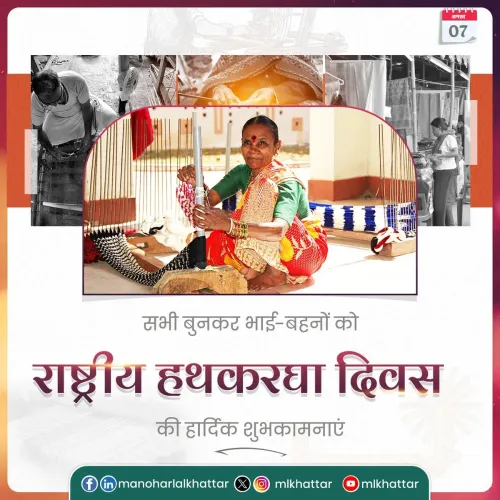
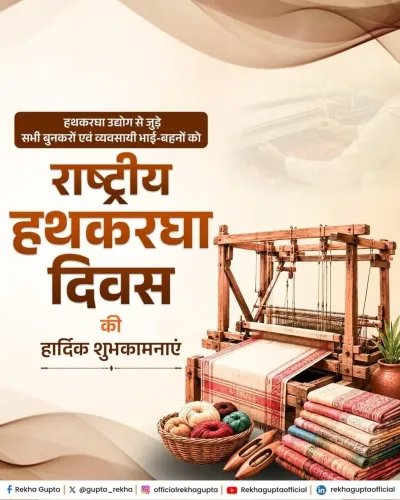
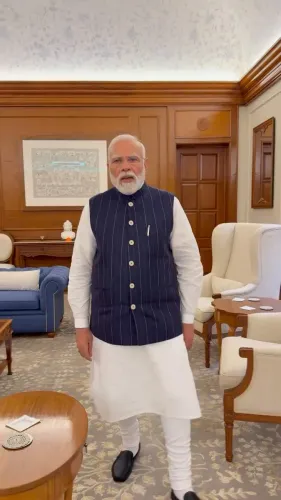
On National Handloom Day, 7 August 2026, Union Jal Shakti Minister C. R. Paatil paid tribute to India's weavers, artisans, and handloom workers, crediting Prime Minister Narendra Modi's signature campaigns with lifting the sector onto a global stage.
Posting in Hindi, Paatil wrote: 'Rashtriya hathkargha divas par desh ke sabhi bunakaron, shilpakaron aur hastkargha se jude parishramee karigaron ko hardik naman' — a heartfelt salute to every weaver, craftsperson, and artisan connected to the loom. He singled out 'Vocal for Local', 'Aatmanirbhar Bharat', and 'Make in India' as the engines that have given India's traditional handloom and handicraft sector 'new identity, new opportunities, and respect on the global stage.'
Why 7 August carries weight for India's looms
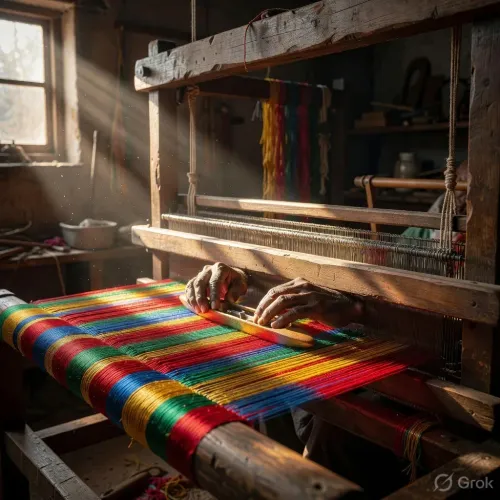
National Handloom Day was instituted in 2015 to commemorate the Swadeshi Movement — the mass campaign that once made the hand-spun cloth a symbol of self-determination. The date anchors a modern economic argument to a century-old act of defiance: that what Indian hands make, Indian markets should value. For millions of weaver families, the day is less ceremony and more livelihood ledger.
Three campaigns, one sector's revival pitch
The three initiatives Paatil invoked are not interchangeable slogans. Vocal for Local targets the demand side — nudging consumers toward indigenous goods. Aatmanirbhar Bharat frames self-reliance as a structural goal, pulling traditional manufacturing into a national resilience argument. Make in India adds the export dimension, positioning handloom and handicrafts as competitive on the world market, not merely heritage curiosities. Together, the campaigns represent the present administration's attempt to reframe artisanal work as an economic asset rather than a cultural relic.
Paatil's post underlines the human core of that argument: Indian handloom, he wrote, is not merely a symbol of rich cultural heritage, but 'a strong foundation of the livelihood, skill, and self-reliance of millions of weaver families.' The framing is deliberate — it ties identity to income, and pride to policy.
Senior leaders issuing sectoral tributes on designated national days is an established practice, and Paatil's message follows that pattern. What keeps it from being routine is the convergence of three high-profile campaigns behind a single, historically grounded occasion — and the ongoing question of whether new marketing schemes or export incentives for the textile sector will follow in upcoming policy updates.
For now, the looms have their day. Whether the next policy cycle gives them more than a salute is the thread worth watching.
Point of View
He reinforces the government's narrative that heritage sectors are active drivers of employment, not museum pieces. The message also keeps the political spotlight on weaver communities ahead of any potential textile policy announcements, signalling that the sector remains electorally and symbolically significant. For the opposition, the challenge is to contest outcomes rather than the sentiment, since few political actors can afford to be seen as indifferent to weavers' livelihoods.
NationPress
7 Aug 2026
Frequently Asked Questions
When is National Handloom Day celebrated in India?
National Handloom Day is observed every year on 7 August . It was instituted in 2015 to commemorate the Swadeshi Movement and to honour India's weaving community and handloom heritage.
Why did C. R. Paatil post about National Handloom Day?
As a senior Union Minister and BJP leader, C. R. Paatil posted a tribute on 7 August 2026 to salute weavers and artisans and to highlight how PM Modi's campaigns — Vocal for Local, Aatmanirbhar Bharat, and Make in India — have supported the handloom sector.
What is the Vocal for Local campaign?
Vocal for Local is a campaign launched under PM Narendra Modi that encourages Indian consumers to buy and promote domestically produced goods, including handloom and handicraft products.
How does Aatmanirbhar Bharat help handloom weavers?
Aatmanirbhar Bharat (Self-Reliant India) is a broad self-reliance initiative that includes traditional manufacturing sectors like handloom, aiming to strengthen domestic production capacity and reduce import dependence for artisanal goods.
Why was National Handloom Day started on 7 August?
7 August was chosen to mark the anniversary of the Swadeshi Movement , launched on that date in 1905 in Calcutta, which made hand-spun cloth a symbol of Indian self-determination and resistance.