What Does Jamaat’s Electoral Surge Near India Frontier Mean for West Bengal?
Synopsis
The recent electoral success of Jamaat-e-Islami near the India-Bangladesh border raises serious security concerns as West Bengal elections approach. With potential disruptions to peace and stability, can Indian authorities manage the impending challenges?
Key Takeaways
Jamaat-e-Islami's electoral success raises security concerns.
Potential targeting of minority Hindus in winning areas.
Madrasas near the border may facilitate illegal immigration.
Intelligence agencies are on high alert.
West Bengal elections could witness increased tensions.
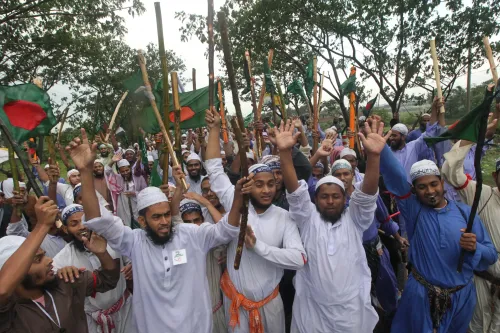
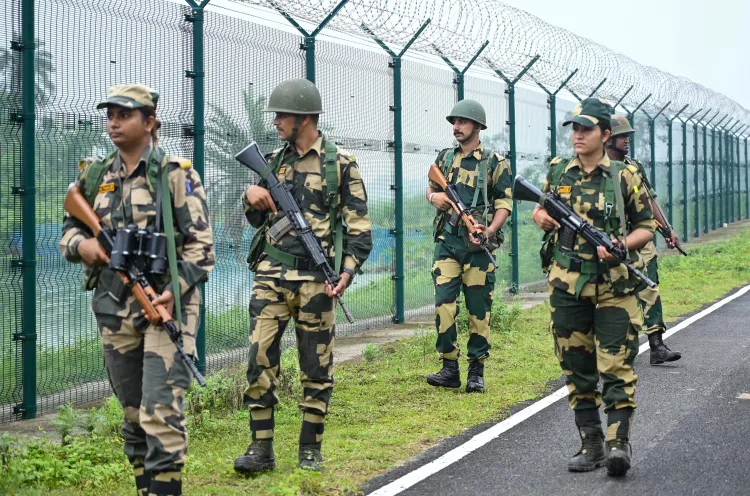
New Delhi, Feb 14 (NationPress) The conclusion of the Bangladesh elections has provided significant relief not just for the citizens of the neighboring nation, but also for India. Nevertheless, Indian agencies are meticulously monitoring regions where Jamaat-e-Islami has achieved substantial victories near the West Bengal border.
Relations with Bangladesh had essentially halted under Muhammad Yunus, but with Tarique Rahman of the Bangladesh Nationalist Party expected to assume the Prime Minister role, New Delhi is optimistic about restoring ties.
Alarmingly, the Jamaat-e-Islami secured 70 seats, a substantial number of which are positioned along the West Bengal border. While they also acquired a few seats near Meghalaya, their performance in West Bengal is notably stronger.
An official from the Intelligence Bureau indicated that this situation raises significant concerns for security agencies. The Jamaat and its affiliates have consistently concentrated on large-scale illegal immigration into India, particularly through West Bengal.
With the West Bengal elections approaching, the Jamaat is likely to exert all its influence to destabilize law and order within the Indian state.
Another concern is the presence of a minority Hindu population residing in the regions where the Jamaat has gained power. Despite their manifesto promising safety and protection for Hindus, the official expressed worry regarding potential targeting of these communities.
Although this marks the Jamaat's best performance in prior elections, frustration emerged post-results regarding the fairness of the vote counting process.
They appear visibly discontent and may seek to disrupt peace, particularly in areas where they hold strength. This could jeopardize border security, as the Jamaat has excelled in regions adjacent to India.
Another official mentioned that leading up to the West Bengal elections, the Jamaat may intensify illegal immigration efforts to alter demographics in a way that incites communal unrest.
Over the years, the Jamaat has developed strongholds in rural Bangladesh, where numerous madrasas have emerged close to the West Bengal border. Intelligence agencies have repeatedly raised alarms regarding these madrasas, which are believed to facilitate illegal immigration and serve as hubs for radicalization and recruitment.
Officials note that not all madrasas operate continuously; some are activated when significant plans are underway, as indicated by intelligence inputs suggesting their imminent reactivation.
During Muhammad Yunus's administration, radicals and terrorists thrived. Numerous individuals linked to groups like Harkat-ul-Jihad Islami (HuJI) and Jamaat-ul-Mujahideen, Bangladesh (JMB) were released from custody and remain at large. These terrorists were reportedly tasked by the ISI to establish splinter factions in areas bordering India.
Numerous operatives are currently positioned in border regions, awaiting directives to act within India. The ISI likely aims for these operations to coincide with the West Bengal electoral process. Agencies have detected a surge in online discussions surrounding potential operations in West Bengal, alongside extensive radical propaganda circulating on encrypted messaging platforms.
Furthermore, information has surfaced indicating that, in addition to groups like HuJI and JMB, operatives linked to Al-Qaeda are also involved in these operations.
Point of View
It is vital to prioritize national security while fostering diplomatic relations. The Jamaat-e-Islami's electoral victories emphasize the need for vigilance. Our focus must remain on safeguarding the integrity of our borders and the safety of all communities in India, while ensuring that political processes happen peacefully.
NationPress
19 Sept 2026
Frequently Asked Questions
What is the significance of Jamaat-e-Islami's electoral performance?
The Jamaat-e-Islami's substantial electoral success near the India-Bangladesh border raises serious security and demographic concerns for India, particularly ahead of the West Bengal elections.
How might Jamaat-e-Islami's victories affect Hindus in the region?
There are fears that the Jamaat-e-Islami may target minority Hindu communities in areas where they have gained strength, despite their assurances of protection in their manifesto.
What role do madrasas play in this situation?
Madrasas in rural Bangladesh near the West Bengal border are suspected of facilitating illegal immigration and serving as hubs for radicalization and recruitment.
What are the implications for India’s border security?
The Jamaat-e-Islami’s electoral surge poses risks to border security, as they may exploit their influence to disrupt peace in areas adjacent to India.
What actions might be taken by Indian agencies?
Indian security agencies are closely monitoring the situation and may increase efforts to counter illegal immigration and ensure the safety of vulnerable communities.