What Happened at Jamia Millia's NEP-2020 Faculty Induction Programme?
Synopsis
The Malaviya Mission Teacher Training Centre at Jamia Millia Islamia recently concluded its 20th Faculty Induction Programme, emphasizing the NEP 2020 framework. This month-long initiative featured 96 expert sessions aimed at enhancing the competencies of newly appointed faculty members in higher education. Discover the insights shared by esteemed speakers and the program's impact.
Key Takeaways
Emphasis on NEP-2020 : The programme aligns with the principles of the National Education Policy 2020.
Diverse Participation : Faculty from public and private institutions actively engaged in the sessions.
Expert Sessions : 96 expert-led discussions enriched participants' understanding of higher education.
Holistic Approach : The initiative aimed to nurture reflective teaching professionals.
Feedback Encouraged : Participants were invited to provide suggestions for future programs.
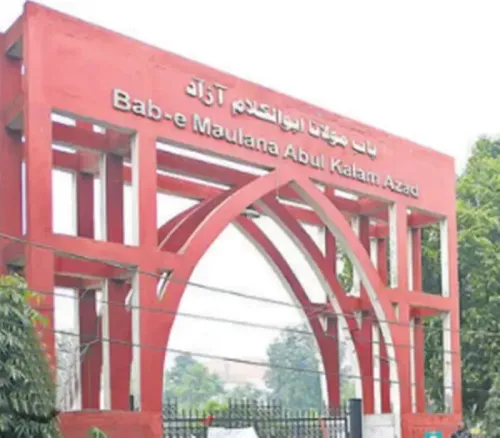
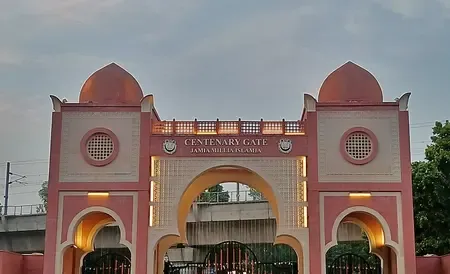
New Delhi, Dec 30 (NationPress) In alignment with the National Education Policy (NEP) 2020, the Malaviya Mission Teacher Training Centre (MMTTC) at Jamia Millia Islamia (JMI) has successfully wrapped up its 20th One-Month Faculty Induction Programme (FIP), conducted in offline mode from December 1 to 29, as reported on Tuesday.
The initiative was structured according to Gurudakshta guidelines, aiming to equip newly appointed faculty members with crucial pedagogical, ethical, and professional skills that resonate with the vision outlined in NEP-2020, stated Chief Public Relations Officer Saima Saeed.
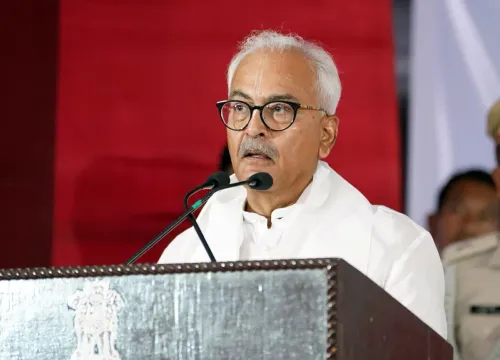
During the concluding address, Professor Mehtab Alam Rizvi, the Registrar of Jamia Millia Islamia, emphasized the significant role of educators in democracy and nation-building, drawing insights from classical philosophical perspectives.
Rizvi also pointed out key policy initiatives included within the NEP-2020 framework, such as the incorporation of Indian Knowledge Systems (IKS) and regional languages. He encouraged participants to offer feedback and suggestions to enhance future programs organized by MMTTC.
The FIP aimed to foster a comprehensive understanding of higher education and cultivate reflective teaching professionals. It featured 96 expert sessions led by renowned scholars, academic leaders, and policymakers nationwide, as noted by Saeed in a statement.
Newly recruited faculty members from various disciplines, representing both public and private higher education institutions, actively participated in the program.
The program commenced with an address from Prof. Anita Rastogi, the Dean of the Faculty of Education at JMI, who provided insightful commentary on ‘Higher Education in Indian & Global Context’, according to the statement.
The coordination of the program was managed by Prof. Bharti Sharma, Professor in the Department of Teacher Training and Non-Formal Education, along with Dr. Afaque Nadeem Khan, Associate Professor in the Department of Educational Studies at JMI, under the leadership of Prof. Kulwinder Kaur, Honorary Director of MMTTC-JMI, supported by a competent team at MMTTC, as highlighted in the statement.
Esteemed experts and resource persons from various institutions across India were involved—including Central Universities like JMI, DU, JNU, IGNOU, AMU, MANUU, Central University of Gujarat, and Central University of Himachal Pradesh, as well as State and Private Universities like IPU, SGT, MRU, G.D. Goenka, and Gurugram.
They delivered engaging lectures covering topics such as higher education policies and ecosystems, curriculum design, ethics and integrity in research, technology-enabled learning, student engagement, Sustainable Development Goals (SDGs), and professional development. The month-long academic discussions interwove perspectives from policy, practice, and pedagogy.
Numerous distinguished speakers, including Susmita Lakhyani (DU), Sudheer Kumar Singh (DU), Arshad Ikram Ahmad (JMI), Sajid Jamal (AMU), Garav Singh (DU), Satendra Gupta (Galgotia University), Aftab Ansari (AMU), addressed critical issues such as higher education policy, innovation, inclusion, assessments, and digital pedagogies.
Point of View
The completion of the Faculty Induction Programme at Jamia Millia Islamia underlines a strong commitment to enhancing the quality of higher education in India. The integration of the National Education Policy 2020 principles reflects a progressive approach towards fostering skilled educators, vital for the nation’s growth and development. Such initiatives are essential for building a robust educational framework that can adapt to the evolving demands of the global landscape.
NationPress
23 Sept 2026
Frequently Asked Questions
What is the purpose of the Faculty Induction Programme?
The Faculty Induction Programme aims to equip newly appointed faculty members with the necessary pedagogical, ethical, and professional skills aligned with the National Education Policy 2020.
Who were the speakers at the programme?
The programme featured renowned scholars and experts from various institutions, including Central and State Universities across India.
What topics were covered during the sessions?
Topics included higher education policies, curriculum design, ethics in research, technology-enabled learning, and Sustainable Development Goals.
How long did the programme last?
The Faculty Induction Programme lasted for one month, from December 1 to December 29.
What was the significance of the NEP-2020 in the programme?
The NEP-2020 provided a framework that guided the design and execution of the programme, emphasizing innovative teaching and learning methodologies.