Did Jamiat Challenge RSS Leader’s Views on Islamic Worship?
Click to start listening
Synopsis
In a heated exchange, Jamiat Ulama-i-Hind challenges RSS leader Dattatreya Hosabale’s controversial suggestion for Muslims to worship nature. The Jamiat emphasizes the importance of understanding Islamic principles and promotes dialogue for communal harmony.
Key Takeaways
- Jamiat Ulama-i-Hind critiques RSS leader's remarks.
- Emphasis on the importance of Tawhid in Islam.
- Call for responsible dialogue among faiths.
- Concern over divisive rhetoric from some leaders.
- Advocacy for communal harmony and mutual respect.
New Delhi, Dec 23 (NationPress) The Jamiat Ulama-i-Hind on Tuesday vehemently condemned remarks made by Rashtriya Swayamsevak Sangh (RSS) general secretary Dattatreya Hosabale, who suggested that Muslims ought to worship the sun, rivers, and trees. They argued that these comments indicate a profound misinterpretation of Islam and the diverse fabric of India.
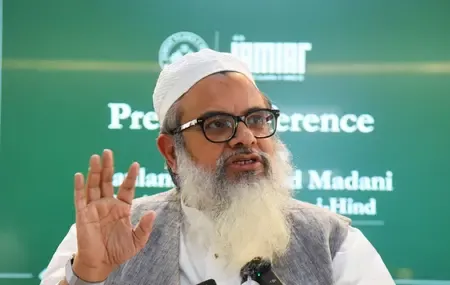
Jamiat president Maulana Mahmood Asad Madani emphasized that Hindus and Muslims have coexisted harmoniously in India for centuries, and the fundamental principles of Islam are clear to anyone with a decent education.
He highlighted that Islam is grounded in the belief of Tawhid, or the oneness of God, emphasizing that any minor deviation from this belief can exclude one from the faith.
Expressing disappointment regarding the statement, Maulana Madani noted that senior RSS officials seem to lack a serious understanding of Islamic teachings.
He pointed out that while Islam promotes affection for nature and environmental conservation, this should not be misconstrued as worship. Urging Muslims to revere natural elements, he noted a failure to differentiate between what is esteemed and what is worshipped across various faiths.
The Jamiat leader remarked that such statements cast doubt on the RSS’s ability to offer national direction or suggest a reluctance to engage thoughtfully with India’s rich social and religious diversity.
He reiterated that Jamiat Ulama-i-Hind has persistently advocated for communal harmony, dialogue, and mutual respect, making efforts in the past to clarify misconceptions about Islam among RSS leaders and other groups aligned with Hindutva.
Recalling previous discussions, he mentioned dialogues with former RSS chief K.S. Sudarshan and others, affirming that the organization remains open to genuine and constructive dialogue today.
However, he expressed concern regarding a rising trend among some RSS leaders to adopt divisive and exclusionary stances.
Maulana Madani reaffirmed Jamiat’s stance that the essence of Indian identity lies in a shared homeland, where all citizens form a singular nation, regardless of their faith.
Quoting B.R. Ambedkar, he stated that India’s unity is founded on constitutional values, pluralism, and mutual respect.
Point of View
It is crucial to focus on constructive dialogue and mutual respect to ensure a harmonious coexistence among various communities.
NationPress
24/12/2025
Frequently Asked Questions
What were the comments made by Dattatreya Hosabale?
Dattatreya Hosabale suggested that Muslims should worship the sun, rivers, and trees, which Jamiat Ulama-i-Hind criticized as a misunderstanding of Islam.
How did the Jamiat respond?
The Jamiat condemned the remarks and emphasized the importance of understanding the core principles of Islam, focusing on the oneness of God.
What does Jamiat Ulama-i-Hind advocate for?
The Jamiat promotes communal harmony, dialogue, and mutual respect among different faiths and has worked to clarify misconceptions about Islam.
Who is Maulana Mahmood Asad Madani?
Maulana Mahmood Asad Madani is the president of Jamiat Ulama-i-Hind, advocating for understanding and respect among diverse religious communities.
What is the significance of this controversy?
This controversy highlights the need for responsible dialogue about faith in India's pluralistic society, emphasizing the importance of recognizing and respecting different beliefs.