Indian Railways approves Janakpur Dham–Ayodhya weekly train, boosting India-Nepal ties
Synopsis
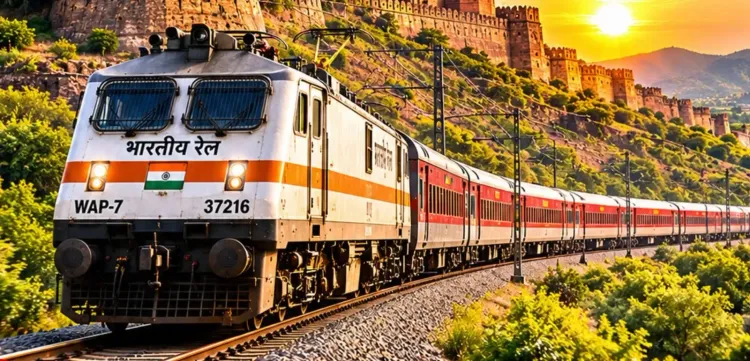
Indian Railways has approved a weekly train directly linking Mata Sita's birthplace in Nepal with Lord Ram's birthplace in Ayodhya — a 604-km Ramayana pilgrimage corridor crossing an international border. For the first time, devotees can travel between the two most sacred Ramayana sites by rail, with departures every Saturday and returns every Monday.
Key Takeaways
Indian Railways has approved a weekly train connecting Janakpur Dham (Nepal) and Ayodhya Cantt (Uttar Pradesh), announced on 14 November 2026 .
The service covers approximately 604 kilometres and stops at 10 stations including Sitamarhi, Raxaul, Gorakhpur, and Ayodhya Dham.
Trains depart Janakpur Dham every Saturday ; return journeys from Ayodhya Cantt begin every Monday .
Janakpur Dham is revered as the birthplace of Mata Sita ; Ayodhya is the birthplace of Lord Ram , making this a direct Ramayana corridor.
The service is expected to boost religious tourism, trade, and livelihoods in Bihar 's border districts and Nepal's Terai region.
An operational launch date has not yet been confirmed.
Indian Railways has approved a new weekly train service linking Janakpur Dham in Nepal with Ayodhya in Uttar Pradesh, a move aimed at deepening cross-border connectivity and strengthening religious tourism between the two neighbouring nations. The announcement, issued by the Press Information Bureau on Saturday, 14 November 2026, marks a significant step in India-Nepal bilateral relations rooted in shared Ramayana heritage.
The Route and Key Stoppages
The new service will cover approximately 604 kilometres between Janakpur Dham and Ayodhya Cantt, passing through key towns and cities in Bihar and Uttar Pradesh. Commercial stoppages have been designated at Jaynagar, Madhubani, Shisho, Sitamarhi, Raxaul, Narkatiaganj, Gorakhpur, Basti, Mankapur, and Ayodhya Dham, in addition to the terminal stations.
The train will originate from Janakpur Dham every Saturday, with the return journey from Ayodhya Cantt commencing every Monday, giving passengers a structured window for pilgrimage and return travel.
Religious Significance of the Two Destinations
Janakpur Dham is revered as the birthplace of Mata Sita, while Ayodhya is celebrated as the birthplace of Lord Ram — two central figures of the Ramayana tradition. The rail link directly connects the two most sacred Ramayana destinations across an international border, something that pilgrims and tourism planners have long sought. Notably, this connection gains added resonance following the consecration of the Ram Temple in Ayodhya in early 2024, which has sharply increased footfall to the city from across South Asia.
Economic and Social Impact Along the Corridor
Beyond pilgrimage, the service is expected to benefit a broad cross-section of travellers — students, business visitors, families, and local communities in the border districts of Bihar and Nepal. Improved connectivity is anticipated to generate new economic opportunities for hotels, restaurants, transport operators, small traders, and traditional artisans along the route. The corridor through Sitamarhi, Raxaul, and Narkatiaganj is already a commercially active India-Nepal border zone, and a direct rail link could meaningfully raise trade volumes and employment in the region.
Strengthening India-Nepal Bilateral Ties
India and Nepal share centuries-old cultural, historical, and social bonds, reinforced through shared religious traditions, intermarriage across border communities, and longstanding trade. The introduction of this train service comes amid ongoing efforts by both governments to deepen people-to-people connectivity. This is the latest in a series of infrastructure-linked diplomatic gestures between New Delhi and Kathmandu, following earlier cross-border road and power grid projects. According to officials, the service is designed to encourage the development of integrated cross-border tourism circuits centred on the Ramayana trail.
What Comes Next
An operational start date for the weekly service has not yet been announced, and coordination between Indian Railways and Nepali authorities on border-crossing logistics will be a key step before the first departure. Travel and hospitality stakeholders along the Bihar-UP corridor are expected to ramp up capacity in anticipation of increased pilgrimage traffic. The service, if well-utilised, could pave the way for additional frequency or expanded routing in future timetables.
Point of View
Ayodhya's pull has surged, and linking it to Janakpur Dham gives India a tangible cultural-diplomacy asset with Nepal at a moment when bilateral ties have needed careful tending. What remains to be seen is whether the service's once-a-week frequency and the border logistics between Indian Railways and Nepal Railways can sustain consistent, punctual operations — past cross-border rail experiments in South Asia have often stalled on exactly these coordination gaps. The economic case for border communities is real, but converting approval into a running train will be the harder test.
NationPress
14 Nov 2026
Frequently Asked Questions
What is the new Janakpur Dham–Ayodhya train service approved by Indian Railways?
It is a weekly cross-border train service connecting Janakpur Dham in Nepal — the birthplace of Mata Sita — with Ayodhya Cantt in Uttar Pradesh, the birthplace of Lord Ram. The service covers approximately 604 kilometres and was announced by the Press Information Bureau on 14 November 2026.
What are the scheduled departure days for the Janakpur Dham–Ayodhya train?
The train will depart from Janakpur Dham every Saturday. The return service from Ayodhya Cantt will commence every Monday, offering passengers a structured window for pilgrimage travel between the two countries.
Which stations will the Janakpur Dham–Ayodhya train stop at?
The train will have commercial stoppages at Jaynagar, Madhubani, Shisho, Sitamarhi, Raxaul, Narkatiaganj, Gorakhpur, Basti, Mankapur, and Ayodhya Dham, in addition to its terminal stations at Janakpur Dham and Ayodhya Cantt.
How will this train service benefit India-Nepal relations?
The service directly connects the two most sacred Ramayana pilgrimage sites across the India-Nepal border, deepening people-to-people ties rooted in shared cultural and religious heritage. It is also expected to stimulate trade, employment, and tourism in Bihar's border districts and Nepal's Terai region.
When will the Janakpur Dham–Ayodhya train service begin operations?
An operational start date has not yet been announced as of 14 November 2026. Coordination between Indian Railways and Nepali authorities on border-crossing logistics is expected to be a key step before the service is launched.