Article 370 abrogation at 7: How J&K shed separatism and reclaimed normalcy
Synopsis
Seven years on, the abrogation of Article 370 has done what decades of policy could not — it broke the financial and political backbone of J&K's separatist ecosystem. But with LeT and TRF still active and militants massed at PoK launch pads, the gains remain contingent on sustained pressure. The story of post-2019 J&K is one of real progress shadowed by an unresolved border threat.
Key Takeaways
Article 370 was abrogated on 5 August 2019 , bringing Jammu and Kashmir fully under Indian constitutional and penal law.
NIA and ED probes exposed Pakistan-funded money trails to separatist leaders, accelerating the collapse of separatist influence in the Valley.
Terror attack volumes have declined since 2019 , though Lashkar-e-Taiba and its proxy TRF remain active threats.
Abolition of Article 35A restored property and residency rights for women who marry non-residents; Central women's protection laws now apply in J&K.
Tourism and investment have revived significantly, and elections in 2024 restored an elected government after years of Central rule.
Scores of militants reportedly remain at launch pads in Pakistan-occupied Kashmir (PoK) , posing a continuing security challenge.
Jammu and Kashmir marks seven years since the abrogation of Article 370 on 5 August 2019, a watershed moment that dissolved the region's special constitutional status and brought it fully under the same penal framework as the rest of India. In the years since, security officials and analysts argue that the structural shift — placing law and order directly under the Union Home Ministry — has fundamentally altered the landscape of both separatism and terrorism in the Valley.
End of Separatist Influence
Before 2019, critics of the old order argue, J&K was effectively co-governed by separatist groups who sheltered militants — both local and those infiltrating from Pakistan — and routinely incited stone-pelting after Friday prayers. The shift to direct Central oversight gave agencies including the National Investigation Agency (NIA) and the Enforcement Directorate (ED) an unimpeded mandate to investigate.
Subsequent NIA and ED probes reportedly traced substantial money trails linking separatist leaders to funds routed from Pakistan through multiple channels. According to officials, a portion of these funds was used to finance violence and push an anti-India agenda, while a significant share allegedly funded personal luxuries — including foreign education for the children of key separatist figures. The public exposure of these links, officials say, accelerated a shift in popular opinion that effectively rendered separatism politically irrelevant in the Valley.
Terror Volumes Fall, But Threats Persist
The collapse of separatist networks had a direct downstream effect on militant activity. Groups such as Hizbul Mujahideen have, according to security officials, lost significant ground in the Valley. While terror attacks have continued after 2019 — the most devastating being the Pahalgam attack — the overall frequency has declined compared to the pre-abrogation period.
An official cited smoother intelligence sharing between Central and state agencies, and the absence of political interference at the local level, as key operational advantages. The local police, freed from political pressure, worked more seamlessly with Central agencies — a coordination that officials say proved decisive in dismantling terror modules and the overground worker (OGW) networks that support them.
The principal remaining threat, according to security officials, is Lashkar-e-Taiba (LeT) and its proxy, The Resistance Front (TRF). TRF claimed responsibility for the killing of a head constable in Anantnag and a separate attack that claimed the lives of two migrant workers. Officials warn that scores of militants remain at launch pads in Pakistan-occupied Kashmir (PoK), and that sustained counter-terror pressure will be required for the long-term consolidation of gains.
Legal Reforms and Women's Rights
The abrogation also ended the provisions of Article 35A, which had denied women in J&K residency and property rights if they married non-residents. Central laws on domestic violence and child abuse — previously inapplicable — are now fully enforceable in the region.
Officials and advocates point to increased political participation for women through reservations in local bodies and expanded representation in District Development Council elections. Improved security conditions have also enhanced women's mobility and participation in public life, according to reports.
Economic Revival and Tourism Surge
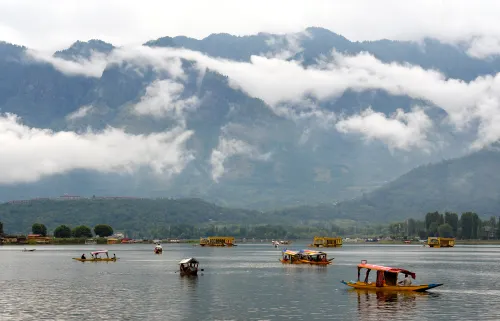
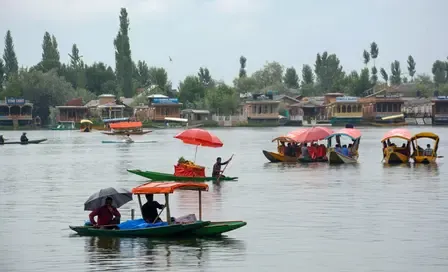
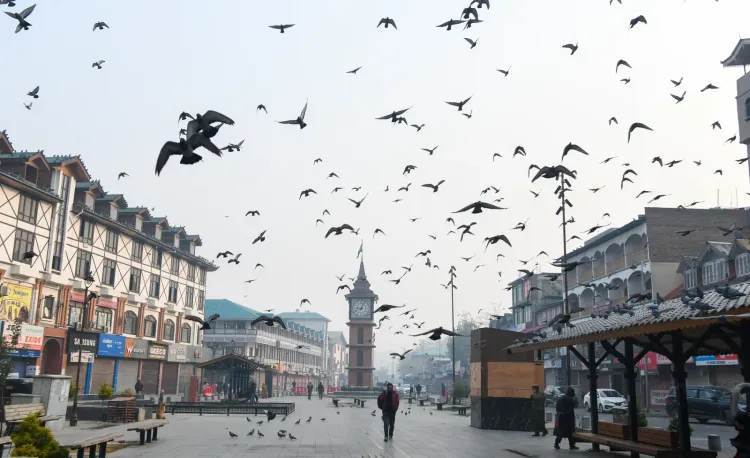
The National Education Policy (NEP) has been implemented across schools and universities in J&K, and schools now function with far greater regularity — no longer shuttered by recurring violence. Tourism, described by officials as virtually non-functional before 2019, has witnessed substantial growth, generating employment and improving household incomes across the region.
Investment inflows have been reported across industries, horticulture, handicrafts, and services. In 2024, after years of Central administration, elections were held and an elected government was restored — a milestone that officials describe as a return to democratic normalcy.
Challenges That Remain
Despite the documented gains, security officials caution against complacency. Pakistan's continued attempts to revive militancy through LeT and TRF remain the single largest structural challenge. An official noted that the long-term success of post-Article 370 reforms would depend substantially on the sustained ability to contain Pakistan-backed terrorism — a process that, by its nature, cannot have a fixed endpoint.
As J&K enters its eighth year under the new constitutional order, the trajectory points to consolidation — but the border dynamic with Pakistan ensures that the security challenge is unlikely to fully recede.
Point of View
Operating under political constraints, could not or would not attempt. But the persistence of LeT and TRF, and the continued presence of militants at PoK launch pads, is a reminder that the security dividend was always contingent on Pakistan's behaviour, not just domestic policy. The Pahalgam attack underscores that a lower attack frequency is not the same as a resolved threat. The democratic restoration of 2024 is a positive signal, but the real test of normalisation is whether elected governance can deliver economic depth — not just tourism numbers — to a population that has lived under extraordinary security conditions for decades.
NationPress
19 Sept 2026
Frequently Asked Questions
What changed in Jammu and Kashmir after Article 370 was abrogated?
The abrogation of Article 370 on 5 August 2019 ended J&K's special constitutional status and placed it under the same penal and legal framework as the rest of India. Law and order moved under the Union Home Ministry, enabling Central agencies like the NIA and ED to operate without local political interference, which officials say was critical to dismantling separatist and terror networks.
Has terrorism in J&K declined since 2019?
Security officials say overall terror attack volumes have fallen since the abrogation, attributed to the collapse of separatist support networks and improved Central-state intelligence coordination. However, threats persist — Lashkar-e-Taiba and its proxy TRF remain active, and officials warn that militants continue to mass at launch pads in Pakistan-occupied Kashmir.
What happened to separatist groups in J&K after 2019?
NIA and ED investigations reportedly traced large sums of Pakistan-routed money to separatist leaders, exposing alleged links between their public activism and personal financial gain. The public disclosure of these money trails, according to officials, sharply eroded popular support for separatism, which officials describe as having 'died a natural death' in the Valley.
How did the abrogation affect women's rights in J&K?
The abolition of Article 35A restored property and residency rights to women in J&K who marry non-residents — rights they previously forfeited. Central laws on domestic violence and child abuse, previously inapplicable in the region, are now fully enforceable, and women's political participation has increased through reservations in local bodies and District Development Council elections.
What is the biggest remaining security challenge in J&K?
Officials identify Lashkar-e-Taiba and its proxy The Resistance Front (TRF) as the primary ongoing threat. TRF claimed the killing of a head constable in Anantnag and an attack on migrant workers. Scores of militants reportedly remain at launch pads in Pakistan-occupied Kashmir, and officials say sustained counter-terror operations will be necessary to protect the gains made since 2019.