Jammu & Kashmir Chief Minister Assesses High Court Complex Construction Progress
Synopsis
Jammu & Kashmir's Chief Minister Omar Abdullah emphasizes the urgent need for timely completion of new high court complexes, enhancing judicial infrastructure in the region. The project aims to modernize facilities and improve efficiency in the legal system.
Key Takeaways
Chief Minister Omar Abdullah leads review of judicial infrastructure projects.
Focus on timely completion and inter-departmental coordination.
New high court complexes planned for Srinagar and Jammu .
State-of-the-art facilities to enhance judicial efficiency .
Commitment to modernizing the legal system in Kashmir .
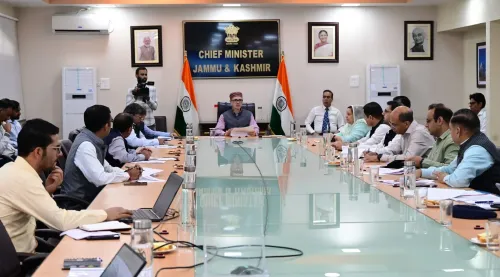
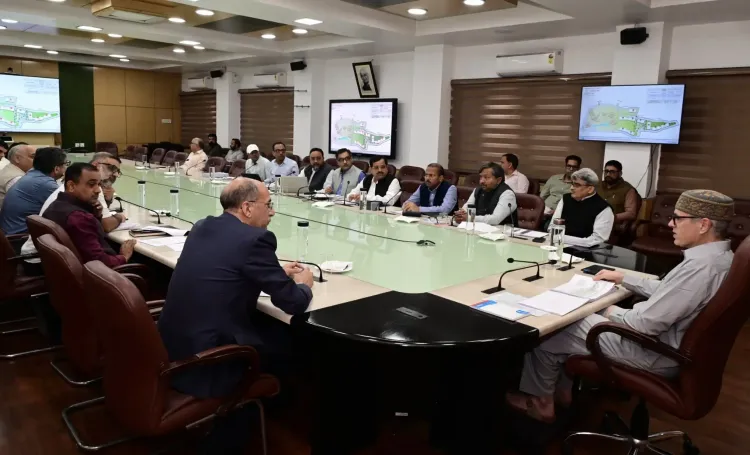
Jammu, April 7 (J&K) – The Chief Minister of Jammu & Kashmir, Omar Abdullah, convened a meeting on Tuesday to evaluate the advancement of the construction of new high court complexes within the Union Territory.
During the high-level review, officials reported that Abdullah focused on the urgent need for completing the prestigious judicial infrastructure projects for the Jammu & Kashmir and Ladakh High Court at its Srinagar and Jammu locations. He emphasized the importance of timely execution and inter-departmental collaboration, directing all relevant departments and executing agencies to accelerate the projects.
Omar Abdullah also urged for the swift granting of administrative approval for the Jammu wing at Raika, which is designed to be a modern, integrated judicial complex. This project, managed by the National Buildings Construction Corporation Ltd (NBCC), aims to relocate the existing High Court from Janipur to a purpose-built campus at Raika, tailored to meet the increasing demands of the judiciary.
The new complex will feature cutting-edge courtrooms, judges’ chambers, administrative blocks, facilities for litigants, parking infrastructure, and digitally-enabled court systems, aligning with modern judicial standards.
The meeting included participation from Chief Minister Advisor Nasir Aslam Wani, Chief Secretary Atal Dulloo, Additional Chief Secretary to the Chief Minister Dheeraj Gupta, Additional Chief Secretary PWD, along with other senior officials and representatives from the NBCC.
NBCC officials informed attendees that the project is being carried out in several phases (I, II, and III) to ensure organized development and efficient resource utilization. A comprehensive presentation outlined the site layout, area distribution, zoning plan, and phased construction strategy, including timelines and potential execution challenges.
The Chief Minister also assessed proposals for the revamp of the Lower Court Complex in Srinagar, aimed at modernizing the current judicial infrastructure in Kashmir. These initiatives are anticipated to enhance accessibility, efficiency in case handling, and the overall experience for litigants. Stressing the significance of robust judicial infrastructure, he instructed officials to maintain strict adherence to timelines, quality standards, and transparency during execution.
He called for consistent monitoring and resolution of any obstacles, particularly regarding approvals, fund flow, and on-ground coordination.
Omar Abdullah remarked that modern court infrastructure is vital for the effective delivery of justice and fostering public trust in the legal system, reiterating the government’s resolve to enhance institutional capacity across both Jammu and Kashmir divisions.
Point of View
It is clear that the ongoing developments in Jammu & Kashmir's judicial infrastructure are essential for promoting effective justice delivery. The government's commitment to modernizing court facilities signals a proactive approach to improving the legal landscape in the region.
NationPress
21 Oct 2026
Frequently Asked Questions
What is the purpose of the new high court complexes?
The new high court complexes are designed to modernize judicial infrastructure, improve efficiency in case handling, and enhance accessibility for litigants.
Who is overseeing the construction of the new complexes?
The construction is being managed by the National Buildings Construction Corporation Ltd (NBCC) under the direction of the Jammu & Kashmir government.
What features will the new complex include?
The new complex will feature state-of-the-art courtrooms, judges’ chambers, administrative blocks, and digitally-enabled court systems.
When is the expected completion timeline for the projects?
The projects are being executed in multiple phases, and detailed timelines were presented during the review meeting.
Why is modern court infrastructure important?
Modern court infrastructure is vital for efficient justice delivery and helps in building public trust in the legal system.