CM Vishnu Deo Sai Signs MoUs With CEPT, HUDCO for Chhattisgarh Urban Push
Synopsis
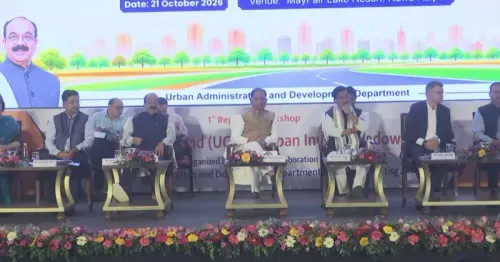
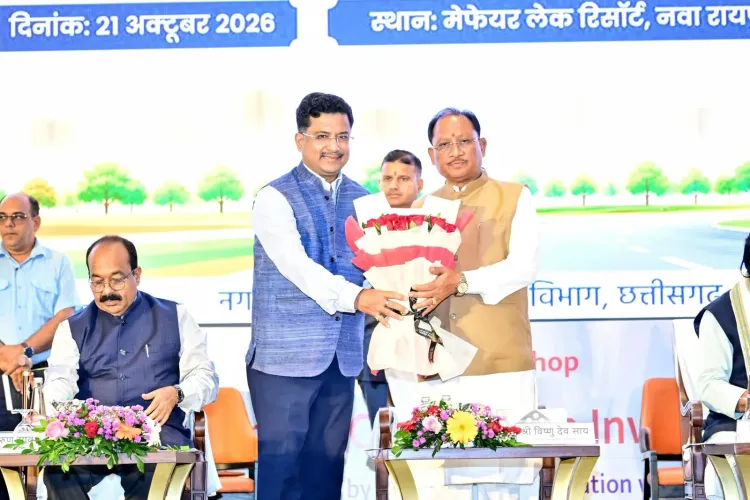
Chhattisgarh CM Vishnu Deo Sai signed MoUs with CEPT University and HUDCO at the first UCF-UiWIN regional workshop in Nava Raipur on 21 October 2026, advancing the state's goal of building organised, investment-ready cities.
Key Takeaways
Chhattisgarh CM Vishnu Deo Sai signed MoUs with CEPT University and HUDCO on 21 October 2026 in Nava Raipur .
The MoUs were inked at the first regional workshop of UCF and UiWIN , focused on urban planning and development.
CEPT University , based in Ahmedabad, brings architecture and urban planning expertise; HUDCO provides central government financing for urban infrastructure.
Nava Raipur is Chhattisgarh's planned capital, developed after the state's formation in November 2000 .
The government's stated aim is cities that combine modern infrastructure with investment attraction and improved citizen quality of life.
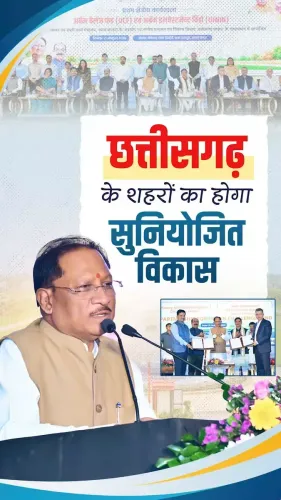
A planned capital city built from scratch two decades ago is about to get a serious upgrade. Chhattisgarh Chief Minister Vishnu Deo Sai on Wednesday, 21 October 2026, signed Memoranda of Understanding with CEPT University and HUDCO at the first regional workshop of UCF and UiWIN held in Nava Raipur, signalling a structured, institutions-backed push to reshape urban development across the state.
In his post, CM Sai laid out the government's urban vision in unambiguous terms: 'नए दौर का छत्तीसगढ़, नए दौर के शहर' — 'A new era's Chhattisgarh, a new era's cities.' The pledge is not just about modern aesthetics. The government's stated goal is cities that are 'organised, convenient, and centres of opportunity,' with citizen quality of life rising in step with the pace of development.
Why Nava Raipur and Why Now
Nava Raipur was conceived in the early 2000s as a purpose-built administrative capital following Chhattisgarh's formation in November 2000. Designed on a clean slate, it was always meant to be the state's showcase of modern urban planning — wide roads, green zones, dedicated institutional precincts. Hosting the first regional workshop of UCF and UiWIN there is a deliberate signal: this is the laboratory where Chhattisgarh's urban future will be prototyped.
Choosing CEPT University — the Ahmedabad-based institution that has shaped urban planning and architecture education across South Asia — as an MoU partner brings rigorous academic firepower to the effort. Its involvement suggests the state is investing in planning methodology, not just construction contracts. Pairing it with HUDCO, the central public sector undertaking that finances housing and urban infrastructure nationwide, adds financial muscle and a direct pipeline to central government urban programmes.
Better Planning, Modern Infrastructure, New Investment
CM Sai's post pointed to three interlocking pillars: better planning, modern infrastructure, and new investment opportunities. The framing is consequential — it positions Chhattisgarh's cities not as welfare delivery points but as economic engines, places that attract capital and generate livelihoods. For a state whose urban story has historically been overshadowed by its mineral and forest wealth, that is a meaningful repositioning.
State governments across India have increasingly leaned on structured MoU frameworks with technical institutions and central agencies to give urban projects credibility with private investors. The CEPT–HUDCO combination mirrors approaches seen in other BJP-governed states seeking to align state-level urban ambitions with centrally-sponsored schemes. The next test will be whether the MoU terms translate into concrete project timelines and visible on-ground activity in Nava Raipur and beyond.
Chhattisgarh is building a blueprint. Whether its cities can genuinely become 'centres of opportunity' will be measured not in workshop proceedings but in the skyline a few years from now.
Point of View
Lending political optics as much as planning depth. For Chhattisgarh, a state historically defined by its natural resource economy, the Nava Raipur workshop is an attempt to narrate an urban-industrial transition — cities as growth poles rather than administrative afterthoughts. The real test of this commitment lies in post-workshop execution: whether project pipelines, investment pitches, and planning guidelines follow at pace, or whether the MoUs become shelf documents. Sai's framing of 'quality of life rising with development pace' is also a quiet acknowledgement that rapid infrastructure builds elsewhere have sometimes left residents behind.
NationPress
21 Oct 2026
Frequently Asked Questions
What MoUs did Chhattisgarh sign at the Nava Raipur urban workshop in October 2026?
Chhattisgarh signed MoUs with CEPT University and HUDCO at the first regional workshop of UCF and UiWIN held in Nava Raipur on 21 October 2026, aimed at improving urban planning and infrastructure across the state.
What is CEPT University and why is it involved in Chhattisgarh's urban development?
CEPT University is an Ahmedabad-based institution specialising in architecture, planning, and environmental design. Its MoU with Chhattisgarh is intended to bring structured planning expertise and methodologies to the state's urban development programme.
What is HUDCO's role in Chhattisgarh's urban push?
HUDCO — the Housing and Urban Development Corporation — is a central public sector undertaking that finances urban infrastructure projects. Its MoU with Chhattisgarh provides a financial and institutional link to central government urban development resources.
What is Nava Raipur and why was it chosen for this workshop?
Nava Raipur is a planned capital city of Chhattisgarh, built from scratch after the state was formed in November 2000. It serves as the state's flagship modern urban project and was the venue for the UCF-UiWIN regional workshop.
What is Chhattisgarh Chief Minister Vishnu Deo Sai's urban development vision?
CM Vishnu Deo Sai has stated that his government's goal is to build cities that are not just modern but organised, convenient, and centres of economic opportunity — with citizen quality of life improving alongside infrastructure development.