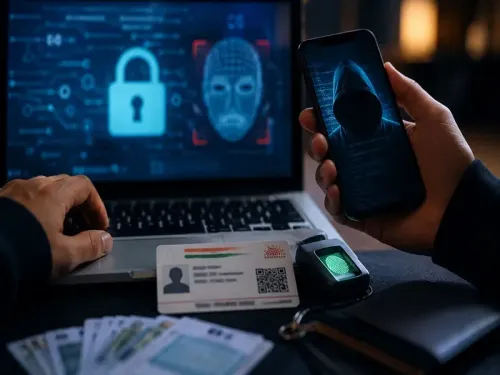
J&K Cyber Crime Department warns public against rising online fraud

Synopsis
As cyber fraud complaints rise across Jammu & Kashmir, the state's Cyber Crime Department has issued a detailed public advisory flagging phishing, OTP theft, and impersonation scams. With the RBI echoing similar warnings nationally, the advisory underscores a widening digital threat landscape — and the urgent need for citizens to act before they become the next target.
Key Takeaways
The J&K Cyber Crime Department issued a public advisory on 30 May 2025 warning against rising online fraud and digital scams.
Key threats identified include phishing links , OTP fraud , fake calls , and impersonation of bank and government officials.
Citizens are urged to enable two-step verification on WhatsApp and never share OTPs, Aadhaar details, or passwords over calls.
Prompt reporting is stressed as critical — especially for financial fraud — to improve chances of fund recovery.
Incidents can be reported via the National Cyber Crime Portal or helpline number 1930 .
The Reserve Bank of India (RBI) and banks have separately and regularly cautioned depositors against sharing account information with impersonators.
The Jammu & Kashmir Cyber Crime Department on Saturday, 30 May issued a public advisory urging residents across the region to remain alert against a surge in digital scams, phishing attacks, and OTP-based fraud. The warning comes as cyber-related complaints continue to mount across Jammu & Kashmir, with fraudsters deploying increasingly sophisticated deception tactics to compromise personal data, financial accounts, and social media profiles.
Key Threats Identified
According to the advisory, cyber criminals are actively using fake calls, phishing links, OTP fraud, and suspicious online requests to target unsuspecting individuals. Officials noted that scammers frequently impersonate bank representatives, government officials, customer care executives, or even known contacts to manipulate victims into surrendering confidential information or transferring money.
The department specifically flagged the misuse of messaging platforms, urging WhatsApp users to immediately activate two-step verification as a defence against unauthorised access and impersonation.
What Citizens Are Advised to Do
The department has outlined a set of precautionary steps for the public. Citizens are advised to avoid clicking on unknown or unverified links, never share OTPs or Aadhaar details over phone calls, and independently verify the identity of anyone requesting sensitive information online.
Strengthening account security across digital platforms — particularly banking and social media apps — has been strongly recommended. Officials stressed that no legitimate bank or government body will ever ask for passwords, PINs, or OTPs through a phone call or message.
Reporting Cyber Fraud
The Cyber Crime Department emphasised that prompt reporting is critical in fraud cases involving financial transactions. Swift intervention by authorities can increase the likelihood of blocking suspicious transfers and aiding fund recovery.
Citizens have been directed to report incidents to the nearest police station, file a complaint on the National Cyber Crime Portal, or call the dedicated cyber helpline at 1930.
Broader Awareness Push
This advisory is part of an ongoing digital safety campaign by the department aimed at promoting responsible online behaviour as internet dependency deepens across the region. The Reserve Bank of India (RBI) and banks operating under its oversight have also been regularly cautioning depositors not to share account details, OTPs, or personal identification information with anyone presenting themselves as a representative of a financial institution.
Notably, this is not an isolated warning — cyber fraud advisories have been issued with increasing frequency across Indian states as digital payment adoption widens the potential target base for online criminals. With the festive and travel season approaching, authorities are particularly concerned about a fresh wave of impersonation and phishing attempts.
Point of View
But their impact depends on reach — and in a region where digital literacy varies sharply across urban and rural pockets, a press statement alone is unlikely to move the needle. The 1930 helpline exists, but awareness of it remains patchy. What is missing from this advisory is data: how many complaints have been filed, how much money has been lost, and how many cases have resulted in recovery or prosecution. Without those numbers, the public has no way to gauge the scale of the problem or the effectiveness of the response. Cyber fraud in India is growing faster than institutional capacity to address it, and J&K is not an exception.
NationPress
25 Sept 2026
Frequently Asked Questions
What is the J&K Cyber Crime Department advisory about?
The J&K Cyber Crime Department issued an advisory on 30 May 2025 warning the public against a rise in online fraud, including phishing, OTP theft, fake calls, and impersonation scams. Citizens have been urged to stay vigilant and report incidents immediately.
How can I report cyber fraud in Jammu & Kashmir?
You can report cyber fraud by visiting the nearest police station, filing a complaint on the National Cyber Crime Portal, or calling the dedicated helpline number 1930. Prompt reporting is especially important in cases involving financial transactions.
What precautions are recommended to avoid online fraud?
The department advises citizens not to click on unknown links, never share OTPs, Aadhaar details, or passwords over calls, and to verify the identity of anyone requesting sensitive information. WhatsApp users are specifically urged to enable two-step verification.
Why are cyber frauds increasing in Jammu & Kashmir?
Authorities attribute the rise to growing reliance on internet-based services and digital payment platforms, which has expanded the pool of potential targets. Fraudsters are exploiting this by using increasingly sophisticated impersonation and phishing tactics.
Is the RBI also warning about similar scams?
Yes, the Reserve Bank of India and banks under its oversight have been regularly advising depositors not to share account details, OTPs, or personal identification information with anyone claiming to represent a financial institution over a phone call or message.