Rajasthan Police warns against WhatsApp hacks via fake QR codes
Synopsis
Rajasthan Police's cyber crime wing has sounded the alarm on a fast-spreading WhatsApp hijack scam where fake QR codes, OTP theft, and impersonation tricks are being used to drain victims' contacts of money. With India home to over 500 million WhatsApp users, the advisory from ADGP V.K. Singh offers a concrete checklist — and a helpline number — to limit the damage.
Key Takeaways
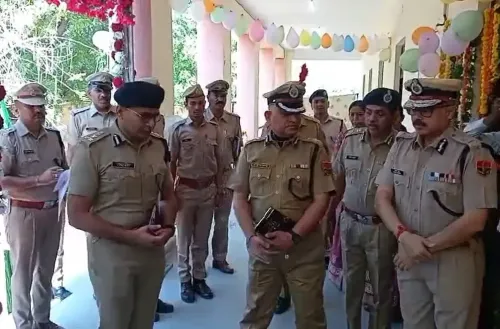
Rajasthan Police's R-4-C wing issued a cybersecurity advisory on 21 October 2026 about rising WhatsApp account hijacking scams.
Singh identified fake QR codes, OTP theft, social engineering, and remote-access apps as the primary attack methods.
Compromised accounts are used to solicit money from victims' contacts under the pretext of medical emergencies or other urgent needs.
Citizens are advised to never scan unknown QR codes and to enable two-step verification on WhatsApp.
Financial fraud victims should call the national cybercrime helpline at 1930 ; complaints can also be lodged at cybercrime.gov.in .
Rajasthan Police's R-4-C (Rajasthan Cyber Crime) wing has issued a cybersecurity advisory on 21 October 2026, warning citizens about a surge in WhatsApp account hijacking scams that use fake QR codes, social engineering, and OTP theft to compromise personal accounts. The advisory comes as cybercriminals grow bolder in targeting ordinary users across the state.
How Cybercriminals Take Over WhatsApp Accounts
According to Additional Director General of Police (ADGP), Cyber Crime, V.K. Singh, attackers employ multiple techniques to seize control of victims' WhatsApp accounts. These include tricking users into scanning fraudulent QR codes or clicking malicious links that silently link the account to an unknown device. Criminals also impersonate friends, government officials, or customer support agents to extract OTPs, verification codes, or two-step verification PINs.
In more sophisticated attacks, fraudsters exploit third-party applications to gain unauthorised access to SMS messages, notifications, or device accessibility permissions. Some victims are also deceived into installing remote-access or screen-sharing software, effectively handing complete device control to the attacker.
What Happens After an Account Is Compromised
Once a WhatsApp account is taken over, the attackers immediately weaponise the victim's contact list. They send messages to friends and family, typically fabricating urgent scenarios such as medical emergencies or financial crises to solicit money. Compromised accounts are also used to circulate suspicious links, potentially spreading the scam further within a victim's social network. This exploitation of trust is what makes these attacks particularly damaging.
Warning Signs Citizens Should Watch For
Police officials have urged users to stay alert to indicators of a possible account compromise — including unexpected logouts, unrecognised linked devices, or messages reportedly sent without the account holder's knowledge. Receiving unsolicited QR codes through messaging platforms or email is itself a red flag, the advisory notes.
Precautions Advised by Rajasthan Police
The R-4-C wing has outlined the following protective steps for citizens:
Users should never scan QR codes received from unknown individuals, unsolicited messages, or unverified websites. Enabling two-step verification with a strong, unique PIN is strongly recommended. Under no circumstances should an OTP, registration code, or two-step verification PIN be shared with any person — regardless of who they claim to be.
How to Report Cyber Fraud
Rajasthan Police has urged anyone who suspects their account has been compromised — or who has received a fraudulent approach — to report it immediately to the nearest police station or cyber police station. Complaints can also be filed online at cybercrime.gov.in, the National Cyber Crime Reporting Portal. Victims of financial cyber fraud are advised to call the national cybercrime helpline at 1930 without delay, as prompt reporting can help limit financial losses.
The advisory reflects a broader national trend of rising WhatsApp-based scams. With over 500 million WhatsApp users in India, law enforcement agencies across multiple states have flagged similar threats in recent months, underlining the need for digital literacy at the grassroots level.
Point of View
Which police departments issue regularly, but enforcement: arrests in WhatsApp impersonation fraud remain vanishingly rare, and the scam networks operating these attacks have shown they can easily outpace state-level response. Until conviction rates rise and cross-state coordination improves, advisories alone will not move the needle for the most vulnerable users.
NationPress
21 Oct 2026
Frequently Asked Questions
How are cybercriminals hijacking WhatsApp accounts in Rajasthan?
Attackers use fake QR codes, malicious links, OTP theft, and social engineering to gain unauthorised access to WhatsApp accounts. They also trick users into installing remote-access apps that hand over full device control.
What should I do if my WhatsApp account is hacked?
Report the incident immediately to your nearest police station or cyber police station, and file a complaint at cybercrime.gov.in. If you have suffered a financial loss, call the national cybercrime helpline at 1930 without delay, as quick action can help recover funds.
How can I protect my WhatsApp from being hijacked?
Enable two-step verification with a strong PIN, never share OTPs or verification codes with anyone, and avoid scanning QR codes from unknown or unsolicited sources. Be wary of third-party apps that request SMS or accessibility permissions.
Who issued the WhatsApp scam advisory in Rajasthan?
The advisory was issued by the R-4-C (Rajasthan Cyber Crime) wing of the Rajasthan Police on 21 October 2026, under the authority of ADGP Cyber Crime V.K. Singh.
What is the national cybercrime helpline number in India?
The national cybercrime helpline number is 1930. Victims of financial cyber fraud should call this number as soon as possible after an incident. Complaints can also be registered online at cybercrime.gov.in.