Japan PM Takaichi departs Delhi after 3-day India visit

Synopsis
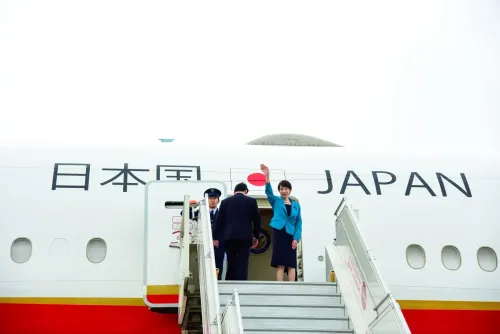
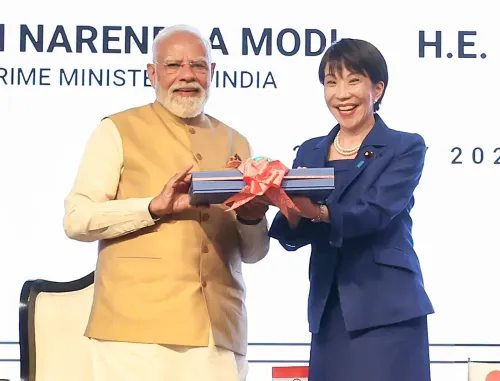
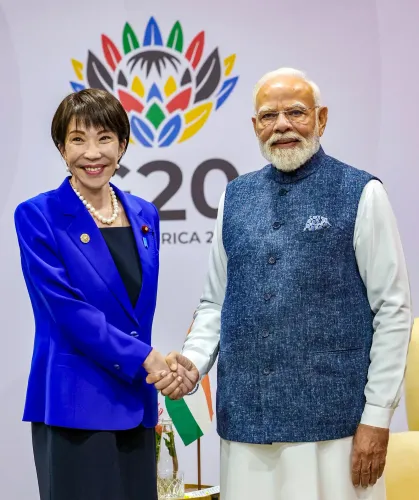
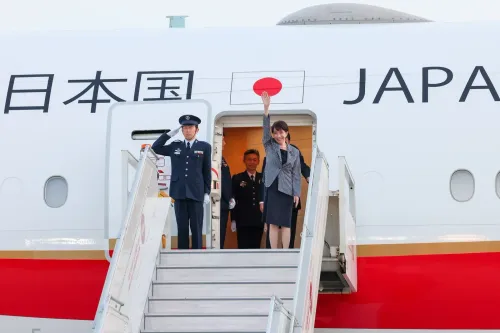
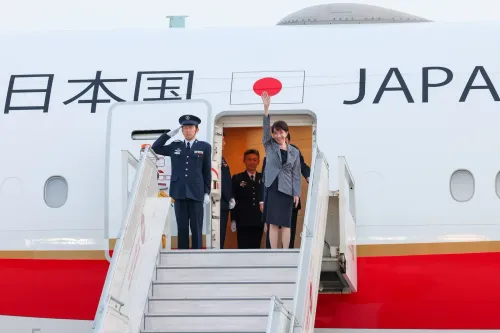
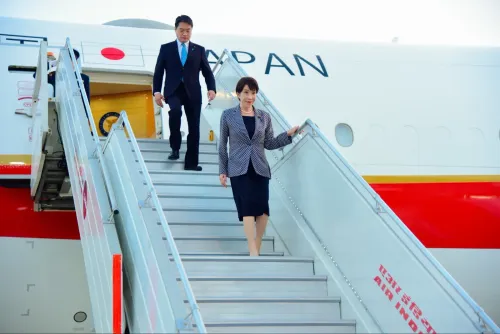
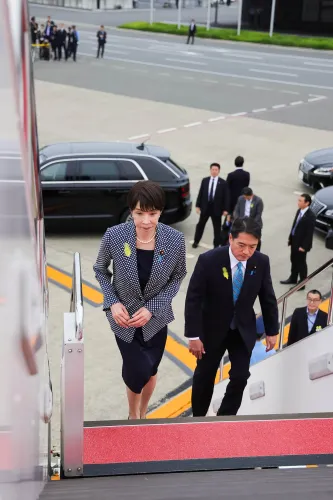
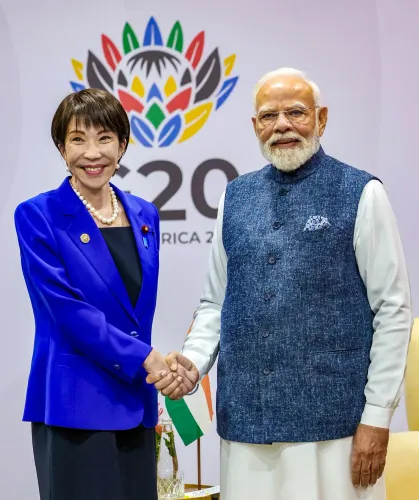
Japanese Prime Minister Sanae Takaichi concluded a three-day official visit to India on 3 July 2026, departing from Palam Technical Airport in New Delhi. Union Minister Dr. Jitendra Singh confirmed the visit, calling it successful, as India and Japan continue to deepen their Special Strategic and Global Partnership.
Key Takeaways
Japanese Prime Minister Sanae Takaichi departed New Delhi on 3 July 2026 after a three-day official visit to India.
She was seen off at Palam Technical Airport , the designated VIP departure facility in the national capital.
Jitendra Singh described the visit as 'successful' in an official post on X.
India and Japan share a Special Strategic and Global Partnership formalised in 2014 , with annual summits since 2006 .
Both countries are Quad members and maintain regular 2+2 ministerial dialogues on defence and foreign affairs.
Follow-up agreements on semiconductors, defence co-development and infrastructure are expected in the coming months.
Union Science and Technology Minister Dr. Jitendra Singh confirmed on Friday, 3 July 2026 that Japanese Prime Minister Sanae Takaichi departed for Tokyo from Palam Technical Airport, New Delhi, concluding a three-day official visit to India that he described as successful.
Context
Dr. Jitendra Singh posted on X that Prime Minister Takaichi 'left for Tokyo this morning, after a successful 3-day visit to India' and was 'officially seen off at the Palam Technical Airport, New Delhi.' The post, accompanied by Indian and Japanese flag emojis and a handshake symbol, signals the warm diplomatic tone maintained throughout the visit.
Palam Technical Airport in the national capital serves as the designated facility for high-protocol VIP arrivals and departures, underlining the ceremonial weight accorded to the Japanese leader's send-off.
Policy Backdrop
India and Japan formalised their Strategic Partnership in 2000, upgrading it to a Special Strategic and Global Partnership in 2014. An annual summit mechanism has been in place since 2006, providing a structured forum for coordination on security, technology and economic issues.
Both nations are members of the Quad — the quadrilateral security dialogue also comprising the United States and Australia — and conduct regular 2+2 ministerial dialogues covering defence and foreign affairs. Japan has been a significant investor in Indian infrastructure, including the Delhi-Mumbai Industrial Corridor and railway modernisation projects, since the mid-2000s.
High-level visits of this kind typically serve to advance cooperation on emerging priorities such as semiconductor supply chains, defence co-development, maritime security and smart-city initiatives, areas where both governments have signalled intent to deepen collaboration.
Stakeholders and Impact
The visit carries implications for diplomatic officials, defence establishments and technology sectors on both sides. Japanese investment in Indian manufacturing has grown steadily alongside political contacts, and a three-day visit at the Prime Ministerial level suggests substantive bilateral engagement beyond ceremonial exchanges.
For India, deepening ties with Japan reinforces its Indo-Pacific posture and diversifies strategic partnerships at a time of evolving regional security dynamics. For Japan, India represents a critical partner in supply-chain resilience and a large consumer market for advanced technology and infrastructure finance.
What's Next
Attention will now turn to any joint statements or follow-up agreements emerging from the visit, particularly in the areas of semiconductors, clean energy and defence co-development. The next annual India-Japan summit will be closely watched for concrete deliverables that build on the momentum generated by Prime Minister Takaichi's New Delhi trip.
Point of View
Confirmed by a senior Union Minister, reflects the high diplomatic priority India places on the bilateral relationship at a moment of intensifying Indo-Pacific competition. A three-day visit at the head-of-government level is substantively longer than routine courtesy calls, suggesting the two sides were working through a detailed agenda rather than exchanging pleasantries. For the ruling dispensation in New Delhi, the optics of a successful Japan visit reinforce its narrative of proactive multilateral engagement and strategic autonomy. Watch for whether concrete deliverables — particularly in semiconductors or defence co-production — are announced in the days following the departure.
NationPress
1 Oct 2026
Frequently Asked Questions
Why did Japan PM Sanae Takaichi visit India in July 2026?
Japanese Prime Minister Sanae Takaichi visited India for three days in early July 2026 as part of the sustained high-level engagement between the two countries under their Special Strategic and Global Partnership, which covers defence, technology, infrastructure and economic cooperation.
Where did Japan PM Takaichi depart from in New Delhi?
Prime Minister Takaichi departed from Palam Technical Airport in New Delhi, the facility designated for VIP and high-protocol aviation operations in the Indian capital.
What is the India-Japan Special Strategic and Global Partnership?
The India-Japan Special Strategic and Global Partnership was established in 2014 , upgrading the bilateral strategic partnership first formalised in 2000 . It covers defence cooperation, technology, infrastructure investment and diplomatic coordination including through the Quad.
Who confirmed Japan PM Takaichi's departure from India?
Union Science and Technology Minister Dr. Jitendra Singh confirmed the departure in a post on X on 3 July 2026 , noting she had been officially seen off at Palam Technical Airport after a successful three-day visit.
What are the key areas of India-Japan cooperation?
India and Japan cooperate across defence co-development, semiconductor supply chains, railway modernisation, smart-city projects, maritime security and clean energy. Both are Quad members and hold annual summits and regular 2+2 ministerial dialogues.