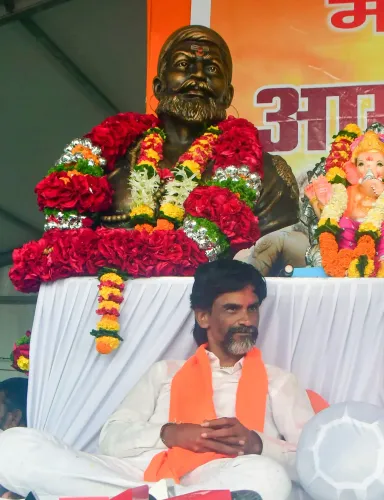
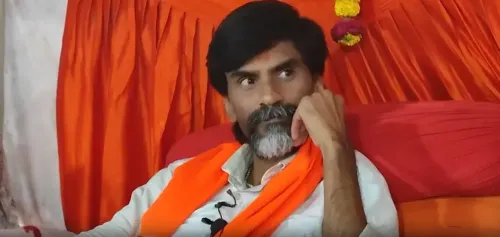
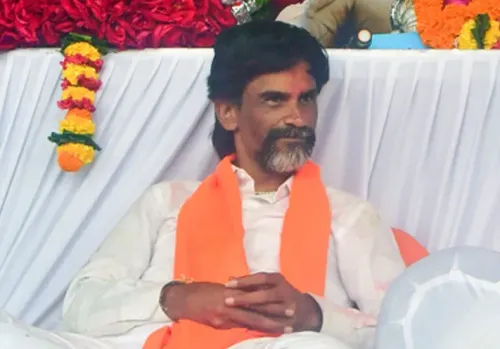
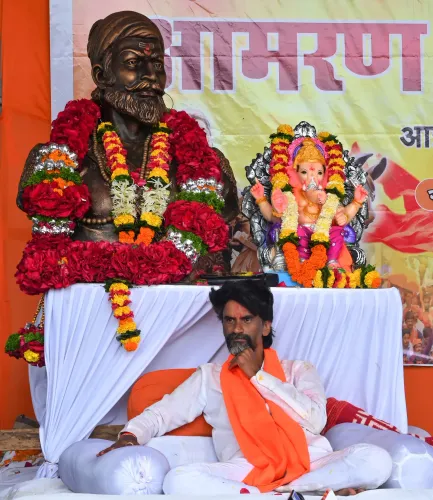
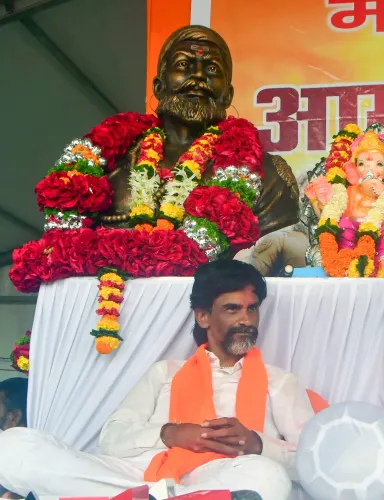
Manoj Jarange Patil suspends 20-day fast, gives Maharashtra govt 90-day ultimatum
Synopsis
After 20 days without food and a health scare on the march to Mumbai, Manoj Jarange Patil called off his hunger strike — but the Maratha quota battle is far from over. The Maharashtra government has 90 days to gazette its promises, sign off on 58 lakh Kunbi records, and issue a GR equating Marathas with Kunbis, or face a fresh march. The clock has started.
Key Takeaways
Manoj Jarange Patil suspended his 20-day hunger strike in Beed on 17 September 2026 after talks with a Maharashtra government delegation.
The government has promised implementation of the Satara, Kolhapur, Pune, and Aundh Gazettes within 90 days via a Government Resolution.
All 58 lakh Kunbi records identified by the Shinde Committee must remain intact — a non-negotiable demand by Jarange Patil.
Revoked Kunbi certificates of four Marathwada elected representatives are to be revalidated under the government's commitments.
Jarange Patil demands a GR explicitly stating 'Maratha and Kunbi are one and the same' , signed or publicly confirmed by CM Devendra Fadnavis .
He warned of a march to Mumbai if the government fails to deliver within the deadline; the broader agitation continues.
Maratha quota activist Manoj Jarange Patil on Thursday, 17 September 2026, suspended his 20-day hunger strike in Beed after holding talks with a Maharashtra government delegation, issuing a firm 90-day ultimatum for implementation of the Satara Gazette and related Kunbi record commitments. Jarange Patil made clear that while the fast is on hold, the broader agitation for Maratha reservation will continue.
Government Assurances That Broke the Deadlock
The delegation that persuaded Jarange Patil to stand down included Minister Radhakrishna Vikhe Patil, Minister Dadaji Bhuse, MLA Prasad Lad, MLA Suresh Dhas, and the Beed District Collector. The government committed to implementing the Satara, Kolhapur, Pune, and Aundh Gazettes within three months through a Government Resolution (GR), issuing a revised GR to grant Kunbi certificates in line with the Hyderabad Gazette, and ensuring that none of the 58 lakh Kunbi records identified by the Shinde Committee are reduced. The delegation also promised revalidation of revoked Kunbi certificates belonging to four elected representatives from Marathwada.
Bharatiya Janata Party MLA Prasad Lad confirmed that Jarange Patil ended the hunger strike following appeals by Chief Minister Devendra Fadnavis, Deputy Chief Minister Eknath Shinde, and Deputy Chief Minister Sunetra Pawar, adding that the government is committed to fulfilling its promises within 90 days.
Jarange Patil's Conditions and Warnings
Jarange Patil set out several non-negotiable demands alongside the suspension. He insisted that any commitment on the 58 lakh Kunbi records must carry the personal signature of Chief Minister Fadnavis or be publicly confirmed by him through a press conference or video statement. He also demanded a GR explicitly stating that Marathas and Kunbis are one and the same community — mirroring a recent government resolution that recognised Hindu Wani, Hindu Vaishya, and Vaishya Wani as the same community.
He was critical of the Shinde Committee, alleging it had not functioned effectively, and warned that if the government uses the 90-day window merely to buy time, protests will resume and he will march to Mumbai. He also demanded that competent officers be specifically assigned to locate Kunbi records and offered to provide community volunteers to assist in the search.
Health Deterioration and the Road to Beed
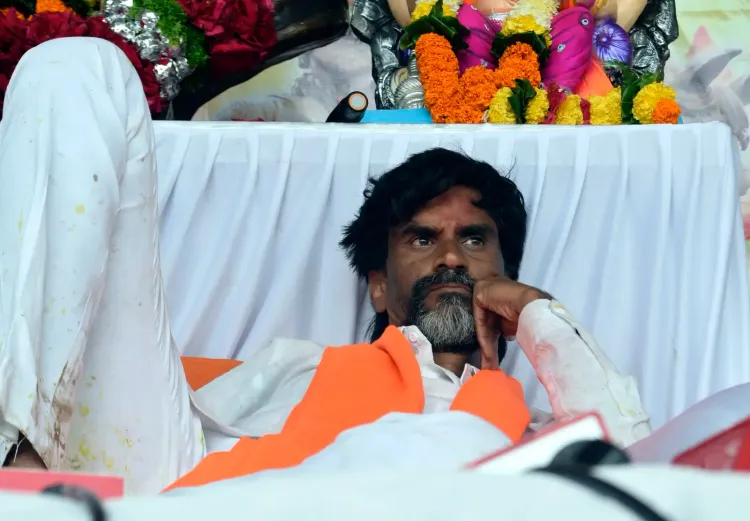
Jarange Patil had earlier planned to launch an agitation at Azad Maidan in Mumbai on 19 September. Police, however, denied permission, citing security concerns and operational pressure during the ongoing Ganesh festival. As he marched toward Mumbai, his health deteriorated sharply after he stopped consuming water and intravenous fluids. The government delegation's successful outreach in Beed ultimately persuaded him to halt the fast before the situation turned critical.
Political Undertones and the Broader Reservation Battle
Addressing his supporters, Jarange Patil extended greetings on Marathwada Liberation Day, marking the end of Nizam rule in the region, and assured the community he would not abandon the fight without securing gazette implementation. He clarified that Chief Minister Fadnavis and Deputy Chief Minister Shinde are not his enemies, but added that he has no option but to resist when his movement is challenged. Notably, he asked that people treat Minister Vikhe Patil with affection despite any differences, signalling a willingness to keep dialogue channels open.
Minister Vikhe Patil explained during discussions that the Satara Gazette involves a 1,100-page report requiring three to four months of study before actionable steps can be taken. On the Hyderabad Gazette GR, currently pending before a court, he assured the delegation that steps would be taken to prevent any stay order.
With the 90-day clock now running, the Maharashtra government faces mounting pressure to convert assurances into gazetted orders — or risk a fresh, more disruptive round of Maratha agitation.
Point of View
A tension the government has so far carefully avoided addressing head-on. Jarange Patil's insistence that Chief Minister Fadnavis personally sign or publicly confirm the Kunbi record commitment signals deep distrust of bureaucratic assurances — and rightly so, given how many earlier pledge rounds ended without follow-through. The real test comes not on day one but on day 89, when paper commitments must convert into gazetted orders.
NationPress
17 Sept 2026
Frequently Asked Questions
Why did Manoj Jarange Patil suspend his hunger strike?
Jarange Patil suspended his 20-day hunger strike on 17 September 2026 after a Maharashtra government delegation visited him in Beed and gave written assurances on Kunbi record protection, gazette implementation, and certificate revalidation. His health had also deteriorated after he stopped consuming water and IV fluids during his march toward Mumbai.
What is the Satara Gazette and why is it significant for Maratha reservation?
The Satara Gazette is a historical document that, according to the Maratha agitation, contains records identifying Marathas as Kunbi — an OBC community entitled to reservation. Jarange Patil's core demand is that the government use this and other gazettes to issue a GR establishing the Maratha-Kunbi link, thereby opening the OBC reservation pathway for Marathas.
What assurances did the Maharashtra government give Jarange Patil?
The government delegation promised: implementation of the Satara, Kolhapur, Pune, and Aundh Gazettes through a GR within three months; a revised GR for Kunbi certificates under the Hyderabad Gazette; continued validity of existing Hyderabad Gazette certificates; no reduction in the 58 lakh Kunbi records found by the Shinde Committee; and revalidation of revoked Kunbi certificates of four Marathwada representatives.
What happens if the government does not fulfil its promises within 90 days?
Jarange Patil has warned that if the government uses the 90-day window merely to buy time, the protest will resume and he will march to Mumbai. He emphasised that the agitation itself has not ended — only the hunger strike has been suspended.
Who is Manoj Jarange Patil and what is the Maratha reservation movement about?
Manoj Jarange Patil is a prominent Maratha community activist who has led a sustained agitation demanding reservations for Marathas in Maharashtra under the OBC category. The movement seeks to establish through historical gazettes that Marathas are the same as Kunbis — an OBC sub-group — thereby making them eligible for existing reservation benefits.