Jharkhand HC orders CBI probe into ₹727.67 crore coal workers' PF loss

Synopsis
The Jharkhand High Court has ordered a CBI probe into how ₹727.67 crore of coal workers' retirement savings vanished after CMPFO invested ₹1,300 crore in DHFL — despite documented warnings from SBI and UTI as early as June 2019. The order, passed on 8 October, could expose years of institutional inaction and puts accountability for one of India's most consequential PF losses directly under criminal-level scrutiny.
Key Takeaways
The Jharkhand High Court on 8 October 2026 ordered a CBI probe into a ₹727.67 crore loss from coal workers' provident fund.
The Coal Mines Provident Fund Organisation (CMPFO) had invested ₹1,300 crore in DHFL , which subsequently went bankrupt.
Fund managers SBI and UTI reportedly warned of DHFL's financial risk as early as 24 June 2019 ; withdrawal was only approved on 20 December 2019 — nearly six months later.
A proposal to write off the ₹727.67 crore was placed before a CMPFO sub-committee on 22 November 2021 and was opposed by employees.
Departmental proceedings were initiated against then Coal Secretary Animesh Bharti ; the High Court flagged a premature clean chit given to officials by CMPFO.
The CBI will examine investment procedures, reasons for delayed exit, and individual accountability for the losses.
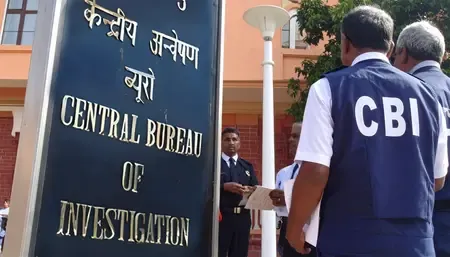
The Jharkhand High Court on Thursday, 8 October 2026, ordered a Central Bureau of Investigation (CBI) probe into the loss of ₹727.67 crore from provident fund money belonging to coal company employees, after the Coal Mines Provident Fund Organisation (CMPFO) invested ₹1,300 crore in Dewan Housing Finance Corporation Limited (DHFL) — a housing finance company that subsequently went bankrupt. The order was passed by a division bench headed by Chief Justice M.S. Sonak while hearing a public interest litigation filed by the Coal Employee Welfare Association.
Background: How the Loss Occurred
The CMPFO, which manages retirement savings for workers of coal companies across India, had parked ₹1,300 crore in DHFL. When DHFL collapsed under a mountain of debt and fraud allegations, the fund was unable to recover a substantial portion of its investment, resulting in a verified loss of ₹727.67 crore.
Critically, the petition alleged that warnings about DHFL's deteriorating financial health were raised as early as 24 June 2019 by the fund's own managers — State Bank of India (SBI) and UTI — who reportedly flagged the risk and advised that the investment be withdrawn without delay. No timely action was taken, according to the petitioner.
The Delay That Cost Workers Crores
Nearly six months after the initial warning, on 20 December 2019, the CMPFO held a meeting in which a proposal was finally passed to exit the DHFL investment. By then, the damage had already crystallised. Almost two years later, on 22 November 2021, an investment-related sub-committee of the CMPFO board tabled a proposal to write off the ₹727.67 crore — a move employees formally opposed.
This is not a simple case of market risk: the petition specifically alleges that decision-makers sat on explicit, dated warnings and failed to act. That allegation of culpable inaction is at the heart of the CBI referral.
What the Court Took Note Of
The High Court took serious note of a separate procedural concern: that even before a departmental inquiry report against then Coal Secretary Animesh Bharti — who faces departmental proceedings in connection with the matter — had been received, the CMPFO filed an affidavit before the court giving a clean chit to its own officials. The bench found this premature and problematic.
The Coal India Board of Directors had also proposed levying a cess of ₹10 per tonne on coal production as a mechanism to recoup the lost funds — a proposal that effectively would have passed the burden of institutional mismanagement onto production operations.
What the CBI Will Now Examine
With the High Court disposing of the petition after ordering the CBI probe, investigators will now scrutinise three key questions: the procedures followed when deciding to invest such a large sum in DHFL; the reasons for the prolonged delay in withdrawing funds despite documented warnings from SBI and UTI; and accountability for the ₹727.67 crore loss ultimately borne by coal workers' retirement savings.
The petitioner, represented by Advocate Anil Kumar Singh, had sought both a CBI investigation and full recovery of the lost amount. The court has accepted the probe demand; the question of recovery will depend on what investigators uncover.
Wider Context
The DHFL collapse was one of India's largest non-banking financial company (NBFC) failures, triggering losses across mutual funds, insurance entities, and provident fund bodies. The CMPFO's exposure to DHFL has been a subject of controversy for years, but Thursday's judicial order marks the first time a formal CBI investigation has been mandated into the fund's specific investment decisions. For the hundreds of thousands of coal workers whose retirement security depends on CMPFO, the CBI probe represents a long-awaited step toward accountability.
Point of View
Yet the CMPFO waited six months to even pass a withdrawal resolution, by which point the loss was irreversible. The subsequent attempt to write off ₹727.67 crore, and the filing of a clean chit affidavit before a departmental inquiry had even concluded, suggests an institutional reflex to protect insiders rather than workers. The CBI order is significant, but recovery for affected coal employees will depend on whether criminal accountability translates into financial restitution — something India's legal process has historically struggled to deliver in NBFC-linked fraud cases.
NationPress
8 Oct 2026
Frequently Asked Questions
What did the Jharkhand High Court order on 8 October 2026?
The Jharkhand High Court ordered a CBI investigation into the loss of ₹727.67 crore from the Coal Mines Provident Fund Organisation (CMPFO) after ₹1,300 crore was invested in DHFL, which went bankrupt. The order was passed by a division bench headed by Chief Justice M.S. Sonak on a PIL filed by the Coal Employee Welfare Association.
Why did CMPFO lose money in DHFL?
CMPFO invested ₹1,300 crore in Dewan Housing Finance Corporation Limited (DHFL), which subsequently collapsed due to financial fraud and insolvency. Fund managers SBI and UTI had reportedly warned about DHFL's deteriorating health as early as June 2019, but the investment was not withdrawn in time, resulting in a loss of ₹727.67 crore.
What will the CBI investigate in the CMPFO-DHFL case?
The CBI will examine the procedures followed when deciding to invest ₹1,300 crore in DHFL, why no timely action was taken despite warnings from SBI and UTI in June 2019, and who is accountable for the ₹727.67 crore loss from coal workers' provident fund savings.
Who are the key officials implicated in the CMPFO loss?
Departmental proceedings were initiated against then Coal Secretary Animesh Bharti in connection with the matter. The Jharkhand High Court also took serious note of the fact that CMPFO filed an affidavit giving a clean chit to its officials even before the departmental inquiry report had been received.
How does this affect coal workers?
The ₹727.67 crore loss comes directly from the provident fund corpus of coal company employees — money that forms the retirement security of workers. Employees had formally opposed a proposal to write off the loss in November 2021. The CBI probe could potentially pave the way for recovery proceedings, though restitution is not guaranteed.