Jharkhand students back Modi's Yuva Shakti push, demand crackdown on paper leaks
Synopsis
Jharkhand's exam-fraud protesters found common ground with Modi's Independence Day 'Yuva Shakti' speech — but made clear that nation-building rhetoric rings hollow without a crackdown on JPSC and JSSC paper leaks. A second grievance, over the Mines and Minerals Amendment Bill stripping state tax powers, has fused with the exam protests, turning a student agitation into a broader federalism flashpoint.
Key Takeaways
Protesting students in Ranchi on 15 August 2026 backed PM Narendra Modi 's 'Yuva Shakti' call from the Red Fort but demanded strictest action against exam paper leaks.
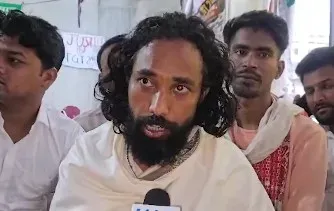
Student leader Ravishankar cited irregularities in NEET and multiple Central exams, as well as JPSC and JSSC examinations in Jharkhand.
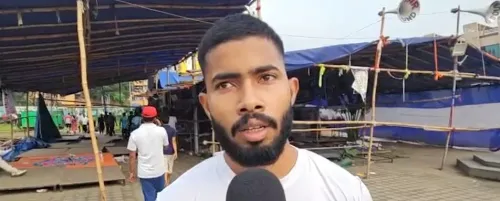
Protester Nitesh Sinha said stringent measures against paper leaks are a prerequisite for youth to contribute to nation-building.
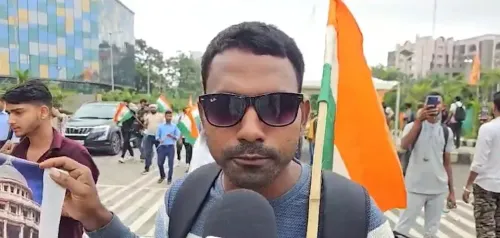
Agitator Ramavtar Mahto urged the Centre to roll back the Mines and Minerals (Development and Regulation) Amendment Bill, 2026 , which curbs state mineral tax powers.
Chief Minister Hemant Soren has strongly opposed the mineral amendment bill, adding a fiscal federalism dimension to the student protests.
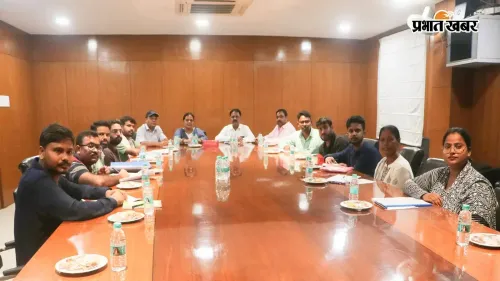
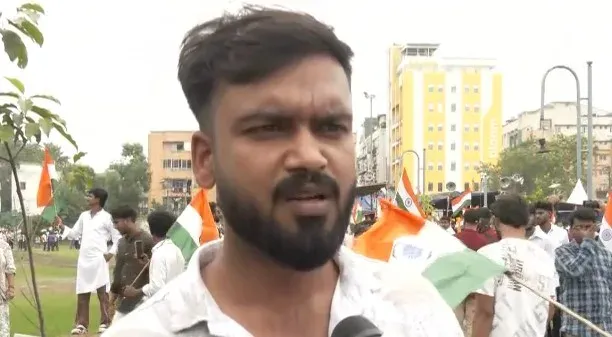
Protesting students in Jharkhand on 15 August 2026 voiced support for Prime Minister Narendra Modi's Independence Day call to harness 'Yuva Shakti' for nation-building, while pressing both the Centre and the Hemant Soren-led state government to impose the harshest possible penalties on those responsible for exam paper leaks. The demonstrations, centred in Ranchi, have been ongoing over alleged irregularities in recruitment examinations conducted by the Jharkhand Public Service Commission (JPSC) and the Jharkhand Staff Selection Commission (JSSC).
What Modi Said — and Why Students Responded
Addressing the nation from the ramparts of the Red Fort on the 80th Independence Day, Modi said India would fully harness the power and potential of its youth and integrate their capabilities into the process of nation-building. He stressed that young people have a central role in realising the vision of 'Viksit Bharat' by 2047. The remarks resonated with agitating students who have long argued that exam fraud directly undermines the very meritocracy that such national ambitions require.
Student Voices: Support With Conditions
Student leader Ravishankar said the youth agenda is a priority at both the central and state levels, but cautioned that rhetoric alone is insufficient. 'Apart from NEET, irregularities have taken place in many other Central examinations as well. Similar irregularities have taken place in Jharkhand. I want to say to both the governments that youth are the future of the country — until they are self-reliant, India won't become Aatmanirbhar and neither progress ahead,' he said. He appealed for the strictest possible punishment for those involved in paper leaks.
Protester Nitesh Sinha echoed the sentiment: 'We support whatever PM Modi said regarding the youth but the government should take stringent measures to stop paper leaks — only then can capable youth contribute in nation-building.'
Fiscal Federalism Grievance Surfaces
Agitator Ramavtar Mahto, while welcoming Modi's remarks on youth, raised a separate but pointed concern about the Mines and Minerals (Development and Regulation) Amendment Bill, 2026, which restricted state powers to levy independent taxes and cesses on mineral rights and land. 'Some of the rights of Jharkhand like the independent taxes have been snatched away. If all the rights are taken over by the Centre, then power may get misused under state government as was happening during the JPSC and JSSC examinations. The state would then have to beg the Centre for its own dues,' Mahto said, urging the Centre to roll back the law.
Chief Minister Hemant Soren has separately and strongly opposed the mineral amendment bill, making this a dual flashpoint — exam integrity and fiscal autonomy — converging in the same protest space. Notably, this is not the first time Jharkhand's mineral revenue rights have drawn state-Centre friction; the state derives a significant share of its own-tax revenue from mining.
Background: The Exam Fraud Crisis
Students have been agitating in Jharkhand over alleged paper leaks and irregularities in JPSC and JSSC recruitment exams, mirroring a national pattern seen in the NEET-UG 2024 controversy that triggered protests across India. The Jharkhand protests reflect a broader crisis of credibility in public examination systems, where candidates invest years of preparation only to face compromised processes. This comes amid mounting pressure on the Centre to establish a tamper-proof national examination framework.
What Happens Next
Both the Centre and the Jharkhand government are yet to announce concrete measures in response to the protesters' demands. With Modi having publicly committed to youth empowerment on the national stage, student groups are now likely to escalate pressure for legislative and administrative action on exam fraud — and for a reconsideration of the mineral amendment bill's impact on state finances.
Point of View
Making them harder to dismiss as fringe discontent. Jharkhand's heavy dependence on mineral revenues means the amendment is not a peripheral fiscal matter — it is existential for state finances. Modi's 'Yuva Shakti' framing will be tested not by speeches but by whether a credible, tamper-proof national examination architecture materialises, and whether states like Jharkhand retain enough fiscal autonomy to fund their own youth welfare programmes.
NationPress
30 Sept 2026
Frequently Asked Questions
Why are students protesting in Jharkhand?
Students in Jharkhand have been agitating over alleged paper leaks and irregularities in recruitment examinations conducted by the Jharkhand Public Service Commission (JPSC) and the Jharkhand Staff Selection Commission (JSSC). They are demanding strict punishment for those responsible and systemic reforms to prevent future fraud.
What did PM Modi say about youth on Independence Day 2026?
Addressing the nation from the Red Fort on the 80th Independence Day on 15 August 2026, PM Modi said India would fully harness the power and potential of its youth and integrate their capabilities into nation-building. He emphasised that young people are central to realising the 'Viksit Bharat' vision by 2047.
What is the Mines and Minerals Amendment Bill 2026 and why does it matter to Jharkhand?
The Mines and Minerals (Development and Regulation) Amendment Bill, 2026 restricts state governments from levying independent taxes and cesses on mineral rights and land. Jharkhand, which derives significant revenue from mining, has strongly opposed the bill through Chief Minister Hemant Soren, with student agitators also calling for its rollback.
Who are the student leaders involved in the Jharkhand protests?
Named figures include student leader Ravishankar, who called for strictest punishment for paper leak culprits, protester Nitesh Sinha, who linked exam integrity to meaningful youth contribution, and agitator Ramavtar Mahto, who raised the mineral tax rights issue alongside the exam fraud grievance.
How does the Jharkhand exam protest connect to the national NEET controversy?
Student leader Ravishankar explicitly cited NEET irregularities alongside JPSC and JSSC fraud, reflecting a nationwide pattern of compromised public examinations. The Jharkhand protests mirror the broader crisis of credibility in India's public exam systems that gained national attention during the NEET-UG 2024 controversy.