Jharkhand Unveils a Rs 1.58 Lakh Crore Budget Despite Rs 16,000 Crore Centre Shortfall

Synopsis
Jharkhand's Finance Minister Radha Krishna Kishore reveals a substantial Rs 1.58 lakh crore budget for 2026-27, dubbed the 'Abua Dishom Budget.' Despite a significant shortfall from the Centre, the budget emphasizes welfare initiatives while promising sustainable growth.
Key Takeaways
Total budget: Rs 1,58,560 crore for 2026-27 Welfare focus: Significant allocations for women's welfare and social security Fiscal deficit: Estimated at Rs 13,595.96 crore Infrastructure spending: Increased capital expenditure for roads and irrigation Health initiatives: Rs 7,990.30 crore allocated for healthcare services
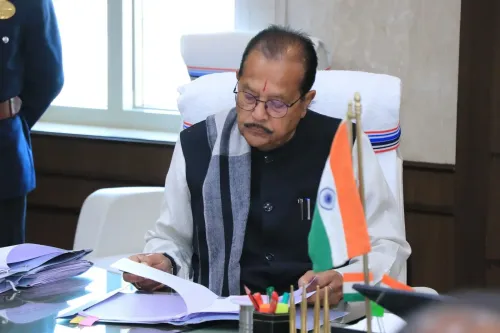
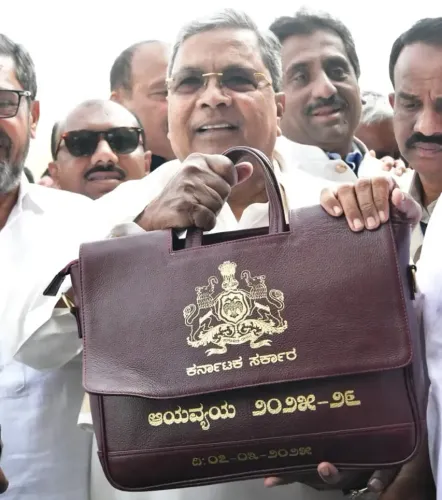
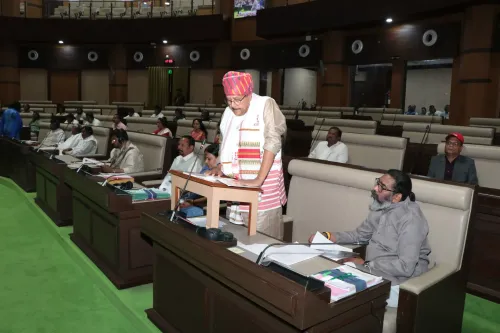
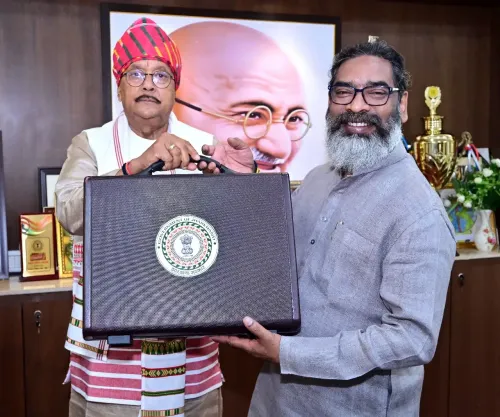
Ranchi, Feb 24 (NationPress) On Tuesday, Jharkhand's Finance Minister, Radha Krishna Kishore, unveiled a budget of Rs 1,58,560 crore for the fiscal year 2026-27 during an Assembly session. He referred to this as the “Abua Dishom Budget”, designed to foster inclusive, sustainable, and welfare-centric growth within the state.
Characterizing it as a blueprint for “Abua Jharkhand” (Our Jharkhand), the Finance Minister emphasized that the budget embodies the government's commitment to alleviate the struggles of the impoverished and to spread joy among all residents.
This budget reflects an approximate nine percent increase over the previous year's budget of Rs 1,45,400 crore.
In his address, Kishore criticized the Central government for not providing sufficient financial assistance to the state. He asserted that Jharkhand has suffered a shortfall of nearly Rs 16,000 crore in terms of tax devolution and grants—comprising around Rs 5,000 crore in tax revenue and Rs 11,000 crore in grants.
He also mentioned that the state incurs an annual loss of about Rs 4,000 crore due to GST rate adjustments. The enforcement of the 60:40 funding ratio under the VB G RAM G scheme has further imposed an additional burden of Rs 5,640 crore on the state treasury. Kishore highlighted outstanding dues totaling Rs 1.36 lakh crore owed by coal companies.
Despite these challenges, the Minister reassured that the government managed to ensure timely salary payments for employees and allocated Rs 13,000 crore for the Chief Minister’s Maiya Samman Yojana.
Projected growth in the state’s own revenue is expected to rise from Rs 25,521 crore in 2019-20 to Rs 66,700 crore by 2026-27.
The fiscal deficit is estimated at Rs 13,595.96 crore, accounting for 2.18 percent of GSDP, while the projected debt-to-GSDP ratio stands at 25.3 percent.
Out of the total budget, Rs 1,20,851.90 crore is allocated for revenue expenditure, whereas Rs 37,708.10 crore is designated for capital expenditure. An increase of 8.5 percent in capital expenditures aims to enhance road, irrigation, power, and drinking water infrastructure.
Women's welfare and social security initiatives received the largest budget allocations. The Chief Minister’s Maiya Samman Yojana has been allocated Rs 14,065.57 crore, which provides Rs 2,500 monthly to women aged between 18 and 50. The Sarvajan Pension Yojana has been allotted Rs 3,517.23 crore, while Rs 1,463.58 crore is designated for the National Pension Scheme.
The budget for the Women and Child Development Department totals Rs 22,995.69 crore.
In healthcare, Rs 7,990.30 crore has been designated, including a Rs 200 crore special initiative for cancer treatment and a goal to establish 750 “Abua Dispensaries”.
For the agricultural sector, funding for the Birsa Seed Production Scheme has been increased to Rs 145 crore. Other allocations include Rs 475.50 crore for soil and water conservation, Rs 75 crore for solar-based irrigation, Rs 80 crore for distributing farm equipment, and Rs 400 crore for crop insurance.
The rural development sector has been allocated Rs 12,346.90 crore, which includes Rs 4,100 crore for the “Abua Housing Scheme”. Additionally, Rs 66 crore has been earmarked to promote products from Sakhi Mandals under the “Palash” brand.
In education, Rs 16,251.43 crore has been allocated for elementary and secondary education, along with Rs 2,564.45 crore for higher and technical education, emphasizing excellence in schools and digital learning initiatives.
The government asserts that this budget effectively balances welfare priorities with capital development to ensure sustained long-term growth.
Point of View
Jharkhand's budget reflects both ambition and challenges. While the initiatives targeting welfare and development are commendable, the significant shortfall from the Centre raises questions about resource allocation and the sustainability of such expenditures. The balance between welfare and infrastructure investment will be crucial for the state's future growth.
NationPress
3 Oct 2026
Frequently Asked Questions
What is the total budget presented by Jharkhand?
Jharkhand's Finance Minister presented a total budget of Rs 1,58,560 crore for the fiscal year 2026-27.
What is the allocation for women's welfare in the budget?
The budget allocates Rs 14,065.57 crore for the Chief Minister’s Maiya Samman Yojana aimed at providing financial assistance to women.
How much is the estimated fiscal deficit?
The estimated fiscal deficit is Rs 13,595.96 crore, which constitutes 2.18 percent of the Gross State Domestic Product (GSDP).
What are the main focuses of this budget?
This budget emphasizes welfare initiatives, infrastructure development, health, education, and rural development.
How does the budget address health care?
The budget allocates Rs 7,990.30 crore for health care, including a special scheme for cancer treatment.