Jitendra Singh: India's 28-yr-old avg team launches rocket
Synopsis
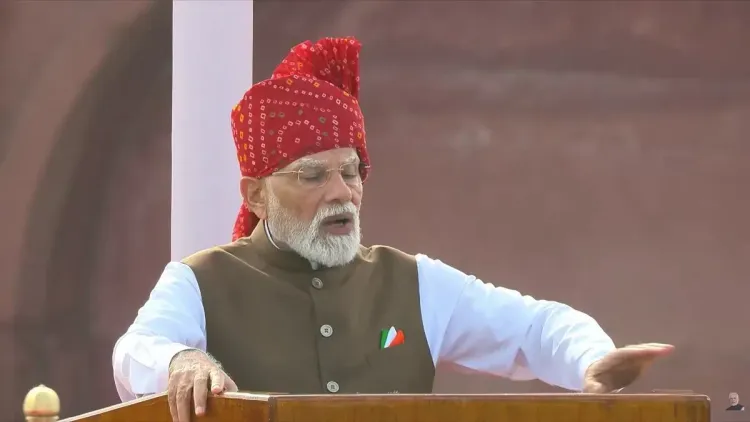
On Independence Day 2026, Union Minister Dr. Jitendra Singh quoted PM Modi highlighting that a team averaging just 28 years of age successfully launched a rocket into space, underscoring India's youthful edge in its expanding space programme.
Key Takeaways
Jitendra Singh shared a quote from PM Narendra Modi on Independence Day, August 15, 2026 .
A rocket was successfully launched by a team with an average age of just 28 years .
ISRO has a documented history of fielding young science teams, dating to the celebrated 2013 Mars Orbiter Mission .
The post aligns with sustained government messaging on youth participation in strategic technology sectors.
India's space sector is expanding through programmes like Gaganyaan and increased private-sector launch vehicle participation.
On Independence Day, August 15, 2026, a striking data point cut through the celebration: a team of young Indians, averaging just 28 years of age, had successfully launched a rocket into space. Union Science and Technology Minister Dr. Jitendra Singh amplified the moment on X, quoting Prime Minister Narendra Modi directly — framing it not as a bureaucratic milestone, but as proof that India's next technological wave has a very young face.
The post quotes PM Modi: 'India's young minds are driving the nation's next wave of innovation and technology. Youth with an average age of 28 years have successfully launched rocket in Space.' The choice of Independence Day to spotlight the achievement was deliberate — space success and national identity have long been woven together in India's public imagination.
The demographic edge India keeps talking about
This is not the first time India's space programme has leaned into its youth advantage as a strategic narrative. When ISRO's Mars Orbiter Mission succeeded in 2013, the relatively young average age of its science team became a talking point as striking as the mission's record-low cost. The pattern has held: successive governments have positioned youthful ISRO teams as symbols of a broader technological self-reliance, not just engineering competence.
An average age of 28 in a rocket launch team is a number worth pausing on. These are scientists and engineers who grew up in the era of India's liberalised economy, expanded STEM education, and the first wave of domestic private-sector aerospace ambition. The workforce behind the launch reflects a generation shaped by exactly the policy investments in science education that ministers like Dr. Jitendra Singh have championed.
Where this fits in India's space ambitions
ISRO is in the middle of its most ambitious phase in decades — with Gaganyaan, India's first crewed spaceflight programme, in advanced preparation, and a growing ecosystem of private launch-vehicle companies entering the sector under liberalised space policy. The minister's post lands at a moment when the institutional and commercial pipelines are converging, and the government is keen to signal that human capital is keeping pace with hardware ambition.
Posting on Independence Day is itself a signal: this achievement is being offered to the public not as a technical bulletin, but as a national statement — one that ties the country's 79-year journey of self-determination directly to the frontier of space.
India has always punched above its budget in space. Now it is betting it can punch above its age, too.
Point of View
Not a footnote. Watch whether this narrative accelerates policy moves on private space sector incentives or STEM funding ahead of the next budget cycle.
NationPress
15 Aug 2026
Frequently Asked Questions
Who launched the rocket that PM Modi mentioned on Independence Day 2026?
PM Modi credited India's young scientists and engineers, with the launch team averaging just 28 years of age. The post shared by Minister Dr. Jitendra Singh does not name a specific mission or organisation beyond this detail.
What did Dr. Jitendra Singh post on Independence Day 2026?
Dr. Jitendra Singh shared a quote attributed to Prime Minister Narendra Modi, stating that Indian youth with an average age of 28 years had successfully launched a rocket into space, calling them drivers of the nation's next wave of innovation.
Has ISRO highlighted young team ages before?
Yes. ISRO's 2013 Mars Orbiter Mission team was widely noted for its relatively young average age, and successive governments have used the demographic profile of ISRO scientists as a symbol of India's technological self-reliance.
What is Gaganyaan and how does it relate to this?
Gaganyaan is India's first crewed spaceflight programme, currently in advanced preparation by ISRO. The government's emphasis on a youthful launch workforce aligns with the broader ambition of Gaganyaan and expanding private-sector participation in Indian space launches.
Why was this announcement made on Independence Day?
Independence Day is India's most prominent national occasion, and the government has a consistent practice of tying space and technology milestones to the date to frame scientific achievement as an expression of national self-determination and progress.