Science Minister Jitendra Singh outlines landslide risk strategy
Synopsis
At the World Landslide Forum in Faridabad, Jitendra Singh described a shift from post-disaster relief towards forecasting and prevention. He cited mapping, satellite monitoring and last-mile warnings as elements of India's landslide risk strategy.
Key Takeaways
Jitendra Singh outlined India's landslide strategy at the 7th World Landslide Forum in Faridabad .
He said the approach was shifting from post-disaster relief towards prevention and risk reduction.
Singh cited susceptibility mapping, a historical landslide inventory and the forecasting centre in Kolkata .
He said AI-based prediction, satellite monitoring and last-mile warnings were being deployed.
The Disaster Management Act, 2005 created the National Disaster Management Authority .
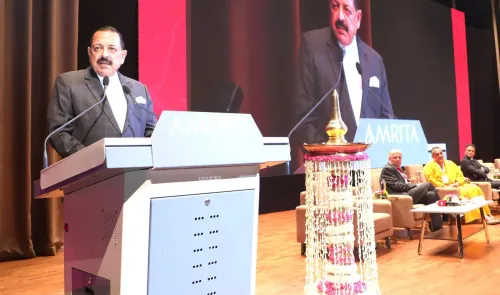
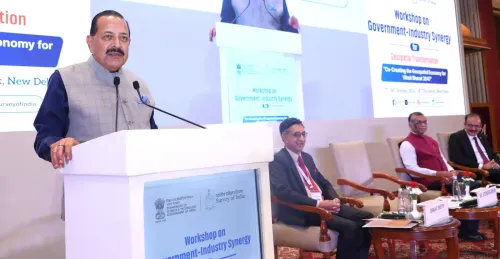
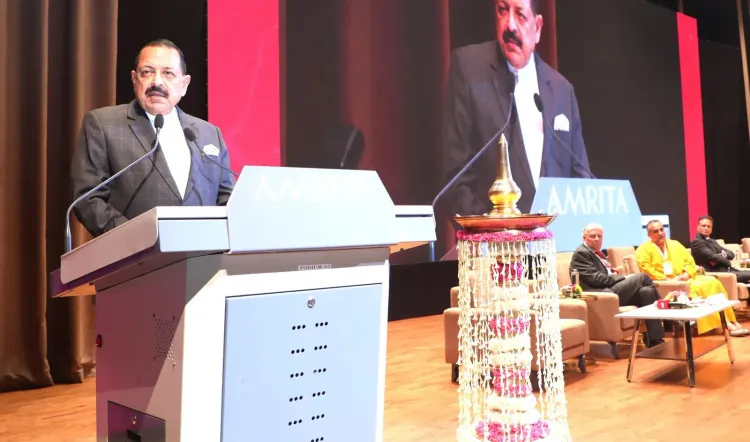
Anticipating a landslide before it strikes can give communities precious time to act. Union Science and Technology Minister Dr. Jitendra Singh outlined India's shift towards that approach in his inaugural address at the 7th World Landslide Forum at Amrita Vishwa Vidyapeetham in Faridabad, sharing the details on 23 November 2026.
From landslide relief to early warning
Singh said India was moving away from waiting for disasters and mobilising relief afterwards, towards anticipating risks, strengthening warnings and preventing avoidable loss of lives and infrastructure. He described the shift from post-disaster relief to prevention and risk reduction as a major transformation in the country's disaster management strategy.
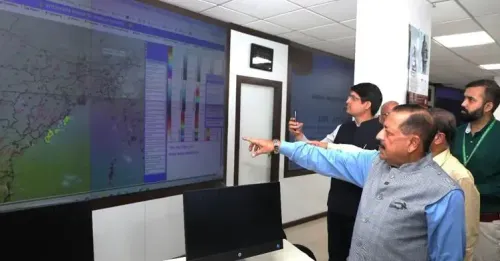
In his post, the minister pointed to susceptibility mapping and a historical landslide inventory as part of that effort. He also cited the National Landslide Forecasting Centre in Kolkata and the approved National Landslide Mitigation Project.
Technology and the last mile
Singh said AI-based prediction, geospatial technologies, satellite monitoring and last-mile early warning were being deployed to strengthen landslide resilience. For people in landslide-prone hill regions, the practical importance of a warning lies in whether it reaches communities in time to help them act.
The approach builds on a longer policy shift. The Disaster Management Act, 2005 created the National Disaster Management Authority and established a framework that moved beyond relief towards risk reduction. India also adopted the Sendai Framework for Disaster Risk Reduction, covering 2015–2030, which emphasises prevention and early warning.
The World Landslide Forum, an international conference series focused on landslide science and risk reduction, brings those questions into a global setting. The test ahead is how effectively forecasting and mitigation translate into timely warnings for communities on vulnerable slopes.
Point of View
But their value to residents depends on timely warnings and action on the ground. The rollout of mitigation measures and the reach of forecasting will be important indicators of how the strategy develops.
NationPress
23 Nov 2026
Frequently Asked Questions
What did Jitendra Singh say at the World Landslide Forum?
He said India was shifting from post-disaster relief towards anticipating landslide risks, improving early warnings and preventing avoidable losses.
Where was the 7th World Landslide Forum held?
Singh said he delivered his inaugural address at Amrita Vishwa Vidyapeetham in Faridabad.
Where is India's National Landslide Forecasting Centre?
The National Landslide Forecasting Centre is in Kolkata, according to Singh's post.
What technologies did Jitendra Singh mention for landslide resilience?
He cited AI-based prediction, geospatial technologies, satellite monitoring and last-mile early warning.
What is the World Landslide Forum?
It is an international conference series focused on landslide science, risk reduction and policy.