Amarnath Yatra 2026: J&K DGP Nalin Prabhat chairs security review ahead of July 3 start
Synopsis
With Amarnath Yatra 2026 set to begin on 3 July, J&K DGP Nalin Prabhat has convened a full-scale security review drawing in the Army's Victor Force, CRPF, BSF, and ITBP. The 57-day pilgrimage — across two high-altitude routes in a region with active counter-insurgency operations — is as much a security test as a religious event.
Key Takeaways
J&K DGP Nalin Prabhat chaired a Security Review Meeting on 22 June in Srinagar ahead of Amarnath Yatra 2026 .
Senior officers from the Army's Victor Force , CRPF , BSF , and ITBP attended and briefed on counter-insurgency and security preparedness.
The Yatra begins on 3 July 2026 and runs for 57 days , concluding on 28 August 2026 .
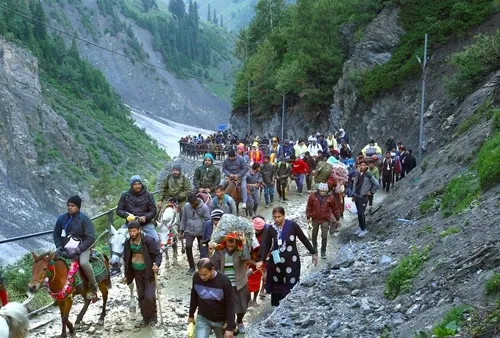
Pilgrims travel via the Pahalgam route (4 days) or the shorter Baltal route (same-day return) to the shrine at 3,888 metres above sea level.
The DGP stressed the need for an integrated, multi-agency security grid to ensure a safe pilgrimage.
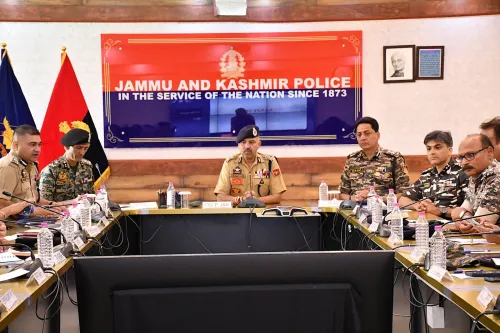
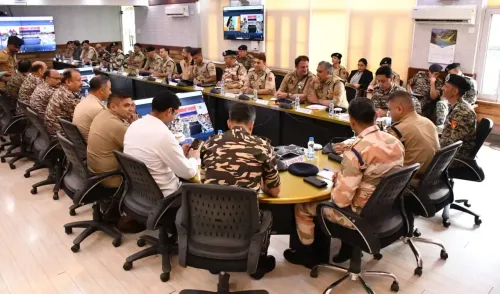
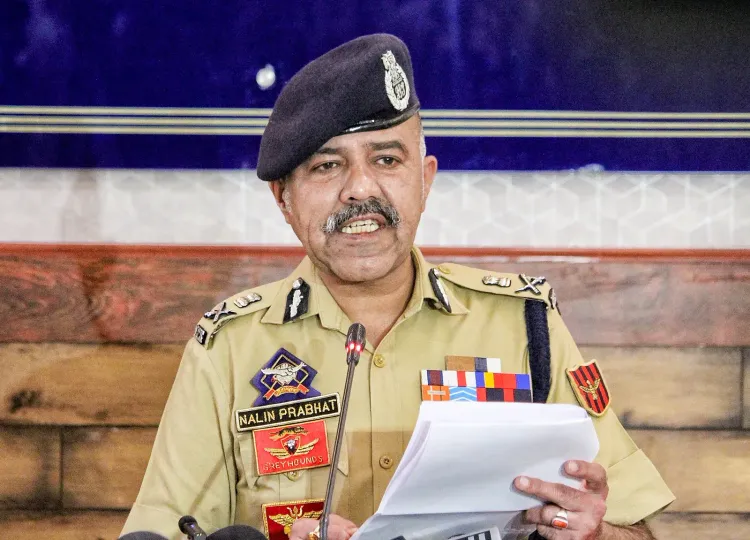
J&K Director General of Police Nalin Prabhat on Monday, 22 June chaired a high-level Security Review Meeting in Srinagar to evaluate counter-insurgency measures and the multi-layered security framework being established for Amarnath Yatra 2026, which is scheduled to begin on 3 July. The review underscores the scale of coordination required to secure one of India's largest annual pilgrimages.
Who Attended the Review
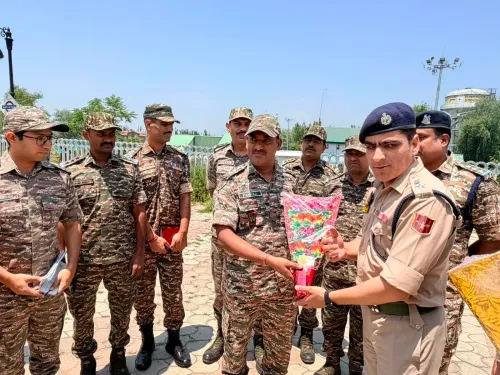
The meeting brought together senior officers from multiple security formations deployed across south Kashmir, including the Army's counter-insurgency Victor Force, the Central Reserve Police Force (CRPF), the Border Security Force (BSF), and the Indo-Tibetan Border Police (ITBP). Senior Superintendents of Police (SSPs) from the districts along the Yatra routes also participated, delivering detailed presentations on the prevailing security situation and ongoing counter-insurgency operations.
Key Directives from the DGP
DGP Prabhat assessed the operational readiness of all security formations and stressed the need for close coordination and seamless inter-agency synergy. He emphasised that a robust, integrated security grid is essential to ensure the safe and smooth conduct of the pilgrimage, which draws thousands of devotees to the Himalayan cave shrine in Jammu and Kashmir every year. The review is part of a series of preparedness exercises being conducted in the lead-up to the Yatra.
Yatra Routes and Schedule
The Amarnath Yatra 2026 commences on 3 July and concludes after 57 days on 28 August. Pilgrims can access the cave shrine via two routes: the traditional Pahalgam route in south Kashmir, which takes approximately four days to complete, or the shorter Baltal route in Ganderbal district of north Kashmir, from which devotees can return to base camp the same day after Darshan. The shrine is situated at an altitude of 3,888 metres above sea level.
Significance of the Shrine
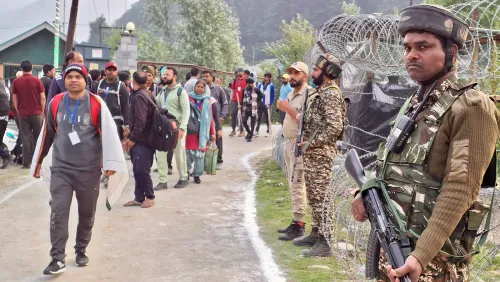
The cave shrine is home to a naturally occurring ice stalagmite that is believed to wax and wane with the lunar cycle. Devotees regard the formation as a symbol of the mythical powers of Lord Shiva, making the pilgrimage one of the most spiritually significant in the Hindu calendar. The combination of high altitude, remote terrain, and large pilgrim footfall makes security coordination a complex, year-on-year logistical challenge for agencies.
Broader Security Context
This comes amid sustained counter-insurgency operations in the Kashmir Valley, with security forces maintaining heightened vigilance in districts along both Yatra corridors. Notably, the involvement of the Victor Force — specifically tasked with counter-insurgency in south Kashmir — signals that threat assessments remain active even as the administration projects confidence in its preparedness. The seamless conduct of the Yatra is widely seen as a barometer of ground-level stability in the region.
Point of View
But the explicit inclusion of the Victor Force — the Army's dedicated counter-insurgency unit for south Kashmir — is a reminder that the pilgrimage corridor runs through one of the most operationally active zones in the Valley. The administration's public emphasis on 'seamless synergy' is as much a confidence signal to pilgrims as it is an operational directive. What the review does not address publicly is threat-specific intelligence, which is where the real preparedness will be tested. The Yatra's smooth conduct has, in recent years, become a political as well as a security metric — any disruption carries outsized reputational consequences for both the J&K administration and the Centre.
NationPress
22 Jun 2026
Frequently Asked Questions
When does Amarnath Yatra 2026 begin and end?
Amarnath Yatra 2026 begins on 3 July and concludes on 28 August, spanning 57 days. The pilgrimage covers the Himalayan cave shrine in Jammu and Kashmir.
What security agencies are involved in securing Amarnath Yatra 2026?
The security framework involves the Army's counter-insurgency Victor Force, the Central Reserve Police Force, the Border Security Force, and the Indo-Tibetan Border Police, along with district-level police formations. All agencies were briefed at the Security Review Meeting chaired by DGP Nalin Prabhat on 22 June.
What are the two routes to the Amarnath cave shrine?
Pilgrims can reach the shrine via the Pahalgam route in south Kashmir, which takes approximately four days, or the shorter Baltal route in Ganderbal district, from which devotees return to base camp the same day after Darshan.
What is the significance of the Amarnath cave shrine?
The shrine houses a naturally occurring ice stalagmite that is believed to wax and wane with the lunar cycle. Devotees regard it as a symbol of Lord Shiva's mythical powers, making the pilgrimage one of the most significant in the Hindu calendar.
Why is security such a priority for the Amarnath Yatra?
The Yatra passes through south Kashmir, a region with active counter-insurgency operations, and involves thousands of pilgrims at high-altitude, remote locations. The combination of large footfall, difficult terrain, and the security environment makes multi-agency coordination essential every year.