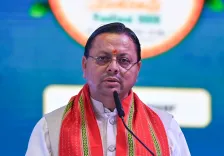
Pralhad Joshi hails Modi's education revolution at Mysuru event
Synopsis
Union Minister Pralhad Joshi shared PM Modi's address at the Mysuru Viveka Smaraka inauguration, citing 650 new universities, 823 medical colleges, 1.4 lakh MBBS seats, and 14,000 PM-SHRI schools as markers of a 12-year education overhaul anchored by NEP 2020.
Key Takeaways
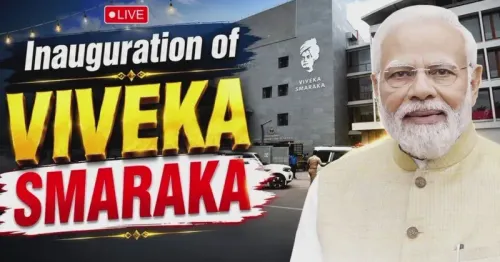
PM Modi spoke at the inauguration of the new Viveka Smaraka in Mysuru on August 1, 2026 .
The government claims 650 new universities have been established over the last 12 years .
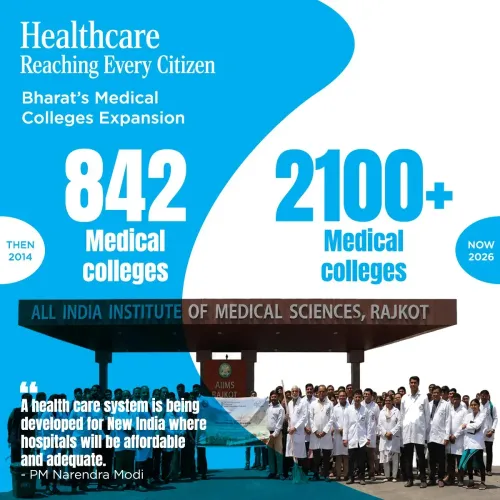
823 medical colleges and 1.4 lakh MBBS seats were cited as part of healthcare education expansion.
The PM-SHRI scheme targets 14,000 model schools to serve as NEP implementation showcases.
The National Education Policy 2020 replaced a framework dating to 1986 , aiming for multidisciplinary, accessible education.
Minister Pralhad Joshi framed the figures as evidence that Indian youth are ready to 'shine at the world level.'
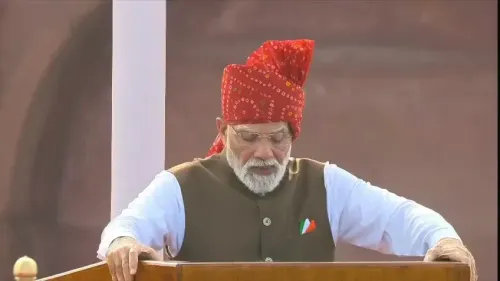
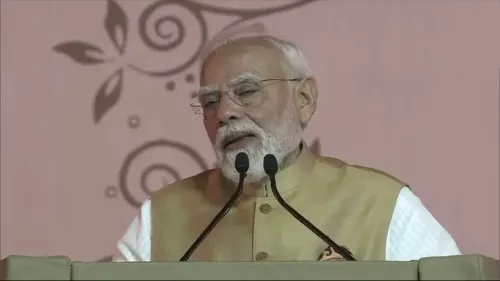
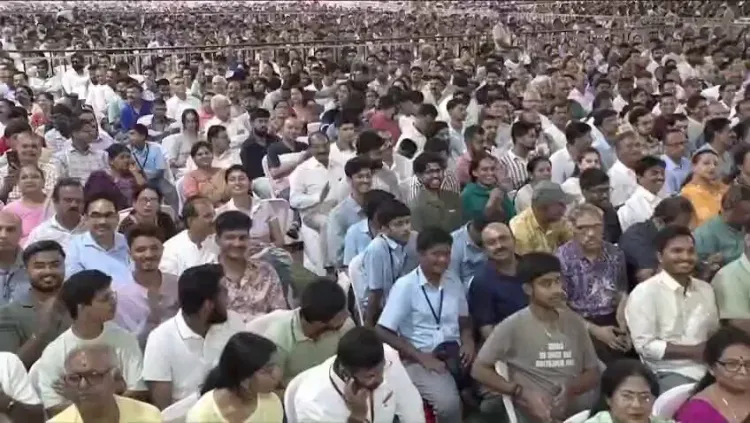
At the inauguration of a new Viveka Smaraka in Mysuru, Prime Minister Narendra Modi on Saturday, August 1, 2026 laid out a sweeping account of what his government calls a decade-plus transformation of India's education landscape — and Union Consumer Affairs Minister Pralhad Joshi amplified that message to his national audience on X.
Posting in Kannada, Joshi quoted the Prime Minister's address at the cultural landmark event, highlighting figures the government says define a new era: 650 new universities, 823 medical colleges, 1.4 lakh MBBS seats, and 14,000 PM-SHRI model schools — all cited as proof of structural change in Indian education over the last 12 years.
What the Viveka Smaraka inauguration signalled
The choice of venue was deliberate. The Viveka Smaraka — a memorial invoking the spirit of Swami Vivekananda — provided a philosophically resonant backdrop for a speech about youth and knowledge. Modi used the occasion to connect a cultural milestone in Karnataka to a national policy argument: that India's youth, shaped by the National Education Policy (NEP) 2020, are now being prepared to compete on a global stage.
Joshi's post captured that framing directly: 'NEP ಮೂಲಕ ನಮ್ಮ ಯುವಜನತೆ ವಿಶ್ವಮಟ್ಟದಲ್ಲಿ ಮಿಂಚಲು ಸಿದ್ಧರಾಗಿದ್ದಾರೆ' — 'Through NEP, our youth are ready to shine at the world level.'
NEP 2020 and the PM-SHRI school push
The National Education Policy, approved by the Union Cabinet in July 2020, replaced a framework that had stood since 1986. Its mandate: make schooling and higher education more multidisciplinary, accessible, and rooted in Indian languages. The PM-SHRI scheme — targeting 14,000 model schools across the country — is one of its most visible implementation arms, intended to serve as exemplars for NEP's classroom vision.
The medical education numbers cited — 823 colleges and 1.4 lakh MBBS seats — speak to a separate but parallel push to expand healthcare training capacity, a persistent demand in a country where doctor-to-population ratios remain a policy pressure point.
India's students and their families are watching whether state governments, which control much of the education machinery, translate these central numbers into ground-level change — particularly the phased rollout of NEP provisions in school curricula and the PM-SHRI upgrade pipeline.
Point of View
Joshi is doing double duty — reinforcing the BJP's national education narrative while speaking directly to a Karnataka audience ahead of continued state-level political competition. The invocation of NEP 2020 alongside raw infrastructure numbers is a now-familiar government playbook: pair a cultural occasion with a data-forward policy argument to shift the education debate from quality concerns to scale achievements. Whether the medical college and university figures translate into outcomes — graduate employment, research output, rural access — is the question that opposition voices and policy watchers are increasingly pressing. The PM-SHRI rollout's pace in non-BJP states will be the real test of whether the central scheme clears political friction on the ground.
NationPress
16 Sept 2026
Frequently Asked Questions
What is the Viveka Smaraka inaugurated in Mysuru?
The Viveka Smaraka is a new memorial in Mysuru, Karnataka , invoking the legacy of Swami Vivekananda. PM Modi inaugurated it on August 1, 2026 and used the occasion to speak on India's education reforms.
What is the PM-SHRI scheme?
The PM-SHRI scheme is a central government initiative to develop over 14,000 model schools across India that serve as showcase institutions for implementing the National Education Policy 2020 .
What is India's National Education Policy 2020?
The National Education Policy (NEP) 2020 was approved by the Union Cabinet in July 2020 , replacing the 1986 policy. It aims to make school and higher education more multidisciplinary, flexible, and accessible, including through Indian-language instruction.
How many new universities has India added in the last 12 years according to Modi?
At the Mysuru event, PM Modi cited 650 new universities established over the last 12 years , alongside 823 medical colleges and 1.4 lakh new MBBS seats .
Why did Pralhad Joshi post about education?
Union Minister Pralhad Joshi shared the highlights of PM Modi's address at the Viveka Smaraka inauguration in Mysuru to amplify the government's education reform narrative to his followers, posting in Kannada to reach a Karnataka audience.